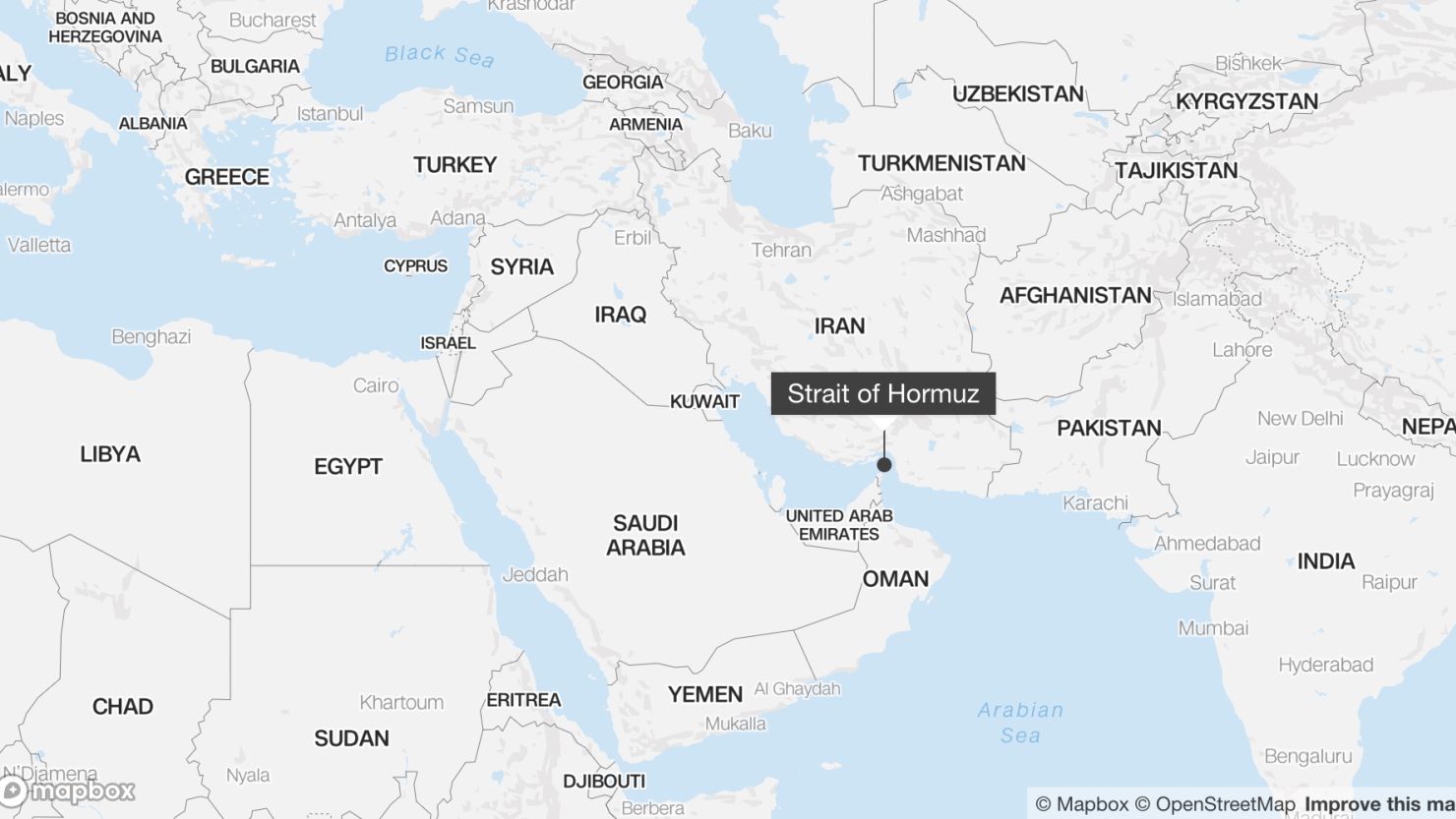
The standard narrative coming out of every major news desk right now is dripping with the same tired alarmism. They tell you that Iran is "tightening its control" over the Strait of Hormuz. They claim the U.S. decision to stand down from renewed strikes is a signal of weakness that hands the keys of the global oil market to Tehran.
It is a comfortable story. It fits neatly into the "Middle East in Chaos" folder that editors have kept open for forty years. But it is fundamentally wrong.
The Strait of Hormuz is not a dial that Iran can simply turn to zero. It is a suicide pill. The moment Tehran actually "closes" the strait—not just harassing a stray tanker or seizing a Panamanian-flagged vessel for the cameras, but truly halting the flow of 20 million barrels of oil per day—the Iranian state ceases to exist in its current form.
The media focuses on the theater of the IRGC speedboats. I focus on the physics of the global supply chain and the brutal reality of Iranian internal economics.
The Myth of Total Maritime Sovereignty
Geopolitics is often taught as a game of Risk, where holding a territory means you own the benefits of that territory. In the Strait of Hormuz, the opposite is true. Possession is a liability.
The "lazy consensus" argues that because Iran sits on the northern shore of the world's most vital chokepoint, they hold a veto over the global economy. This ignores the $Iridium$ reality of modern naval warfare and international insurance markets.
Iran does not "control" the strait; they shadow it. The shipping lanes themselves—the Deep Water Routes—are largely in Omani territorial waters. To "tighten control" in a way that actually disrupts the market, Iran has to violate the sovereignty of its neighbors, not just defy the Americans.
When the U.S. calls off attacks, it isn't retreating. It is refusing to play the specific game of escalation that validates Iran's domestic propaganda. By not striking, the U.S. keeps the burden of "the first move" squarely on Tehran’s shoulders. If you are a trader sitting in Singapore or London, you aren't terrified of an Iranian blockade. You are terrified of a miscalculation. There is a massive difference.
The China Factor The Silent Veto
Every armchair general forgets the biggest stakeholder in the Strait of Hormuz: China.
Mainstream analysis acts like this is a binary struggle between Washington and Tehran. It isn’t. China is the primary destination for the crude flowing through those waters. Iran is currently kept afloat by "tea house" refineries in China that buy sanctioned Iranian oil at a steep discount.
If Iran were to actually choke the strait, they wouldn't just be poking the Great Satan. They would be severing the jugular of their only remaining superpower patron. Beijing’s tolerance for "regional resistance" ends exactly where their industrial energy costs begin to spike.
I’ve spent years watching how energy markets price in risk. The "Hormuz Premium" is often a ghost. Crude prices frequently drop after Iranian threats because the market knows the bark is a survival mechanism, while the bite is a death warrant.
The Insurance Shell Game
Let’s talk about the mechanics that the news ignores: Protection and Indemnity (P&I) clubs.
When the media says Iran is "tightening control," what they usually mean is that the IRGC is increasing patrols or using drones for surveillance. This is noise. The signal is found in the insurance premiums for tankers.
If Iran actually had the capacity to dictate who moves through the strait, the Lloyd’s Market Association would have declared the entire Persian Gulf a no-go zone months ago. They haven't. Why? Because the tactical reality on the water hasn't changed in three decades.
Iran uses asymmetric tools—limpet mines, fast-attack craft, and coastal missile batteries—because they cannot win a conventional naval engagement. These tools are designed for harassment, not occupation. You cannot "control" a waterway with a speedboat. You can only make it expensive.
The Logistics of a Failed Blockade
Imagine a scenario where Iran attempts a hard blockade.
- They mine the narrowest point (21 miles wide).
- Global oil prices spike to $250 a barrel instantly.
- China’s economy enters a tailspin.
- The U.S. Fifth Fleet, based in Bahrain, has a legal and functional mandate to clear the lanes under the UN Convention on the Law of the Sea (UNCLOS), even though the U.S. hasn't ratified it.
The clearing operation would be violent, brief, and would result in the total destruction of the Iranian Navy and most of its coastal infrastructure. The Iranian leadership knows this. Their goal isn't control. Their goal is the perception of control to maintain internal legitimacy and leverage in nuclear negotiations.
The US Stand-Down Is Not Weakness
The competitor’s article frames the U.S. calling off attacks as a victory for Iran. This is a fundamental misunderstanding of "Over-the-Horizon" posture.
The U.S. has realized that every time it bombs a pier or a radar site in Yemen or Iran, it costs $2 million in munitions to destroy a $50,000 target, all while giving the target "martyrdom" status in the regional media.
By standing down, the U.S. is practicing strategic patience. It is letting the internal contradictions of the Iranian regime—soaring inflation, a disgruntled youth population, and a looming succession crisis—do the work that Tomahawk missiles cannot.
The Real Chokepoint is Domestic
If you want to know who really controls the Strait of Hormuz, don't look at the ships. Look at the rial-to-dollar exchange rate in Tehran.
Iran’s "tightened control" is a classic diversionary tactic. When the economy is screaming, you start a fire in the backyard to distract the neighbors. The regime needs the threat of conflict to justify its repressive security apparatus. Peace is actually more dangerous to the Iranian hardliners than a low-grade naval standoff.
Actionable Reality for the Energy Sector
Stop reacting to the headlines about "increased tensions."
- Watch the VLCC (Very Large Crude Carrier) rates. If the people actually moving the oil aren't changing their routes, the threat is theatrical.
- Monitor Chinese diplomatic cables. The moment Beijing sends a high-level envoy to Tehran, you know Iran has stepped over the line.
- Ignore the "Control" rhetoric. Control implies stability. What we have is a permanent state of managed instability.
The Strait of Hormuz is a stage. Iran is a master of the props, but the U.S. still owns the theater, and China bought most of the tickets.
The biggest mistake you can make is believing the actors are in charge of the script. They are just trying to keep the lights on for one more night.
Move your capital based on structural realities, not the choreographed maneuvers of speedboats in the Persian Gulf.