Every time tensions flare in the Persian Gulf, the foreign policy establishment dusts off the same tired map. They point their laser pointers at three tiny, sun-baked specks of land in the Strait of Hormuz: Abu Musa, Greater Tunb, and Lesser Tunb.
The lazy consensus never changes. We are told these islands are the ultimate geostrategic keys to the global economy. Analysts warn that whoever controls these rocks holds a knife to the throat of global energy shipping. They paint a picture of an impending apocalypse where Iranian batteries on these islands choke off twenty percent of the world’s petroleum, triggering a global financial meltdown. For a closer look into similar topics, we recommend: this related article.
It is a neat, cinematic narrative. It is also completely detached from the realities of modern naval warfare, logistics, and energy economics.
The obsession with these three islands is a historical hangover. It treats 21st-century hybrid warfare as if it were a 19th-century game of imperial battleship. The truth is far more uncomfortable for the hawks and the defense contractors: these islands do not control the Strait of Hormuz. In a real conflict, they would be nothing more than indefensible, static targets. For broader background on the matter, comprehensive analysis can be read on BBC News.
The Static Target Fallacy
Let’s dismantle the basic military premise first. The conventional argument insists that placing radar installations, anti-ship missiles, and drone launchpads on Abu Musa or the Tunbs allows a hostile force to dominate the shipping lanes.
This view ignores the fundamental shift in modern precision strike capabilities.
In military planning, a fixed island is a liability, not an asset. It cannot move. It cannot hide. Its coordinates are known down to the millimeter by every satellite constellation orbiting the earth.
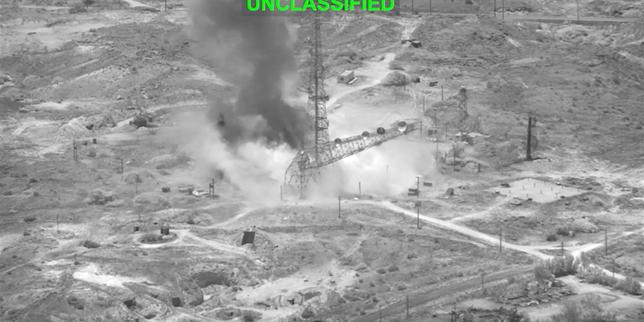
Imagine a shooting war involving the United States, its Gulf allies, and Iran. The very first salvos would not be a dramatic amphibious assault to capture Abu Musa. The first salvos would be a barrage of GPS-guided munitions, cruise missiles, and stealth bomber strikes that would turn every runway, radar dome, and missile silo on those islands into smoking craters within the first forty-five minutes.
I have spent years analyzing maritime security corridors and speaking with naval planners who laugh at the idea of dug-in island garrisons. The Iranian Revolutionary Guard Corps (IRGC) does not survive by holding fixed positions. They survive through asymmetry.
If Iran wants to threaten shipping, they will not do it from a highly exposed rock in the middle of the Gulf. They will do it using highly mobile, truck-mounted anti-ship cruise missile launchers hidden in the rugged, GPS-masked folds of the Zagros Mountains on the Iranian mainland. They will use fast-attack crafts launched from disguised civilian ports along a thousand-mile coastline. They will use low-cost loitering munitions hidden in commercial warehouses.
Investing diplomatic capital or military sweat into the sovereignty of these three islands is an exercise in fighting the last war. The islands are geopolitically loud but tactically whisper-quiet.
The Geography of the Strait is Already Irrelevant
To understand why the islands do not matter, you have to look at the actual hydrography of the Strait of Hormuz, rather than the simplified graphics shown on cable news.
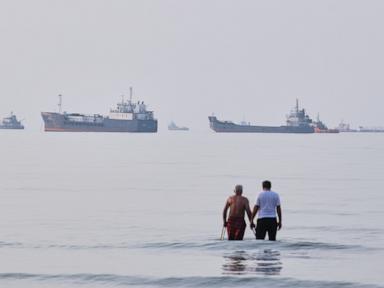
The Strait is about twenty-one miles wide at its narrowest point. But the actual shipping channels—the Traffic Separation Scheme (TSS) used by giant supertankers—are incredibly narrow.
- The Inbound Lane: Two miles wide, located entirely within Omani territorial waters.
- The Outbound Lane: Two miles wide, also running through Omani waters.
- The Buffer Zone: A two-mile-wide strip separating the two lanes.
Abu Musa and the Tunbs lie further to the west, well inside the wider Gulf basin. They do not sit directly on top of these transit lanes like toll booths on a highway.
Even if we accept the premise that proximity equals control, the entire Strait is already within the envelope of shore-based artillery, short-range ballistic missiles, and basic drones launched from the Iranian mainland. You do not need a forward base on Greater Tunb to hit a 300,000-ton supertanker moving at fifteen knots when your mainland coast is only twenty-five miles away.
Furthermore, the depth of the water around these islands limits their utility for submarine operations or heavy naval deployment. The Gulf is remarkably shallow, averaging only about thirty-five meters deep. It is a terrible environment for traditional naval maneuvers, which is exactly why the U.S. Navy relies so heavily on aerial surveillance and minesweeping capabilities there rather than parking carrier strike groups inside the bucket.
Holding the islands does not change the physical geography of the shipping lanes. It just gives you a slightly closer vantage point to watch ships that you could already track, target, and hit from your own mainland living room.
The Economic Suicide Pact
The ultimate flaw in the "Hormuz Chokepoint" panic is the assumption that Iran actually wants to close the Strait, or that doing so would be a winning move.
The media treats the closure of the Strait as a button Iran can press whenever it gets angry. In reality, shutting down the Strait of Hormuz is an economic suicide pact that hurts Iran far more than it hurts the West.
Look at the buyer profile of the oil flowing through the Strait. The vast majority of the crude transiting Hormuz does not go to the United States or Western Europe. It goes to Asia. Specifically, it goes to China, India, Japan, and South Korea.
Destination of Strait of Hormuz Oil Transits (Approximate):
┌───────────────────────────┬─────────┐
│ Destination               │ Share   │
├───────────────────────────┼─────────┤
│ China                     │ ~35%    │
│ India                     │ ~20%    │
│ Japan & South Korea       │ ~25%    │
│ Rest of Asia              │ ~10%    │
│ Europe & North America    │ ~10%    │
└───────────────────────────┴─────────┘
China is Iran's primary economic lifeline. Beijing buys millions of barrels of discounted Iranian crude every day, circumventing Western sanctions. India remains a major diplomatic partner.
If Iran closes the Strait of Hormuz, they do not just stop Saudi and Emirati oil. They stop their own exports. More importantly, they cut off the energy supply to the only superpower that protects them on the UN Security Council: China.
Do you honestly think Tehran is going to tank the Chinese economy, cause blackouts in Beijing, and trigger a global depression just to make a point about three disputed islands?
The moment Iran closes the Strait, they lose China. The moment they lose China, the Iranian regime collapses from the inside out under the weight of total economic isolation.
The threat to close the Strait is a diplomatic poker chip. It is a bluff designed to deter a pre-emptive strike on their nuclear facilities. It is not an actual, executable military strategy. And because it is a bluff, the physical staging grounds like Abu Musa and the Tunbs are just props in a theatrical production.
The Insurance War is the Real Battleground
If a conflict does break out in the Gulf, it will not look like the Battle of Midway. It will not be decided by who plants a flag on the Tunb islands.
It will be fought in the boring, unglamorous offices of maritime insurance syndicates in London and Singapore.
Modern global trade relies on insurance. A supertanker carrying $100 million worth of crude oil cannot sail without Hull and Machinery (H&M) insurance and Protection and Indemnity (P&I) cover.
During the "Tanker War" of the 1980s, neither Iraq nor Iran succeeded in physically blocking the Strait of Hormuz. Instead, they attacked merchant ships with mines and missiles. What actually threatened to halt the flow of oil was not the physical destruction of ships, but the sky-rocketing cost of war-risk insurance premiums.
At one point, insurance rates became so prohibitive that shipowners refused to enter the Gulf unless their governments re-flagged and escorted their vessels (Operation Earnest Will).
This is how a modern shipping crisis unfolds:
- A few cheap, one-way attack drones strike a tanker.
- No one sinks, but the hull is damaged.
- The Joint War Committee in London designates the entire Gulf as a high-risk area.
- Insurance premiums jump by 1,000 percent overnight.
- Shipowners refuse to transit, effectively closing the Strait without Iran ever having to lay a single mine or fire a heavy anti-ship missile.
This scenario does not require island fortresses. It requires a handful of teenagers in a garage on the mainland assembling off-the-shelf drones with fiberglass bodies and lawnmower engines.
If you are a risk analyst, an energy trader, or a policymaker, and you are still focusing on which nation has sovereignty over Abu Musa, you are looking at the wrong chessboard. You are analyzing 20th-century territorial disputes while the real threat is a decentralized, low-cost war of economic attrition that completely bypasses physical territory.
Stop Looking at the Map, Look at the Tech
The territorial dispute over Abu Musa and the Tunbs between the UAE and Iran is a useful diplomatic cudgel. The UAE uses it to rally Western support and highlight Iranian expansionism. Iran uses it to project nationalist strength to its domestic audience.
But as a military factor in a potential war, these islands are a distraction.
If hostilities break out, the islands will be neutralized in the opening hours of the conflict, or they will be ignored entirely as both sides engage in long-range missile exchanges, cyber-warfare, and commercial disruption that doesn't care about borders or coastlines.
The next time a defense intellectual tells you that we need to worry about who controls the three islands of the Strait of Hormuz, ask them how a static, undefended sandbar survives a hypersonic missile strike. Ask them how holding Abu Musa protects a tanker from a swarm of underwater autonomous drones launched from a generic fishing dhow fifty miles away.
The era of island-based choke points is over. The sooner we stop fetishizing these three rocks, the sooner we can prepare for the actual, decentralized future of maritime conflict.