Silence has a weight. In most homes, it is the soft cushion of evening, the pause between laughter, the breathing of sleeping children. But sometimes, silence hardens. It becomes dense, cold, and heavy enough to crack the floorboards. It settles into the corners of a room and refuses to leave, turning an ordinary address into a vault.
Consider a quiet town in France. On a Tuesday that began like any other, a partner walks through a door. They are looking for something ordinary. A misplaced set of keys, a document, an item from a drawer. What they find instead shatters the architecture of their reality forever.
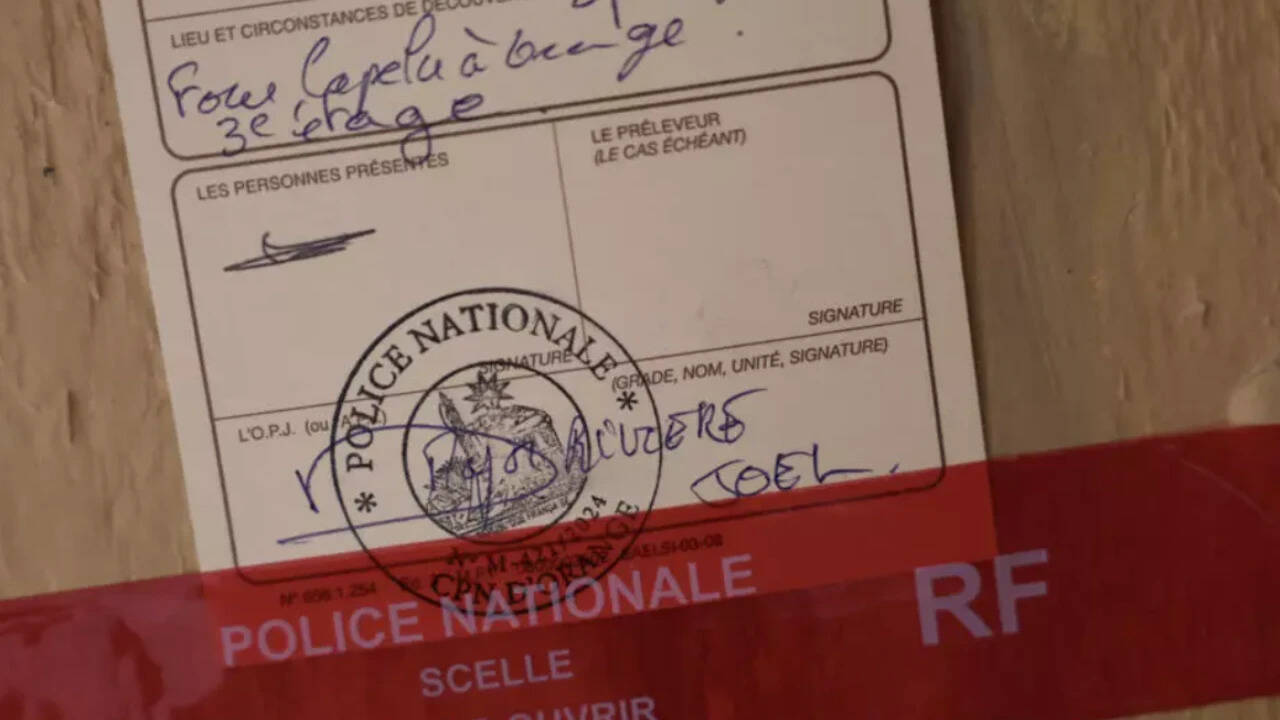
Remains. Five tiny remains, hidden in a French couple's home.
The human mind is a master of compartmentalization. We build walls around our darkest secrets, painting them with the neutral tones of daily routine. We wash dishes, we watch television, we pay electric bills, all while a catastrophic truth festers just inches away behind a locked door or a darkened crawlspace. How does a person live in the same space as a horror so profound? How does the air taste when every breath requires an active, monstrous suppression of memory?
To understand this tragedy, we have to look past the initial shock value of the headlines and examine the architecture of isolation. Investigators swarmed the property. The details trickled out, cold and forensic. Autopsies. Timelines. DNA profiling. The mechanics of a criminal investigation are designed to reduce human catastrophe into manageable data points. Yet, numbers and police reports fail to capture the suffocating reality of what unfolded inside those walls.
Secrecy is a corrosive agent. When couples share a life, they share an unspoken contract of reality. They mirror each other's sanity. But what happens when that mirror cracks? In cases of concealed neo-natal deaths, psychological isolation often plays a central, terrifying role. Sociologists and criminologists frequently point to profound distress, societal shame, and a complete breakdown of psychological safety nets.
Imagine living a double life where one half requires the total erasure of truth.
The partner who made the discovery did not step into a crime scene designed by a mastermind. They stepped into a monument of denial. The shock of that discovery is unimaginable. One moment you are sharing a domestic routine, and the next, the person you thought you knew intimately is revealed to be a stranger guarding an unimaginable abyss.
Law enforcement agencies moved swiftly. The mother was taken into custody, placed under psychiatric evaluation. The father was questioned. The legal system grinds forward, seeking answers to questions that seem almost too dark for human comprehension. Was it concealment of births? Was there violence? Was there medical neglect born of utter desperation? The courts will parse the evidence, examining forensic pathology and psychological profiles to reconstruct a timeline of horror.
Yet, as the legal apparatus works to assign accountability, a lingering unease remains in the public consciousness.
We read these stories because we want to believe they belong to another world entirely. We want to draw a thick, impenetrable line between "them" and "us." We tell ourselves that normal people do not live this way. We comfort ourselves with the fiction that madness announces itself with loud noises and broken windows.
It doesn't.
Sometimes, madness looks like a closed bedroom door. It looks like a partner going to work, coming home, eating dinner, and never, ever mentioning the unspeakable. It looks like an ordinary house on an ordinary street, hiding a silence so heavy it eventually brings the whole structure down.
The town will eventually move past the media vans and the police tape. The reporters will pack their cameras. The street will return to its quiet rhythm. But the house remains, an empty vessel holding the echoes of what should have been life, but was met only with the dark, impenetrable quiet of a secret too heavy to bear.


