A Sudden Shift in Public Trust
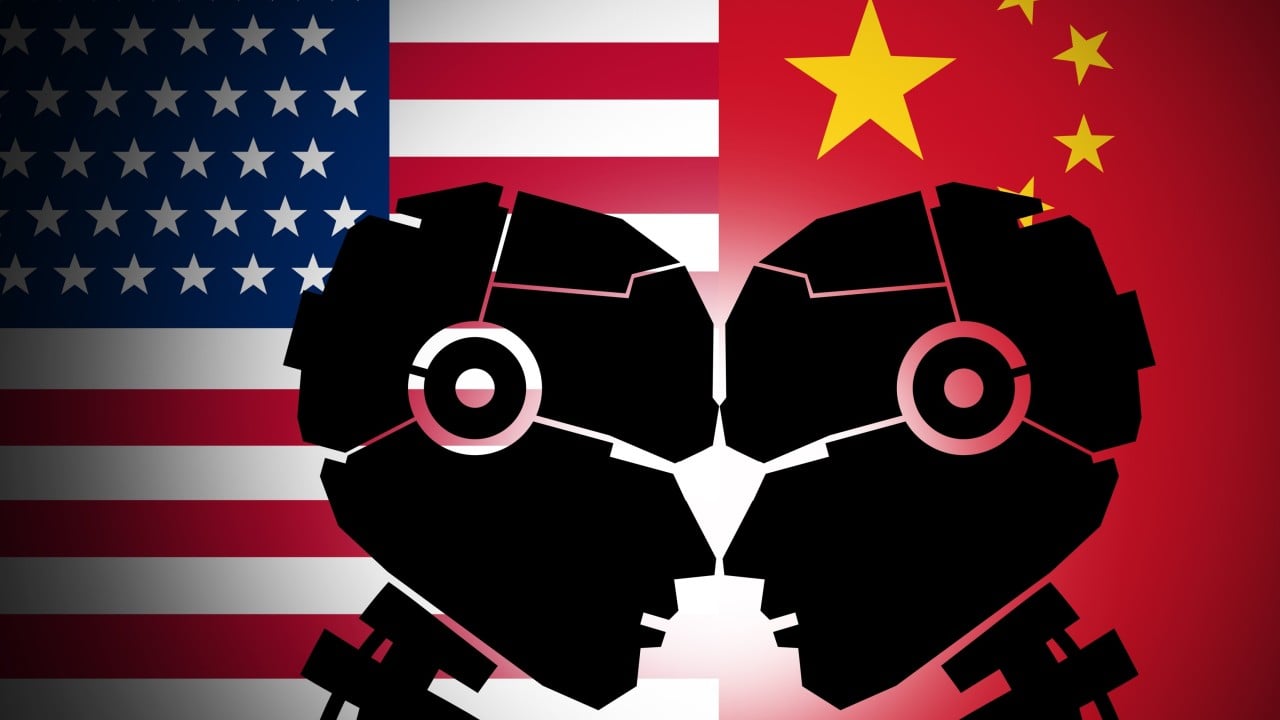
A quiet shift in American public perception hit a tipping point recently. A growing share of the US population now believes China, not the United States, leads the world in artificial intelligence.
While Washington regulators debate legislative guardrails and Silicon Valley executives parade benchmark scores, everyday citizens are reaching a starkly different conclusion. They look at physical infrastructure, high-speed rail, automated ports, and consumer technology hardware coming out of East Asia and see a nation executing a coherent strategy. Meanwhile, the American strategy looks increasingly fragmented, plagued by legal challenges, supply chain bottlenecks, and persistent grid constraints. You might also find this similar coverage insightful: When Your Waffle Fries Come With a Side of Digital Extortion.
The gap between executive rhetoric and public perception is no longer a minor variance in polling data. It represents a fundamental misreading of what "leadership" means to the average person.
Silicon Valley measures dominance in raw compute power, token throughput, and parameter scale. The public measures dominance in visible, tangible outcomes. When an American consumer hears that a domestic tech giant built a massive server cluster, they see an abstract corporate investment. When they watch autonomous electric vehicles operating without safety drivers across vast Chinese metropolises, they see a nation operating in the future. As extensively documented in recent articles by CNET, the implications are worth noting.
This divergence in perspective reveals a deeper structural issue in the American innovation ecosystem that goes far beyond software development.
The Hardware Disconnect
Software gets the headlines. Hardware wins the infrastructure race.
For two decades, the Western tech playbook relied on a comfortable division of labor. American firms designed the chips and wrote the code while factories in Asia built the physical devices. That division of labor worked brilliantly when technology remained confined to glass screens and desktop computers.
Artificial intelligence broke that mold.
Modern AI applications require massive physical installations. They demand specialized semiconductors, vast power plants, advanced cooling systems, and massive manufacturing pipelines to convert algorithmic breakthroughs into real-world utility. China recognized this physical reality early. Over the past decade, Chinese state policy funneled hundreds of billions of dollars directly into the supply chains that support physical automation, advanced battery manufacturing, and telecommunications infrastructure.
Infrastructure Pillar   | United States Approach            | China Approach
------------------------|-----------------------------------|----------------------------------
Energy Access           | Grid interconnection backlogs    | Rapid nuclear and renewables expansion
Supply Chain            | Outsourced manufacturing reliance | Vertical integration of raw materials
Commercial Deployment   | Fragmented market adoption        | State-supported rapid scaling
American strategy focused almost exclusively on the top layer of the stack. Companies chased massive language models while relying on fragile global supply chains to manufacture the underlying chips and power the underlying data centers.
The public instinctively picks up on this vulnerability. When a country controls the processing of critical rare earth elements, the production of lithium-ion cells, and the physical manufacturing of industrial robotics, claiming supremacy based on a software benchmark feels hollow.
Gridlock on the Home Front
You cannot run advanced computing facilities without electricity.
In the United States, energy infrastructure has become the primary bottleneck for technological deployment. Securing approval for new high-voltage transmission lines can take a decade or more. Regulatory reviews, local zoning disputes, and environmental litigation repeatedly stall critical projects before a single foundation is poured.
Tech companies are now forced to negotiate directly with utility providers for power capacity that simply does not exist on the current grid. Some software firms are exploring custom nuclear options or acquiring legacy power stations just to guarantee electricity for their future facilities.
China operates under a fundamentally different regulatory paradigm.
When the state determines that a region requires additional energy capacity for high-performance computing centers, high-voltage direct current lines are constructed rapidly. Solar, wind, and nuclear generation facilities are brought online at a pace that seems unthinkable under Western administrative processes.
This power disparity translates directly into operational capacity. An AI model cannot generate insights if the data center housing it cannot draw sufficient voltage from the grid.
The Perception Gap
The American public is not reading academic research papers or tracking model leaderboard performance. They experience technology through everyday interactions.
Consider the deployment of autonomous systems. In Western cities, pilot programs face constant legal hurdles, public pushback, and restrictive municipality rules. Rollouts are slow, highly cautious, and frequently interrupted by local government interventions.
In contrast, Chinese cities have served as living laboratories for automated transportation and municipal management systems. Hundreds of millions of urban residents interact with automated logistics, facial recognition systems, and smart city infrastructure on a daily basis.
Whether these deployments respect privacy rights or offer long-term economic efficiency is a separate question. What they undeniably accomplish is creating an undeniable impression of technological supremacy.
Public Exposure Vector  | Western Consumer Experience       | Chinese Consumer Experience
------------------------|-----------------------------------|----------------------------------
Robotics & Mobility     | Limited geographic test zones     | Commercial autonomous fleets
Municipal Integration   | Paper-based city services         | Sensor-integrated transit grids
Consumer Hardware       | Incremental phone updates         | Rapid hardware iterations
When people see advanced technology embedded directly into the physical environment around them, they naturally assume the country behind it is winning the race. The American strategy of building invisible software backends accessible through web browsers simply lacks the visual impact of automated urban infrastructure.
Capital Allocation and Corporate Priorities
Follow the money.
American venture capital has historically favored light capital commitments. Investors prefer software startups because they offer high margins, rapid scalability, and minimal physical overhead. Building physical hardware, developing energy infrastructure, or manufacturing heavy machinery carries high upfront capital requirements and narrow profit margins.
This investment philosophy created extraordinary financial wealth for Silicon Valley, but it created a severe vulnerability in deep technology deployment.
Chinese investment capital, heavily guided by state mandates, moved in the opposite direction. Subsidies poured into hard technology sectors:
- Solar wafer production and advanced battery chemistry
- Commercial robotics and industrial automation equipment
- Semiconductor packaging and advanced materials processing
- Telecommunications hardware and edge computing nodes
This industrial policy aimed squarely at foundational physical capabilities. While American platforms optimized digital advertising platforms and consumer software apps, Asian firms established dominant positions in the physical supply chains that make modern hardware possible.
The consequences of this divergence are now obvious. American companies attempting to build advanced hardware frequently discover that the machinery, specialized skills, and raw component supply chains required to produce it at scale simply do not exist inside the United States.
The Regulatory Fragment
American policy regarding emerging technology is currently defined by uncertainty.
Different federal agencies assert overlapping jurisdiction. State legislatures introduce conflicting laws regarding data privacy, algorithmic accountability, and automated decision-making. Standard setting processes stall in congress while lawmakers struggle to understand the technical nuances of neural network architectures.
This regulatory gridlock creates severe operational friction for domestic developers. Companies spend immense energy navigating legal liability, compliance reviews, and intellectual property litigation rather than executing technical roadmaps.
China enforced a centralized regulatory framework.
The state establishes clear boundaries around data sovereignty, content generation, and system access. While these rules restrict freedom of expression and reinforce state monitoring, they provide commercial entities with clear operational parameters. Domestic firms know precisely what boundaries exist, allowing them to deploy resources aggressively within those constraints.
Uncertainty kills momentum. A domestic firm facing constant regulatory risk operates cautiously, while a competitor backed by explicit state direction moves aggressively.
Reclaiming the Narrative Through Execution
Public confidence cannot be restored with marketing campaigns or patriotic press releases. It requires physical execution.
If the United States intends to maintain its leadership position in emerging technologies, the strategy must expand beyond software development. Software capabilities remain useless if the physical foundations required to build, power, and deploy them are controlled elsewhere.
That reality demands immediate structural changes:
- Reforming energy permitting. Critical infrastructure projects supporting high-performance computing must be streamlined to bypass endless administrative delays.
- Rebuilding physical supply chains. Domestic capability in advanced packaging, materials processing, and industrial hardware must be prioritized alongside chip design.
- Deploying technology publicly. Advanced automation must be permitted to operate in real-world environments to demonstrate tangible benefits directly to citizens.
The public perception that America is falling behind in artificial intelligence is not an optical illusion or a temporary polling anomaly. It is a rational response to an innovation model that prioritized intangible software over physical infrastructure.
Software alone will not preserve technological dominance. The nation that masters the physical realities of energy, hardware, and deployment will dictate the future of technology, regardless of who claims the highest benchmark score.


