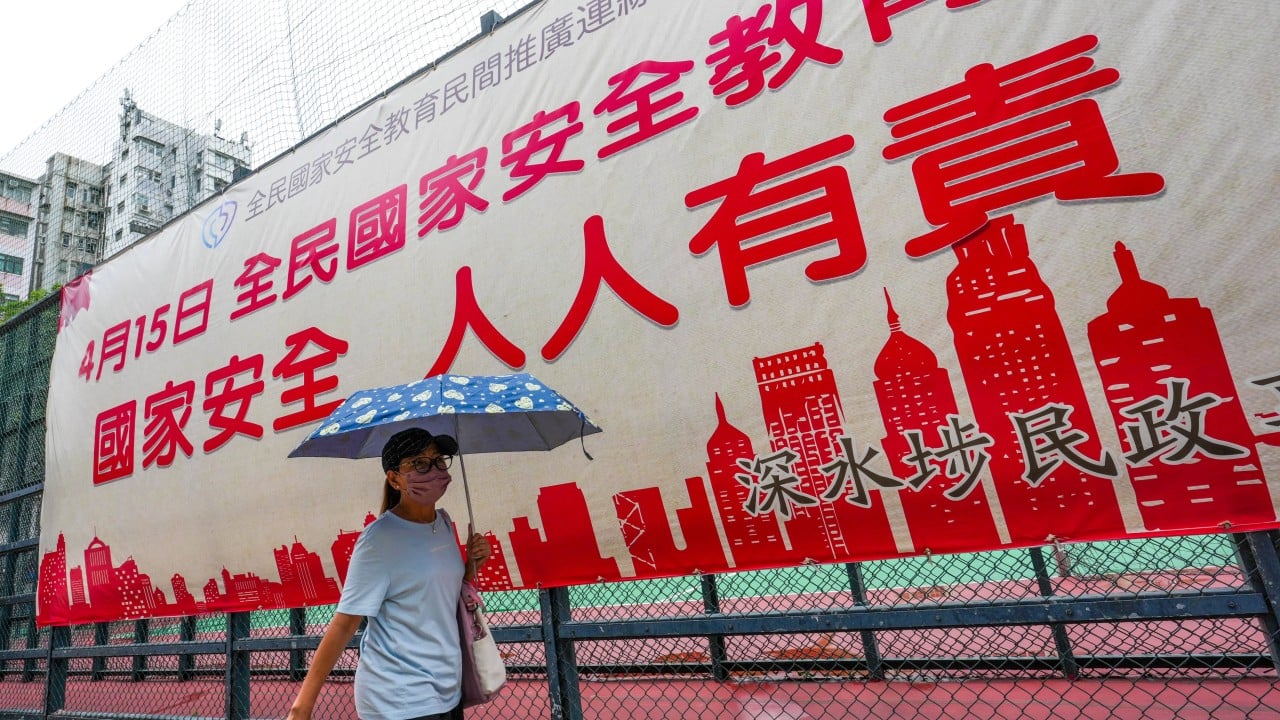
The justice minister wants the public to breathe easy. Following the quiet expansion of sweeping national security powers granted to city leadership, official channels rushed to clarify that the established appeals process remains entirely untouched. It is a classic bureaucratic soothing mechanism. By assuring citizens that the legal safety valve is still intact, authorities hope to bypass deeper questions about how these powers alter the civic dynamic. The reality is far more troubling. While the technical right to file an appeal survives on paper, the practical mechanism for successfully challenging an executive decree has been systematically hollowed out.
To understand why the minister's assurances fall flat, one must look at the structural friction introduced by these new administrative capabilities. National security measures rarely announce themselves with a blunt refusal of judicial review. Instead, they operate through the manipulation of evidence, timeline constraints, and evidentiary privileges. When a city leader invokes a national security mandate to shut down an organization, freeze assets, or restrict public assembly, the deck is stacked against any appellant from day one.
The core of the issue lies in the nature of "closed-material proceedings." Under the expanded framework, city officials can present intelligence summaries directly to a reviewing body while withholding the underlying source data from the accused and their legal counsel.
You cannot effectively appeal a decision when you are barred from viewing the evidence that triggered it.
The Asymmetry of Administrative Deference
Courts and tribunals possess an inherent bias toward executive discretion when the phrase "national security" is uttered in the courtroom. This is not a conspiracy; it is a long-standing doctrine of administrative law known as judicial deference. Judges routinely concede that local executives and intelligence agencies possess specialized knowledge that the judiciary lacks.
When a city leader claims that a specific entity poses a threat to public order, a reviewing panel will rarely second-guess that assessment. The new powers expand the definitions of what constitutes a threat, moving the goalposts from overt acts of subversion to vaguely defined "pre-criminal interference" and "subversive influence."
Consequently, the promised appeal becomes a hollow ritual. The appellant argues points of procedural law, while the state points to a sealed folder of classified assertions that the judge accepts at face value. The process is technically intact, but the outcome is predetermined.
Consider how this plays out in municipal governance. If a local administration decides that a particular advocacy group or independent media outlet is acting as a conduit for foreign interference, it can deploy these new security tools to disrupt their operations overnight. The justice minister asserts that the group can simply appeal the decision. Yet, by the time a court date is secured—months or even years down the line—the organization is already bankrupt, its reputation is destroyed, and its operational capability is zero. The delay itself becomes a weapon of enforcement.
Secret Evidence and the Ghost of Accountability
The true engine of these new powers is the institutionalization of secret evidence. In standard litigation, the principle of open justice demands that all parties see the case against them. Under the newly minted national security protocols, this principle is treated as a luxury the city can no longer afford.
- Intelligence as Fact: Raw, unvetted intelligence reports are elevated to the status of legal facts without undergoing cross-examination.
- Special Advocates: Appellants are often assigned a "special advocate"—a government-cleared lawyer who can view the secret evidence but is forbidden from discussing its specifics with the client they represent.
- Chilled Precedent: As more cases are decided behind closed doors, public legal precedent withers, leaving future defendants with no roadmap for survival.
This framework creates a profound chilling effect across civic life. When the boundaries of state intervention are fluid and the mechanisms of correction are obscured, individuals and enterprises begin to police themselves. They self-censor. They withdraw from controversial public debates. They decline to fund causes that might inadvertently cross an invisible, shifting line drawn by municipal security officials.
The Fiscal Weaponization of Security Mandates
Beyond the courtroom, these powers introduce a secondary, highly effective method of control that completely bypasses the judicial appellate system: financial strangulation.
Local governments are increasingly leveraging their regulatory control over commercial licensing, zoning laws, and municipal banking access to enforce security directives. If the city leadership flags an entity as a security risk, financial institutions and insurance underwriters routinely terminate their relationships with that entity to avoid regulatory scrutiny.
[City Executive Security Designation]
               │
               ▼
[Regulatory Pressure on Banks/Insurers]
               │
               ▼
[Immediate Account Termination] ──► (No Judicial Appeal Available)
An appeal to a justice ministry tribunal cannot compel a private bank to restore a closed account or force an insurance company to renew a policy. By outsourcing the enforcement of security mandates to the private sector, city leaders achieve their disruption objectives without ever having to defend their underlying intelligence in a court of law. The target is neutralized through economic isolation, rendering the minister’s boasts about preserved appellate rights entirely irrelevant.
The expansion of localized security powers is part of a broader global trend where municipal authorities demand wartime executive privileges to manage peacetime civil friction. By framing local political dissent or systemic social unrest as existential national security crises, city leaders secure a level of administrative impunity previously reserved for federal governments during active conflicts.
The public is left with a two-tiered system of justice. For minor infractions and standard civil disputes, the traditional protections of the legal system remain available. But the moment an issue is designated as a matter of national security by city leadership, those protections dissolve into an administrative black hole where the state acts as investigator, prosecutor, judge, and executioner.
Assurances of unchanged appeal rights are a smoke screen designed to mask a fundamental shift in the balance of power between the citizen and the state. The architecture of accountability has not been preserved; it has been bypassed entirely, leaving behind a decorative facade of due process that serves only to legitimize arbitrary executive action.