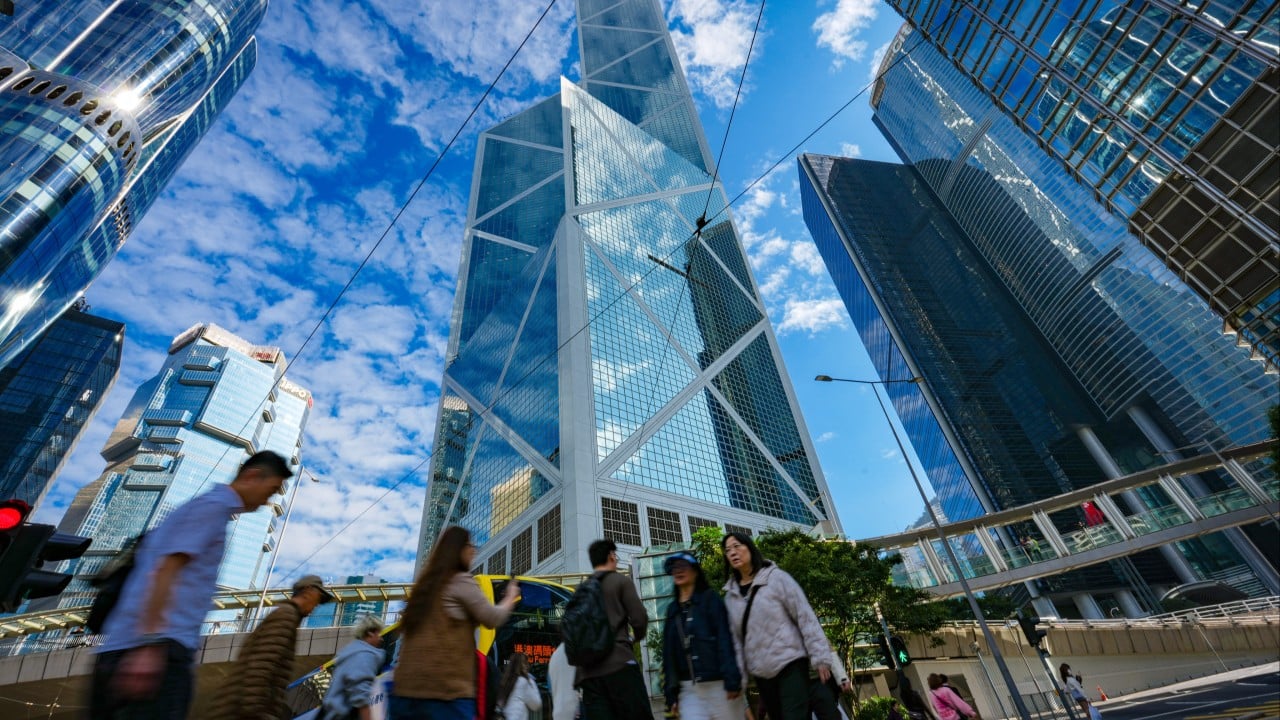
The Securities and Futures Commission (SFC) recently announced that Hong Kong’s asset and wealth management business hit a record US$5.38 trillion, driven by renewed mainland Chinese appetite. This headline paints a picture of a triumphant financial hub reclaiming its crown. The reality on the ground is far more complex, fragile, and transactional. Mainland capital is indeed flowing into Hong Kong, but it is not doing so out of a renewed confidence in the city's long-term economic exceptionalism. Instead, Hong Kong has become the ultimate financial escape hatch for mainland wealth desperate to hedge against domestic economic stagnation and a depreciating yuan.
To understand the surge, one must look past the aggregate trillions and examine the specific pipes through which this money is moving.
The Mechanism of the Outflow
The growth is heavily concentrated in specific channels, most notably the Wealth Management Connect scheme and insurance products. These are not vehicles for long-term venture equity or deep capital market speculation. They are capital preservation tools.
Mainland investors are facing a protracted property crisis at home, a volatile domestic stock market, and falling interest rates. By shifting funds into Hong Kong dollars—which are pegged to the US dollar—and investing in high-yielding offshore deposits or global funds, they are executing a classic defensive maneuver.
Mainland China Economic Pressures
  ├── Property Market Crisis
  ├── Volatile Domestic Stocks
  └── Depreciating Yuan
        │
        ▼ (Capital Seeking Safety)
Hong Kong Financial Escape Hatch
  ├── Wealth Management Connect
  └── USD-Pegged Insurance Policies
Consider the surge in mainland visitors buying Hong Kong insurance policies. These products often feature a savings component denominated in foreign currencies. For a mainland family, purchasing such a policy is not an endorsement of Hong Kong’s regulatory environment; it is a legal method to convert yuan into a stable, hard asset outside the immediate purview of mainland domestic banks.
The Problem with Short Term Sticky Capital
This influx creates a highly volatile base of assets under management.
- Yield Chasing: Much of this money is parked in money market funds and short-term debt instruments to capture the high interest rates dictated by the US Federal Reserve's monetary policy.
- Reversal Risk: The moment the yield differential between the US and China narrows, or if Beijing tightens cross-border capital controls further, this capital can exit just as quickly as it arrived.
- Lack of Velocity: Unlike institutional venture capital, this wealth does not feed the local ecosystem. It does not fund local tech startups, underwrite major corporate expansions, or stimulate high-velocity economic activity in the territory. It sits quietly in asset structures, earning a yield, waiting.
The Shrinking IPO Engine
While wealth management numbers look massive on paper, the traditional engine of Hong Kong's financial prestige—the Initial Public Offering (IPO) market—tells a vastly different story. Historically, Hong Kong was the premier global venue for Chinese mega-listings. Today, investment banks in the city are facing structural downsizing.
Major global investment firms have reduced their investment banking headcounts in Hong Kong significantly over the past three years. The reason is simple. Deal volumes have dried up, and the valuations of companies listing on the Hong Kong Stock Exchange (HKEX) have plummeted compared to their historical peaks.
Institutional capital from Europe and the United States has pulled back due to geopolitical tensions and compliance mandates. The mainland wealth entering the asset management side is not replacing this institutional liquidity. Retail investors and private wealth clients from Guangdong do not underwrite multi-billion-dollar corporate IPOs. Without deep institutional liquidity, Hong Kong risks becoming a localized wealth storage vault rather than a dynamic international capital marketplace.
The Family Office Gambit
In response to the shifting global dynamic, the Hong Kong government has aggressively courted family offices, offering tax concessions and residency pathways. The goal is to compete directly with Singapore, which has seen an unprecedented influx of global wealth.
The campaign has achieved numerical success, but the composition of these family offices requires scrutiny. A significant portion of the newly established entities are originating from mainland China rather than the Middle East or Europe. While capital is capital, a lack of geographic diversity leaves Hong Kong vulnerable to the specific macroeconomic policy decisions of a single government in Beijing.
Singapore has positioned itself as a neutral, pan-Asian hub attracting wealth from India, Indonesia, and the West. Hong Kong is increasingly becoming a mono-cultural financial satellite. If a family office in Hong Kong is merely an extension of a mainland conglomerate's treasury department, it does not bring the global network effects that define a true international financial center.
The Local Economic Disconnect
Walk through the financial district of Central, and the disconnect between the US$5.38 trillion headline and daily economic reality becomes stark. Office vacancy rates in premium Grade A commercial buildings have lingered at historic highs.
Retail sectors that previously thrived on luxury spending are pivoting. The mainland visitors arriving today are more budget-conscious, participating in "city walk" tourism rather than high-end retail sprees. The wealth accumulated in the asset management statistics is insulated. It stays within the ledger books of private banks and insurance conglomerates, failing to trickle down into the broader local service economy.
The financial sector itself is undergoing a cultural and structural shift. Mastery of Mandarin and deep networks within provincial mainland governments have replaced Wall Street pedigree as the primary hiring criteria. This is a logical evolution, but it solidifies Hong Kong’s transition from a global gateway to Asia, into an offshore financial utility for China.
The Geopolitical Tightrope
The structural reality is that Hong Kong's greatest financial asset—the US dollar peg—remains under constant geopolitical scrutiny. The peg allows mainland capital flowing into the city to instantly enjoy the stability of greenback-linked assets.
Yet, this arrangement requires Hong Kong to import US monetary policy, regardless of whether it suits the local or mainland economic cycle. When the Federal Reserve maintains elevated interest rates to combat inflation, Hong Kong must follow suit, suppressing its local property market and increasing borrowing costs for homegrown businesses, even as mainland China cuts rates to stimulate growth.
This divergence creates friction. The asset management industry thrives on this friction by capturing the yield spread, but the foundational real economy of the city bears the cost.
The record high asset numbers are a metric of defensive positioning, not economic expansion. Wealth is seeking shelter, and Hong Kong has the infrastructure to provide it. Relying on capital that enters a market out of fear rather than opportunity is a precarious strategy for long-term economic stability.