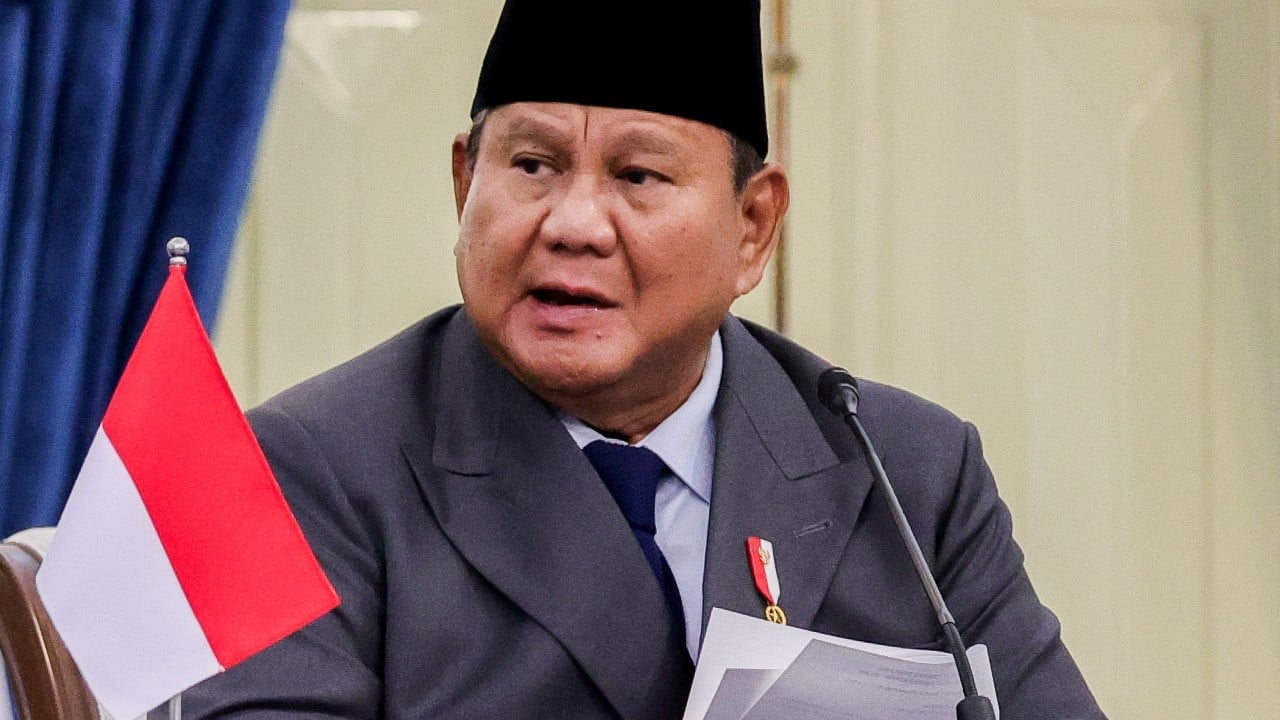
Indonesian President Prabowo Subianto wants the world to believe that Jakarta can act as a bridge between Seoul and Pyongyang. South Korean President Lee Jae Myung reportedly asked Prabowo during an April summit to sound out North Korea and help pry open diplomatic channels. Prabowo publicly accepted the mandate with characteristic bravado. Yet this high-stakes diplomatic theater ignores a foundational reality of modern statecraft. Jakarta possesses no actual leverage over the Kim Jong Un regime, and Pyongyang's doors remain firmly shut to opportunistic messengers.
For decades, Indonesian foreign policy has operated on a strict dogma of non-alignment and active independence. This posture served Jakarta well during the Cold War. It allowed Indonesian leaders to posture as elder statesmen of the Global South, engaging Washington and Moscow without picking a permanent side. Prabowo has eagerly revived this tradition, offering his services as an international troubleshooter. Earlier diplomatic overtures aimed at mediating the Middle East conflict showed his appetite for global staging. Now, he has trained his sights on the most brittle security architecture in East Asia.
The core question is not whether Prabowo is willing to board a flight to Pyongyang. He has made it clear that he is. The real test is whether North Korea has any structural incentive to receive him.
The Empty Currency of Non-Interference
Prabowo anchors his mediation pitch in Indonesia's historical reputation for non-interference. In theory, this makes Jakarta an unthreatening interlocutor. It does not carry the historical baggage of the United States, nor does it possess the heavy-handed economic dominance of China. Seoul finds this appealing because President Lee desperately needs a diplomatic off-ramp from a spiraling inter-Korean cold war.
North Korea views the world through a much harsher lens. Pyongyang formally abandoned reunification as a policy goal, rewriting its constitution to designate South Korea as its primary foe and an immutable enemy. The regime does not want a mediator because it does not want a dialogue that normalizes the southern government's legitimacy.
When a state explicitly categorizes its neighbor as a hostile belligerent, outside appeals for peaceful coexistence sound like noise. Jakarta's diplomatic currency—built on compromise, trade, and multilateral charm—buys zero influence inside the Workers' Party headquarters. Pyongyang values hard security guarantees, advanced technology, or massive sanctions relief. Indonesia offers none of these.
What Seoul Miscalculates
President Lee is playing a familiar political hand. Facing a domestic audience fatigued by endless cross-border provocations, trash-balloon campaigns, and loudspeaker propaganda wars, Seoul must appear proactive. Inviting a major middle power like Indonesia to test the waters serves a domestic political utility. It signals to the South Korean electorate that the administration is leaving no stone unturned in the pursuit of peace.
Diplomacy conducted for domestic optics rarely survives contact with a totalitarian adversary. If Prabowo were to arrive in Pyongyang bearing messages from Seoul, he would likely face immediate marginalization. North Korean state media would either ignore the visit entirely or use it as a prop to showcase how foreign leaders come to pay homage to the Supreme Leader's strength.
Consider a hypothetical scenario in which an Indonesian delegation lands at Sunan International Airport. Without concrete economic incentives or security concessions to place on the table, the talks would stall before they begin. Pyongyang does not trade concessions for moral persuasion.
The Limits of Middle Power Diplomacy
International relations literature loves the concept of middle powers acting as diplomatic lubricants. Scholars point to historical instances where smaller nations successfully lowered regional temperatures. Those successes usually occurred when both warring parties shared a baseline desire to de-escalate.
That baseline does not exist on the Korean Peninsula today. North Korea has locked its ideological gates. Its alignment with Moscow has grown intensely transactional, fueled by conventional arms shipments for the war in Ukraine in exchange for satellite technology and economic lifelines. In this environment, an Indonesian president offering friendly advice on non-alignment appears quaint, if not entirely out of touch.
Prabowo's eagerness highlights a recurring temptation among emerging economies seeking global prestige. Punching above one's weight class feels satisfying in a speech before the Indonesian Chamber of Commerce. Translating that rhetoric into operational breakthroughs in a closed dictatorship requires more than good intentions and a neutral passport.
Jakarta can offer venue spaces, pleasant communiques, and warm handshakes. It cannot manufacture a diplomatic breakthrough where the primary actor prefers confrontation over compromise. As long as Pyongyang views its nuclear arsenal as its ultimate survival insurance, the Jakarta broker remains a messenger without a message.