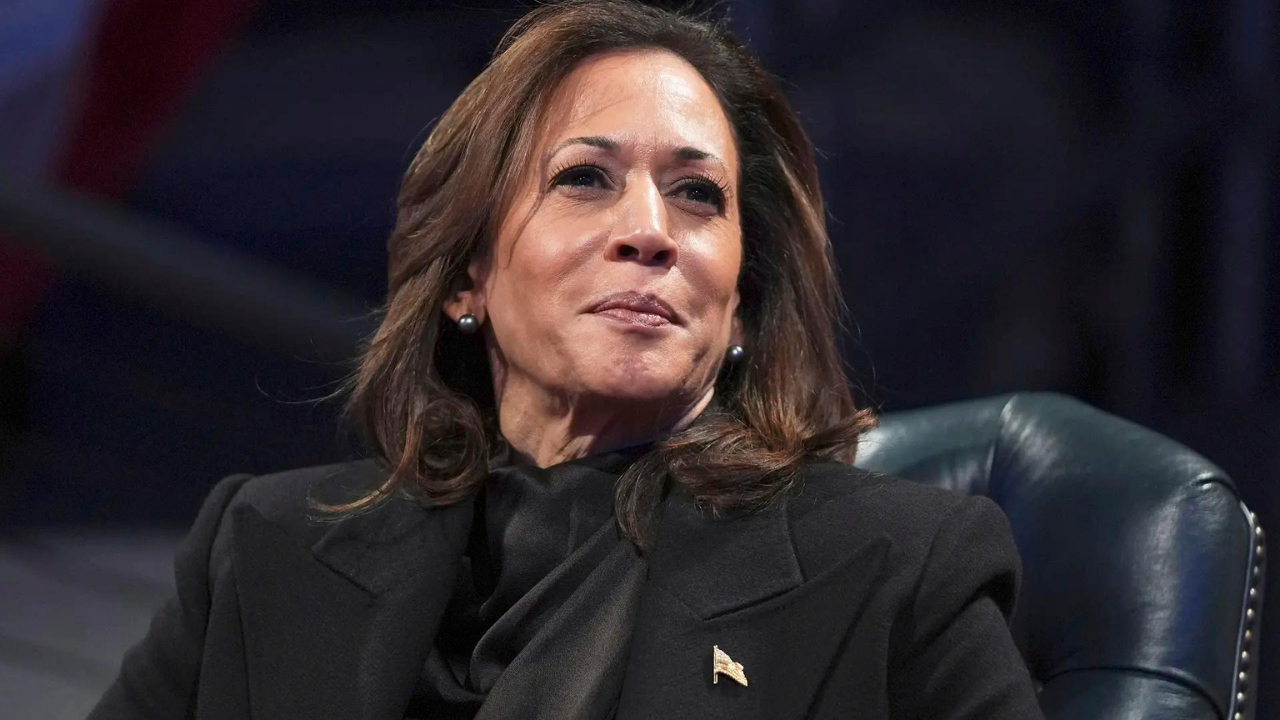
The Democratic Party did not just lose an election; it lost its baseline connection to reality. When the Democratic National Committee finally relented and dropped its long-delayed, 192-page post-election autopsy of the 2024 disaster, it offered something rare in modern politics. It showed a party hierarchy so consumed by internal panic that the committee chair, Ken Martin, practically disowned his own document upon release, publicly labeling it a subpar product that failed to meet basic standards.
The report, drafted by veteran strategist Paul Rivera, attempts to diagnose why Kamala Harris burned through $1 billion in 107 days only to surrender the White House, the Senate, and the House to Donald Trump. It points to a failure to engage rural America, an overreliance on identity politics, and an inability to counter the conservative media ecosystem.
Yet the institutional focus on messaging, branding, and structural timelines misses the deeper decay. The true collapse of the 2024 campaign was not born from a shortened 107-day calendar or an unoptimized advertising budget. It was the predictable consequence of a managerial political class that treated economic anxiety as an informational misunderstanding and local cultural alignment as an afterthought. By treating politics as a series of marketing adjustments rather than an exercise in raw economic utility, the party leadership decoupled itself from the material realities of the American electorate.
The Institutional Evasion of the Primary Disaster
The most glaring flaw of the official party self-examination is what it chooses to ignore. The document glides past the fundamental operational failure of the entire election cycle. The decision by Joe Biden to seek reelection despite overwhelming evidence of physical and cognitive decline, combined with an establishment apparatus that shielded him from a competitive primary, effectively sealed the party's fate long before the summer convention.
By bypassing a traditional primary process, the party elite eliminated the natural selection mechanism of American politics. Primaries are designed to test a candidate’s messaging, stress-test their infrastructure, and force them to refine their policy positions under pressure. Instead, Harris was handed the nomination via intra-administration succession. She was forced to execute a national campaign without the benefit of a mandates-driven agenda or an independent political identity.
This structural shortcut left the campaign trapped in a fatal ideological bind. Harris could not effectively separate herself from an unpopular sitting administration without implicitly criticizing her own record. When asked on national television what she would have done differently than Biden over the preceding four years, her response—that nothing came to mind—became the defining epitaph of her candidacy. The campaign attempted to run as both the continuation of the current regime and the vanguard of generational change. It was a mathematical impossibility that voters immediately rejected.
The Material Reality of the Working Class Collapse
While party operatives fixate on the rise of conservative podcasts and fragmented digital ecosystems, the electoral shift was driven by simple, unyielding economics. For three years, the Biden-Harris administration insisted that macroeconomic indicators—such as gross domestic product growth and job creation statistics—proved the success of their policy agenda. They expected voters to vote based on spreadsheets.
The electorate, however, voted based on their bank accounts. The cumulative impact of inflation had raised the baseline cost of living to a level that working-class families could no longer sustain. By the time the election arrived, grocery prices, housing costs, and utility bills had permanently rebased upward. When the campaign attempted to market the benefits of legislative victories like the Inflation Reduction Act, it fell flat. A significant majority of voters felt the legislation had zero positive impact on their daily lives.
VOTER PERCEPTION OF THE NATIONAL ECONOMY (2024 EXIT POLLS)
---------------------------------------------------------
Rating of Economy: "Not so Good" or "Poor" | Approx. 70% of Electorate
Support for Kamala Harris within this Group| 28%
The data underscores a total breakdown in persuasion. The party’s historic base—non-college-educated workers, Latino men, and younger voters—shifted toward the opposition not because they were misled by digital disinformation, but because they felt abandoned by the party that traditionally claimed to represent labor. The administration chose to campaign on the abstract preservation of democratic norms while the electorate was focused on the concrete reality of declining purchasing power.
The Cultural Disconnect and the New Media Vacuum
The party's organizational collapse was further accelerated by an outdated media strategy that treated legacy television networks as the primary battlefield. The official autopsy notes that the campaign routinely went dark between election cycles, abandoning working-class regions until the final months before Nov. 5. This strategy ignored a fundamental transformation in how Americans consume information.
While the Democratic apparatus relied on high-cost, short-term television ad buys, their opponents spent years embedded in alternative media spaces, long-form audio platforms, and distributed online networks. This was not a temporary tactical advantage; it was a permanent structural shift. By the time the Harris campaign attempted to pivot into these alternative digital spaces in the final weeks of the race, the political narrative had already been set.
Furthermore, the party's elite donor base increasingly dictated its cultural signaling. This influence alienated suburban and rural moderates who viewed the party as overly technocratic and detached from common-sense realities. The focus on micro-targeted demographic groups obscured a broader truth. Voters do not want to be viewed through the lens of identity categories; they want an economy that works and a government that functions predictably.
The 2028 Mirage and the Risk of Doing Nothing
The current danger facing the party heading into the 2028 cycle is the comforting belief that their problems are merely administrative. Many establishment figures argue that with a traditional primary timeline, a fresh face, and a more aggressive media apparatus, the party can naturally reclaim its lost ground. This is an illusion.
The shift among working-class voters across the American South and Middle America is structural, not cyclical. The opposition campaign did not win by deploying superior technology; it won by recognizing that millions of citizens felt invisible within the modern globalized economy championed by metropolitan elites.
If the party intends to build a viable path forward, it cannot rely on a 192-page document that its own leadership refuses to endorse. It requires a fundamental reassessment of its core economic platform. The party must choose between serving as a managerial custodian for affluent, highly educated metropolitan voters or returning to its roots as a populist advocate for material security, industrial revitalization, and working-class stability. Until that fundamental choice is made, any talk of a strategic roadmap is just paperwork.
To better understand the internal party mechanics and communication failures that shaped the post-2024 landscape, see this Analysis of the DNC Autopsy Report, which breaks down the specific organizational defects and the ongoing debate surrounding the party's official self-assessment.