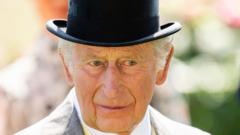
The ink on a tax return is remarkably dry, but the calculation behind it is purely visceral. On a quiet June afternoon, Buckingham Palace released a single line of data that flipped a centuries-old script on its head. King Charles III paid £12.9 million in income and capital gains tax for the 2024-25 fiscal year. Combined with the previous year, his voluntary contribution to the British Treasury totals £24.6 million over two years, vaulting him comfortably into the ranks of the nation’s top 100 taxpayers.
Monarchs are historically engineered to collect wealth, not redistribute it to the state. By laying bare these numbers, the King did something no modern British sovereign has ever done. He put a price tag on his privacy.
But look closer at the ledger, and the numbers begin to blur.
To understand why a man who is legally exempt from every tax law in the country would hand over eight figures to the Inland Revenue, you have to look past the spreadsheets. Consider a hypothetical British citizen—let's call her Sarah—working as a nurse in Manchester. Sarah looks at her monthly payslip and sees her income tax deducted automatically. It is a mandatory, legally binding transaction that funds her local roads and the hospital she works in. She has no choice.
For the man sitting in Clarence House, the transaction is entirely theatrical. It is an act of political survival masquerading as civic duty.
The Fire That Changed the Math
The modern history of royal taxation didn't begin with a sudden burst of transparency. It began with smoke. In 1992, a catastrophic fire ripped through Windsor Castle, destroying irreplaceable historic rooms. When the government initially suggested that the British public should foot the multi-million-pound restoration bill, the public mood curdled instantly. Amid a roaring recession, the idea of taxpayers funding the repairs of a billionaire family’s private fortress sparked a fierce backlash.
Sensing the shifting winds, Queen Elizabeth II made a tactical retreat. In 1993, she and her eldest son volunteered to pay income tax on their private revenues.
Charles has merely continued that tradition, but with a crucial upgrade: he added hard data to the promise. The Palace frames this as a grand push for modernization, a direct effort to clear the fog that has historically shrouded royal finances. Yet, the timing tells a different story. The monarchy has spent months weathering a storm of public skepticism, fueled by the financial fallout and disgrace surrounding Andrew Mountbatten-Windsor. Simultaneously, the Sovereign Grant—the taxpayer-funded mechanism that covers official royal duties—is ballooning to £132.1 million to cover a massive, £369 million renovation of Buckingham Palace.
The £12.9 million tax bill is a brilliant piece of optical engineering. It creates the illusion of parity between the palace and the high street. Look, the headline shouts, the King is just like any other high-earning citizen.
But the real problem lies elsewhere. The number is massive, but the context is completely missing.
What the Ledger Fails to Show
True transparency requires both sides of the equation: the tax paid, and the exact income it was levied against. The Palace eagerly provided the former while completely withholding the latter.
We know the King received a massive £25.2 million surplus from the Duchy of Lancaster—a sprawling, 44,748-acre portfolio of commercial property, ancient farmland, and urban tech hubs held in trust for the reigning sovereign. We know he owns vast private estates like Sandringham and Balmoral, which generate personal wealth through tourism, forestry, and investments. What we do not know is how much those entities actually brought in, or how many millions were deducted as tax-exempt "official expenses" before the final tax bill was calculated.
An independent audit previously estimated the King's personal fortune at roughly £1.8 billion. To the average observer, a £12.9 million tax bill looks like a staggering sum. To a billionaire with structural exemptions, it might just be a very reasonable cost of doing business.
Consider what happens next within the family hierarchy. Prince William received nearly £23 million from his own hereditary estate, the Duchy of Cornwall. The Palace notes that the Prince of Wales also voluntarily pays the highest rate of income tax on his surplus. But his exact bill? Hidden. The transparency policy apparently stops at the monarch’s pen.
This selective openness extends to other corners of the royal estate. While ordinary British citizens must make their wills matters of public record, the wills of thirty-three Windsor family members have been legally sealed in secrecy since 1911. Millions of pounds worth of jewels, racehorses, and historic paintings gifted to the family over decades remain in a gray area—unclear whether they belong to the British state or the private portfolios of the individuals wearing them.
The Cost of Staying Put
Even the King’s living arrangements reflect this delicate dance between public expectation and private luxury. Concurrently with the tax announcement, the Palace confirmed that King Charles and Queen Camilla will not move into Buckingham Palace when its decade-long, taxpayer-funded renovation concludes. Instead, they will remain at Clarence House, claiming the move allows for "greater public access" to the historic palace.
It is a comfortable compromise. The public pays hundreds of millions to restore a historic monument, while the monarch pays a voluntary tax bill from a private fortune that remains entirely shielded from inheritance tax.
When an ordinary family passes down a home or an investment portfolio, the state takes a massive bite through inheritance laws. When the Crown passes from monarch to monarch, the wealth moves intact, untouched by the fiscal realities that govern the rest of the kingdom. This unique exemption ensures that the core of the royal fortune remains structurally immortal.
A tax return is designed to be a definitive statement of financial accountability. But in the hands of a sovereign, it becomes an instrument of narrative control. By revealing the number on the check while hiding the balance in the account, the Monarchy has given the public just enough data to look away from the structural inequality that keeps the institution alive.
The £12.9 million was paid in full, and the receipt was proudly displayed to the world. But the real cost of the monarchy remains a secret kept safely behind palace gates.