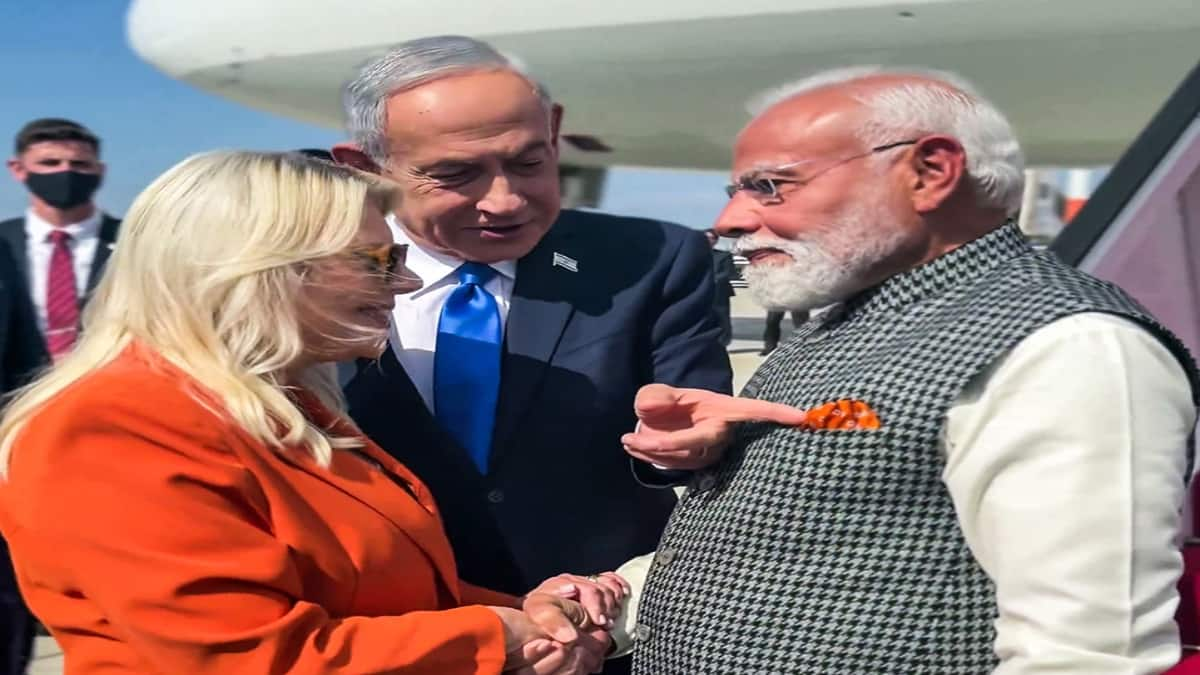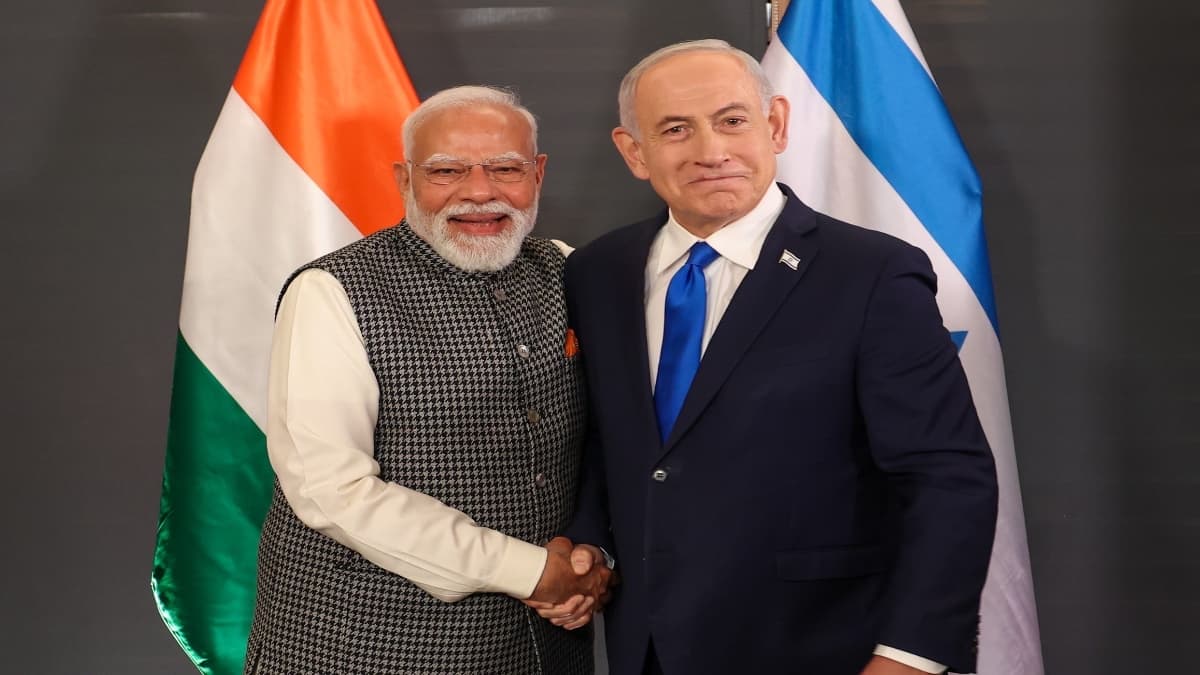
The sight of Narendra Modi and Benjamin Netanyahu hugging on a tarmac isn't just a photo op for the evening news. It’s a signal that the geopolitical map of the Middle East and South Asia is being redrawn in real-time. When Modi stood before the Knesset on February 25, 2026, he wasn't there as a polite guest. He was there as the leader of a 1.4 billion-person powerhouse reaffirming a "Special Strategic Partnership for Peace, Innovation, and Prosperity."
If you think this is just about selling weapons or buying software, you're missing the bigger picture. This relationship has shifted from a "closet romance" of the 1990s into a full-blown public alliance that ignores traditional diplomatic taboos.
The end of the balancing act
For decades, India treated Israel like a secret it didn't want its neighbors to know about. New Delhi would buy Israeli defense tech while publicly keeping its distance to avoid upsetting Arab partners or its own domestic constituencies. Those days are over.
Modi’s 2026 visit—his second since the 2017 icebreaker—proves that India has mastered the art of "de-hyphenation." It can support a Gaza peace plan and maintain ties with Tehran while simultaneously calling Israel an "iron wall against barbarism." In the Knesset, Modi didn't mince words. He stated that India stands with Israel "firmly, with full conviction in this moment and beyond." That’s a massive departure from the cautious, bureaucratic language of the past.
Netanyahu, ever the showman, went even further. He called Modi "more than a friend, a brother." He even joked about the "Modi hug" becoming a global phenomenon. But beneath the "bromance" rhetoric lies a hard-nosed reality: both countries feel surrounded by "radical axes" and see each other as the ultimate insurance policy.
Why this matters for 2026
- Security synergy: India is already the largest buyer of Israeli arms. We aren't just talking about rifles. We’re talking about joint development of ballistic missile defense, laser platforms, and high-end drones.
- The technology bridge: They’re moving beyond simple buyer-seller dynamics. The focus now is on AI, semiconductors, and quantum computing. It’s about merging Israel’s "startup nation" DNA with India’s massive scale.
- Food and water: 43 Centres of Excellence are already running in India. They’ve trained over half a million farmers in precision irrigation. In a world facing climate collapse, this is the tech that actually keeps people fed.
Breaking the Jihadist axis
One of the most striking moments of the Knesset address was the shared rhetoric on terrorism. Modi recalled the 26/11 Mumbai attacks, linking India’s scars to Israel’s experience on October 7. By framing the struggle as a unified fight against "extremist Islam," both leaders are signaling a shift toward a more ideological alliance.
Netanyahu thanked Modi for not "flinching or wavering." It’s a clear jab at other Western nations that have been more critical of Israel’s recent military campaigns. For Israel, India represents a massive, democratic ally that doesn't lecture them on internal security. For India, Israel is a partner that provides the "cutting-edge" (excuse the term, let's say "sharpest") tech without the political strings often attached by Washington.
The corridor that changes everything
Don't ignore the mention of the India-Middle East-Europe Economic Corridor (IMEC). This isn't just a railway project. It’s a direct challenge to China’s Belt and Road Initiative. By linking India to Europe via the UAE, Saudi Arabia, and Israel, New Delhi is carving out a trade route that bypasses hostile territory and cements its influence in the Mediterranean.
The two countries are also pushing for a Free Trade Agreement (FTA). While trade reached nearly $4 billion in 2024, both sides know that's peanuts compared to the potential. An FTA would likely see an explosion in fintech and green energy collaboration.
Cultural ties and the "Hodu" connection
Modi’s speech wasn't all about missiles and microchips. He reached back 2,000 years, citing the Book of Esther’s reference to India as "Hodu." He pointed out that India is one of the few places on earth where Jews lived for centuries without state-sponsored persecution.
This isn't just fluff. It’s a way to build a "civilizational" narrative. When you frame a partnership as a 2,000-year-old friendship, it becomes much harder for future governments to dismantle it. It moves the relationship from the hands of diplomats into the hearts of the public.
Netanyahu even shared a personal anecdote about his first date with his wife, Sara, being at an Indian restaurant in Tel Aviv. It’s these small, humanizing details that make the alliance feel lived-in rather than manufactured in a committee room.
What you should watch next
The rhetoric is great, but the proof is in the paperwork. Keep an eye on the "Special Strategic Partnership" milestones over the next twelve months. Specifically, look for the rollout of the remaining 57 Centres of Excellence for agriculture to hit that 100-center goal.
Also, watch the progress of the Bilateral Investment Treaty. If the FTA gets signed by the end of 2026, expect a surge in Israeli tech firms setting up shop in Bangalore and Hyderabad. The "iron alliance" is no longer a prediction—it's the new status quo.
You should start looking at how these bilateral financial linkages and Digital Public Infrastructure projects will impact cross-border investments. If you're in the tech or defense sector, the door to Israel-India collaboration has never been wider. Follow the joint R&D fund updates to see where the next wave of AI-driven medical diagnostics or cybersecurity innovations will emerge.