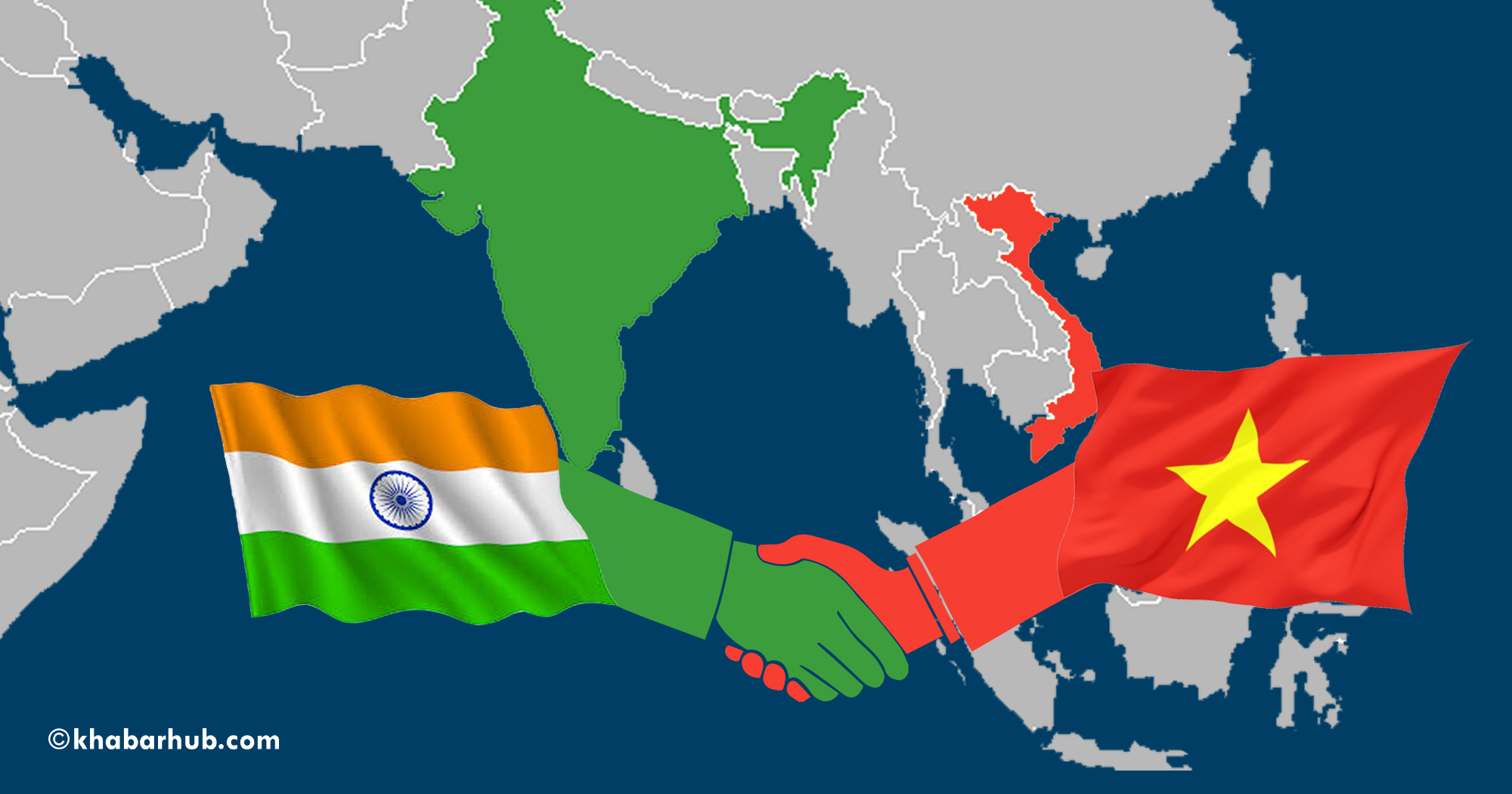
India and Vietnam aren't just playing nice for the cameras anymore. When Prime Minister Narendra Modi and Vietnamese Prime Minister Pham Minh Chinh shook hands on a $25 billion trade target for 2030, they weren't just picking a random figure out of the air. This is a cold, calculated move to rewire how goods move across Asia. If you've been watching the "China Plus One" strategy play out, this is the main event.
For years, Vietnam was seen as a competitor to India for manufacturing dominance. That's a tired, old-school way of looking at it. Today, the two nations are realizing they're much stronger as a duo. The recent state visit in New Delhi proved that the focus has shifted from simple commodity exchange to building a wall against global supply chain shocks.
Why 25 Billion Dollars is Actually a Conservative Goal
Critics might say jumping from roughly $15 billion to $25 billion in a few years is a stretch. It isn't. In fact, given the current trajectory of electronics and energy cooperation, we might see them blow past that number before 2030 even hits.
The math makes sense. India is hungry for Vietnam’s high-tech components and agricultural prowess. Meanwhile, Vietnam needs India’s massive market for its finished goods and relies on Indian expertise in pharmaceuticals and digital infrastructure. It’s a reciprocal loop. The trade isn't just about tea and textiles anymore. We're talking about semiconductors, green hydrogen, and advanced defense tech.
I’ve seen plenty of these bilateral agreements fizzle out. They usually fail because they’re too broad. This one feels different. It’s grounded in specific sectors like the "Action Plan for the Comprehensive Strategic Partnership" for 2024-2028. That's a fancy way of saying they finally have a roadmap with actual milestones, not just vague promises.
Solving the Supply Chain Headache
Everyone talks about "resilience" like it’s some magical shield. It’s not. Resilience is having a backup plan when a port shuts down or a geopolitical spat cuts off a raw material source. PM Modi’s emphasis on "supply chain resilience" isn't just rhetoric—it’s a survival tactic.
Vietnam has mastered the art of light manufacturing and electronics assembly. India is scaling up its production-linked incentive (PLI) schemes to become a global hub for everything from iPhones to jet engines. By linking these two engines, they create a corridor that bypasses traditional bottlenecks.
Think about the maritime geography. The South China Sea is a powderkeg. India’s presence in the region, bolstered by defense exports like the BrahMos missiles to Vietnam, ensures that trade routes stay open. You can't have trade without security. It's that simple.
Digital Public Infrastructure is the Secret Sauce
One thing the mainstream media often ignores is the "Digital Stack." India is exporting its digital success stories. We're talking about UPI and Aadhaar-style systems. During the talks, there was a clear push to integrate digital payment systems between the two countries.
If a small business owner in Hanoi can get paid instantly by a distributor in Chennai without jumping through the hoops of Western banking intermediaries, trade velocity skyrockets. That’s how you hit $25 billion. You don’t do it by shipping more crates of rice. You do it by lowering the friction of doing business.
Vietnam is already a digital-first economy in many ways. Their youth are tech-savvy and their startups are aggressive. India’s software depth provides the perfect scaffolding for Vietnam’s digital growth. It’s a match that makes too much sense to ignore.
The Defense Angle Nobody Wants to Trigger
Let’s be real. You can’t talk about India and Vietnam without talking about the elephant in the room. China. While neither leader mentioned Beijing by name in every sentence, the subtext was loud and clear.
The $300 million credit line for Vietnam's maritime security is a massive deal. It’s not just a loan; it’s a statement. India is helping Vietnam modernize its navy and coast guard. This ensures that the waters connecting the two nations remain navigable.
When you strengthen a partner's defense, you’re protecting your own investments. India has invested billions in Vietnamese oil and gas blocks. Those rigs need protection. The "Comprehensive Strategic Partnership" is as much about metal and gunpowder as it is about dollars and cents.
What Businesses Should Do Right Now
If you’re sitting on the sidelines, you’re losing money. The window to get in on the ground floor of this bilateral surge is closing.
- Audit your sourcing. Look at your dependencies on single-source markets. Vietnam offers a viable alternative with a workforce that is getting more skilled by the day.
- Explore the North-South Transport Corridor. Logistics is the biggest hurdle. New shipping routes and direct flights between major Indian cities and Vietnamese hubs like Ho Chi Minh City are opening up. Use them.
- Leverage the New Credit Lines. The Indian government is backing these ventures. If you’re in the defense, tech, or energy sectors, there’s capital available for joint ventures.
- Watch the Farm Sector. Vietnam is a powerhouse in coffee, rubber, and pepper. India's food processing industry is booming. The overlap here is a goldmine for agritech companies.
Don't wait for the 2030 headlines to tell you the target was reached. The infrastructure for that $25 billion is being built right now. You either help build it or you pay a premium to use it later. The choice is yours.
The shift is happening. India and Vietnam are no longer just "developing nations" trying to catch up. They are the ones setting the pace. If you want to keep your supply chain from snapping, keep your eyes on this partnership.