India wants a piece of Myanmar's rare earth wealth. On paper, it sounds like a brilliant strategy. China currently dominates the global supply of heavy rare earth elements, which are vital for electric vehicle motors, wind turbines, and precision military hardware. Myanmar happens to sit on some of the richest deposits of heavy rare earths on Earth, particularly dysprosium and terbium. So when Indian diplomats and mining executives gather with Myanmar officials to talk about deep cooperation, it looks like a major strategic shift.
Don't celebrate just yet.
Behind the polite diplomatic statements lies a messy reality that headline writers often skip over. The minerals India needs aren't sitting under the control of the government in Naypyidaw. They sit in conflict zones in northern Myanmar, controlled by ethnic armed groups. Worse, almost every ton of raw ore mined there currently gets shipped straight across the border to China for processing.
If New Delhi wants to break its dependence on Chinese critical minerals by sourcing them from Myanmar, it has to overcome a massive web of civil war, logistical hurdles, and a total lack of local processing infrastructure.
The High Stakes Behind Heavy Rare Earths
Most discussions about rare earths get bogged down in technical jargon. Here is what actually matters.
Not all rare earths are equal. Light rare earths, like cerium and lanthanum, are fairly common across the globe. Heavy rare earths, like dysprosium and terbium, are rare, expensive, and exceptionally difficult to replace. They are what make super-magnets work under high temperatures. Without them, you don't get high-performance electric vehicles, modern wind turbine generators, or guided missile systems.
Right now, Myanmar accounts for nearly half of the world's heavy rare earth production. For years, Chinese companies simply crossed the border into Myanmar's Kachin State, set up leaching pits, extracted the raw ore, and trucked it back into Yunnan Province for refining.
India imports over 90 percent of its processed rare earth requirements. Much of that comes directly or indirectly from Chinese supply chains. That is a glaring vulnerability for a country trying to turn itself into a global clean energy and defense manufacturing hub.
India's Critical Minerals Mission aims to change this setup. With billions of rupees allocated for mineral exploration and acquisition, India wants to secure independent sources. Naturally, looking right next door at Myanmar makes geographical sense.
What Happened at the Mandalay Mining Forum
At the mining forum in Mandalay, Indian Ambassador Abhay Thakur made it clear that engagement between the two nations on critical minerals has picked up pace. Indian state-owned entities like IREL India Ltd and NTPC Mining, alongside private players like Himadri Speciality Chemical, PrNd Metal & Magnets, and Jai Puri Holdings, have shown active interest.
These discussions aren't happening in a vacuum. Earlier this summer, Myanmar junta leader Min Aung Hlaing met with Indian Prime Minister Narendra Modi. Indian Foreign Secretary Vikram Misri acknowledged that critical minerals and rare earths were right at the top of the bilateral agenda.
India wants direct access to raw minerals to supply its expanding domestic industry. Myanmar, isolated by international sanctions and facing economic strain, wants foreign investment, technical assistance, and infrastructure development.
On the surface, it looks like a win-win partnership. But looking at a map reveals why turning these high-level conversations into actual shipments of refined minerals is going to be a grueling task.
The Mining Is Outside Junta Control
Here is the biggest issue that diplomat speeches don't address. The actual mines in Kachin State aren't controlled by the junta in Naypyidaw.
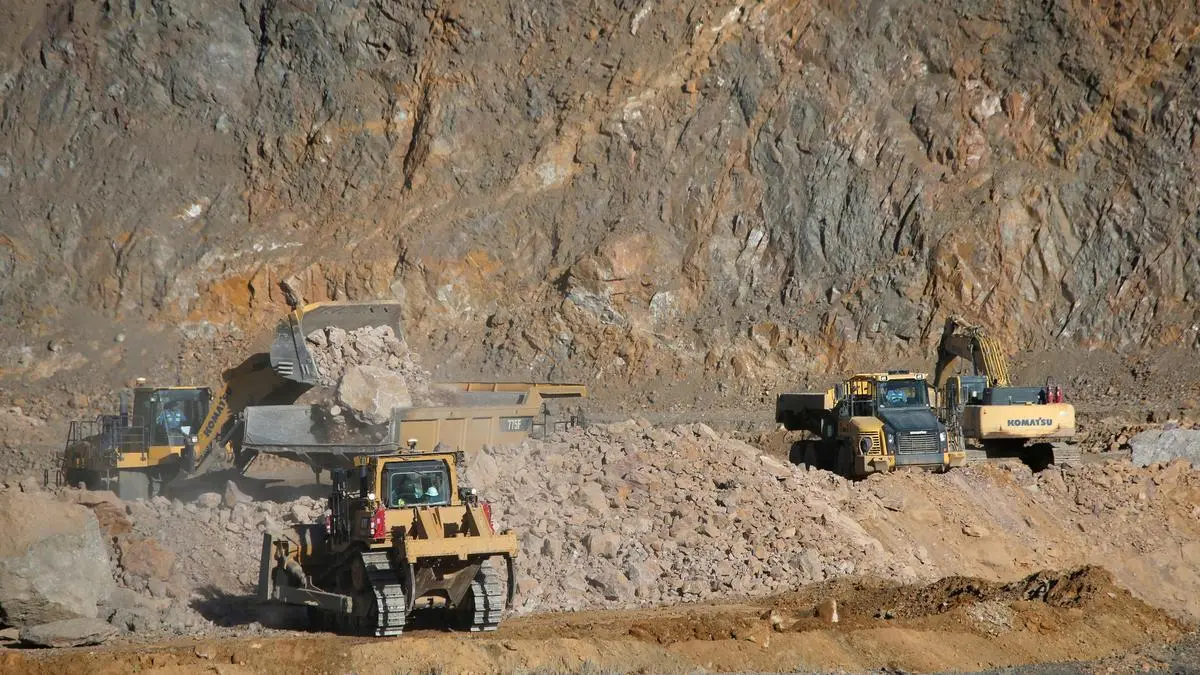
Following intense fighting over the past two years, the Kachin Independence Army and affiliated groups took control of primary rare earth mining hubs like Chipwi and Pangwa. The number of active leaching pits in these northern mountains has skyrocketed into the thousands.
That means any deal negotiated purely between New Delhi and Naypyidaw doesn't automatically grant safe access to the mines. The junta can sign agreements, grant licenses, and issue statements, but they don't control the ground in Chipwi or Pangwa.
Indian agencies have recognized this gap. Reports show Indian officials have quietly explored sending mineral samples to domestic laboratories for verification while keeping lines of communication open across various regional stakeholders. But operating in an active conflict zone where control of territory changes rapidly is a completely different ballgame than signing formal memorandums in capital cities.
China Still Controls the Refineries
Even if Indian firms manage to secure raw ore directly from mines in northern Myanmar, they hit another roadblock. Where do you process it?
Mining rare earths is only the first step. The real technical power lies in refining—separating the individual elements from toxic chemical sludge and turning them into high-purity metals and permanent magnets.
China controls over 90 percent of global refining capacity for heavy rare earths. Historically, raw ore from Kachin went straight to Yunnan because China had the processing facilities right across the border. When border gates close or fighting breaks out, the trade pauses, but the fundamental supply chain always flows north into China.
India has IREL, which handles mineral sands and basic processing, but domestic commercial capacity for refining heavy rare earths into magnet-grade metals remains very small. Buying raw dirt from Myanmar without having the facilities in India to turn it into dysprosium metal doesn't break dependence on Beijing. It just moves the bottleneck further down the line.
To make this strategy work, India needs to build its own processing facilities simultaneously. Without those refineries operating at scale, raw ore from Myanmar will still end up having to be shipped to Chinese processors.
Transit Routes and Transit Risks
Logistics pose another massive headache.
Transporting heavy tonnage of raw ore from landlocked northern Myanmar across rugged mountains and active war zones to Indian ports requires functioning infrastructure.
Projects like the Kaladan Multi-Modal Transit Transport Project and the India-Myanmar-Thailand Highway have suffered years of delays, security disruptions, and damage due to ongoing civil conflict in Myanmar's western states. Rebuilding and securing these trade corridors through regions prone to artillery fire and drone attacks is a huge undertaking.
If trucks carrying raw materials can't reach Indian borders or ports safely, the entire supply chain collapses before it even starts.
What India Must Do Next
India's strategy to secure rare earths from Myanmar isn't wrong, but it requires a realistic approach. Polite diplomatic handshakes won't overcome complex ground realities.
If New Delhi wants to make this partnership work, it needs to execute a clear plan:
- Accelerate Domestic Refining Capacity: The Ministry of Mines must fast-track funding for domestic heavy rare earth refining facilities. Raw ore is useless without processing plants capable of making high-purity NdFeB magnets.
- Build Modular Processing Hubs: Partnering with regional allies through mechanisms like the Quad Critical Minerals Initiative can help fund modular processing units closer to secure transport routes.
- Diversify Sourcing Partnerships: While Myanmar offers geographical proximity, India must continue expanding exploration agreements in Australia, South America, and domestic coastal sand deposits to balance the risk.
- Focus on Practical Infrastructure Security: Securing transit corridors and border trade points must take priority over symbolic bilateral announcements.
Securing critical mineral supply chains is a long game. Myanmar holds immense resource wealth, but turning that strategic aspiration into an operational supply chain will take years of domestic capacity building, heavy infrastructure investment, and sharp ground-level diplomacy.