Indonesia just dropped a financial bomb on the global commodities market. President Prabowo Subianto stood before parliament on May 20, 2026, and announced a policy so aggressive that trade analysts are openly calling it a hostile takeover of the country's own export economy.
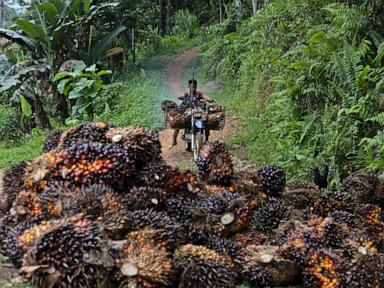
Starting June 1, 2026, private companies producing coal, palm oil, and ferroalloys will lose the right to sell directly to foreign buyers. Instead, a brand-new state-owned entity called PT Danantara Sumberdaya Indonesia will step in as the mandatory middleman. By September 1, 2026, this state body will hold absolute end-to-end control over contract negotiations, shipping documentation, and pricing.
If you run a business relying on Indonesian raw materials, the old rulebook is officially dead. This isn't just a minor regulatory tweak. It's a massive structural shift toward a state-led economy that will disrupt supply chains from Beijing to Washington.
The Massive Scale Of The Trade Gating
To understand why this is sending shockwaves through international boards, look at what Indonesia actually controls. The archipelago is the world’s top exporter of thermal coal and palm oil. Millions of tons of cargo move through its ports monthly, feeding power grids and manufacturing plants worldwide.
Prabowo claims the state had to act because of rampant, long-term corruption. He told lawmakers that between 1991 and 2024, Indonesia lost an astronomical $908 billion due to exporters underreporting sales, using transfer pricing tricks, and hiding export proceeds offshore.
The government wants that cash back. Dwindling state reserves, worsened by recent global energy shocks from the conflict in Iran, have left Jakarta desperate for revenue. By inserting a state gatekeeper, the administration aims to force every single dollar of trade revenue through national banks, requiring exporters to hold foreign currency proceeds inside the country for at least a year.
Squeezing Out Chinese Dominance
The biggest casualty in this policy shift is undeniably China. For the past decade, Chinese firms poured billions into Indonesian mining and refining, particularly dominating the critical mineral and processing sectors. They built a highly efficient pipeline to feed China’s massive renewable energy, electric vehicle, and battery industries.
That pipeline just hit a massive wall of state bureaucracy.
Just days before the announcement, the China Chamber of Commerce in Indonesia sent a blistering five-page protest letter to the government. The letter explicitly complained about an unstable business climate, over-enforcement, and outright extortion by local authorities. Prabowo ignored them completely.
Every single supply contract currently held by Chinese buyers is now subject to government revision. Bhima Yudhistira, an economist with the Jakarta-based Center of Economic and Law Studies (CELIOS), pointed out that this move deliberately targets the heavy concentration of Chinese capital. By breaking up China’s direct grip on these resources, Jakarta hopes to force a diversification of its investor base.
The Emerging Geopolitical Tug Of War
- The United States: Washington sees a massive opening. As Indonesia actively tries to decrease its reliance on Beijing, American capital has a clear signal to step in, especially for resources tied to clean energy supply chains.
- The European Union: European buyers, already navigating strict environmental regulations on palm oil, now face an extra layer of state-controlled pricing that could drive up costs.
- Regional Neighbors: Major Asian buyers like India, Japan, South Korea, and Vietnam are left scrambling to figure out if their long-term supply agreements will even be honored come September.
Real Risks For Private Operators
The timeline for this transition is dangerously short. Private companies have a mere three-month window—from June to August—to hand over their entire network of import and export data to the new state entity.
For a business operating on thin margins or relying on just-in-time shipping schedules, this creates three distinct headaches.
First, expect massive bureaucratic delays. Transitioning thousands of complex international trade contracts to a brand-new, untested state enterprise in less than 120 days is a logistical nightmare. Decisions that used to take hours during direct corporate negotiations will now likely sit on government desks for weeks.
Second, say goodbye to pricing freedom. Private producers will no longer discover prices naturally through the market. PT Danantara Sumberdaya Indonesia wants to artificially lift prices to maximize tax revenue. If the government decides your product is too cheap, they can simply block the transaction.
Third, long-term contract sanctity is gone. If you signed a five-year supply deal in 2024, that contract doesn't mean much anymore. The state now has the legal authority to rewrite terms, change delivery schedules, or alter payment structures to suit its fiscal needs.
The Bigger Picture Of Prabowo Economic Model
This trade takeover isn't an isolated incident. It’s part of a deliberate blueprint to pivot Indonesia toward a highly centralized, top-down economic model.
We're seeing the state assert its authority across multiple sectors simultaneously. The government recently poured $4.24 billion into a centralized free school meals program. They also launched a massive $25 billion Red-White village cooperative initiative designed to manage rural finance directly from Jakarta.
Controlling the export gates is simply the most lucrative piece of this puzzle. The administration needs cash to fund these ambitious domestic projects, and tapping the country's natural resource wealth is the fastest way to get it.
Actionable Next Steps For Affected Businesses
If your supply chain or investment portfolio touches Indonesian commodities, sitting on your hands isn't an option. You need to protect your operations before the September deadline hits.
Audit every active contract immediately. Identify which of your agreements rely on coal, palm oil, or iron alloys sourced from Indonesia. Review the force majeure and government intervention clauses to understand your legal exposure when the state takes over the transaction interface.
Open immediate lines of communication with your local Indonesian partners. They are the ones who have to submit transaction data to the state wealth fund between June and August. You need to know exactly how prepared they are for the data migration to avoid sudden shipping halts.
Diversify your sourcing origins right now. Even if the transition goes smoothly, pricing volatility and bureaucratic bottlenecks are guaranteed this autumn. Look for alternative suppliers in South America, Australia, or alternative Southeast Asian markets to serve as a buffer for the unavoidable disruptions ahead.