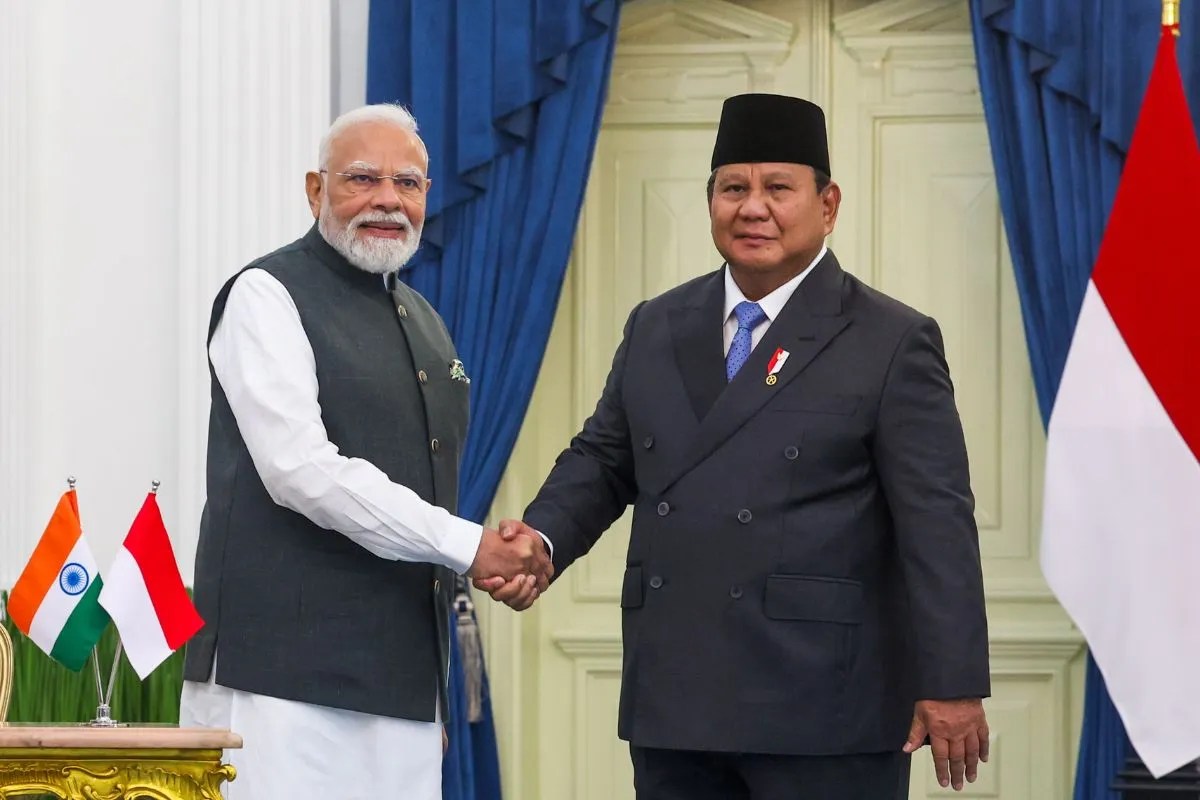
When Prime Minister Narendra Modi landed in Jakarta, the headlines naturally gravitated toward the grand state welcome, the high civilian honors, and the geopolitical posturing in the Indo-Pacific. But the real shake-up was happening behind closed doors in the defense procurement offices.
Indonesia officially signed deals to purchase India's indigenous Astra beyond-visual-range air-to-air missile alongside additional batteries of the BrahMos supersonic cruise missile. This makes Jakarta the very first export customer for the Astra. It is a massive validation for Indian defense manufacturing, and honestly, it catches many global arms exporters off guard.
For years, Southeast Asian nations looked toward Washington, Paris, or Moscow to secure their skies. Indonesia's decision to break that pattern and choose an Indian-made air-to-air missile reveals a major shift in how regional powers assess military hardware. They aren't just looking at spec sheets anymore. They want weapons that have faced actual combat conditions.
The Real Reason Behind Jakarta's Choice
Why would Indonesia buy a missile that, until now, only India operated? The answer lies in a major military engagement from last year that reshaped defense procurement strategies across Asia: Operation Sindoor.
When tensions flared and India launched Operation Sindoor to neutralize cross-border threats, the country didn't just rely on imported systems. The Indian military deployed its own home-grown tech under real combat pressure. The Astra missile performed exactly as advertised. It successfully intercepted supersonic aerial targets, locking down the skies and proving its reliability when the stakes were highest.
Military planners in Jakarta noticed. If you're a nation guarding vital, highly contested maritime choke points like the Malacca Strait, you can't rely on unproven tech or weapons with restrictive end-user agreements. Indonesia already operates Russian-made Sukhoi Su-30 fighter jets. Because India has spent years mastering the integration of the Astra missile onto its own Su-30 MKI fleet, Jakarta realized they could bypass years of expensive integration tests. They can plug the Astra straight into their existing fleet. It is a plug-and-play solution that saves millions.
Breaking Down the Astra Technical Edge
Let's look at what the Astra actually brings to the table. Developed by the Defence Research and Development Organisation (DRDO), the Astra Mk-1 is a radar-guided weapon built to strike enemy aircraft from long stand-off distances.
- The Range and Speed: The missile hits speeds of Mach 4.5 and comfortably engages targets at distances between 80 to 110 kilometers, reaching altitudes up to 20 kilometers.
- The Guidance System: It relies on inertial guidance with mid-course updates, switching over to active radar homing in the terminal phase. Essentially, once it locks on in those final seconds, the target has very little room to escape.
- The Electronic Warfare Edge: Modern air combat isn't just about speed; it's about burning through enemy jamming. The Astra was built from day one to operate in dense electronic countermeasures environments.
India is already working on advanced variants, including the Astra Mk-2 and an air-breathing Mk-3 using solid fuel ducted ramjet technology. Indonesia isn't just buying an isolated batch of missiles; they are plugging into an active, evolving technology pipeline.
Changing the Indo Pacific Power Dynamic
This deal isn't happening in a vacuum. Jakarta and New Delhi share growing anxieties about regional assertiveness in the Indo-Pacific. Indonesia's Aceh province sits a mere 150 kilometers away from India's southernmost territory at Indira Point. The commercial shipping lanes passing through these waters are vital to global trade, and keeping them stable requires serious muscle.
By supplying both the BrahMos and the Astra, India is directly helping Indonesia build a multi-layered denial strategy. The BrahMos keeps hostile naval vessels at bay, while the Astra ensures that Indonesian fighter jets can dominate the airspace above those waters.
Beyond the hardware, the two nations are linking their security frameworks tightly. Indonesia is stationing a liaison officer at India's Information Fusion Centre – Indian Ocean Region (IFC-IOR) in Gurugram to share maritime data in real time. They are also moving forward with plans to jointly develop the strategic Sabang Port, sitting right at the mouth of the Malacca Strait.
What This Exports Deal Means for New Delhi
For decades, India was known as one of the world's largest defense importers. Deals like this turn that old narrative on its head. When a foreign military buys your air-to-air missiles, it means they trust your engineering with the lives of their pilots.
The economic and strategic advantages of this purchase show that India can compete directly with Western and Russian alternatives on both performance and price. With the Philippines already deploying the BrahMos and now Indonesia locking in the Astra, the blueprint for India's defense export strategy is becoming clear.
If you are tracking regional defense trends, watch how quickly Jakarta integrates these systems into their Su-30 squadrons over the coming months. The success of this rollout will likely dictate whether other Southeast Asian neighbors, currently sitting on the fence, decide to place their own orders for India's battle-tested missile inventory.