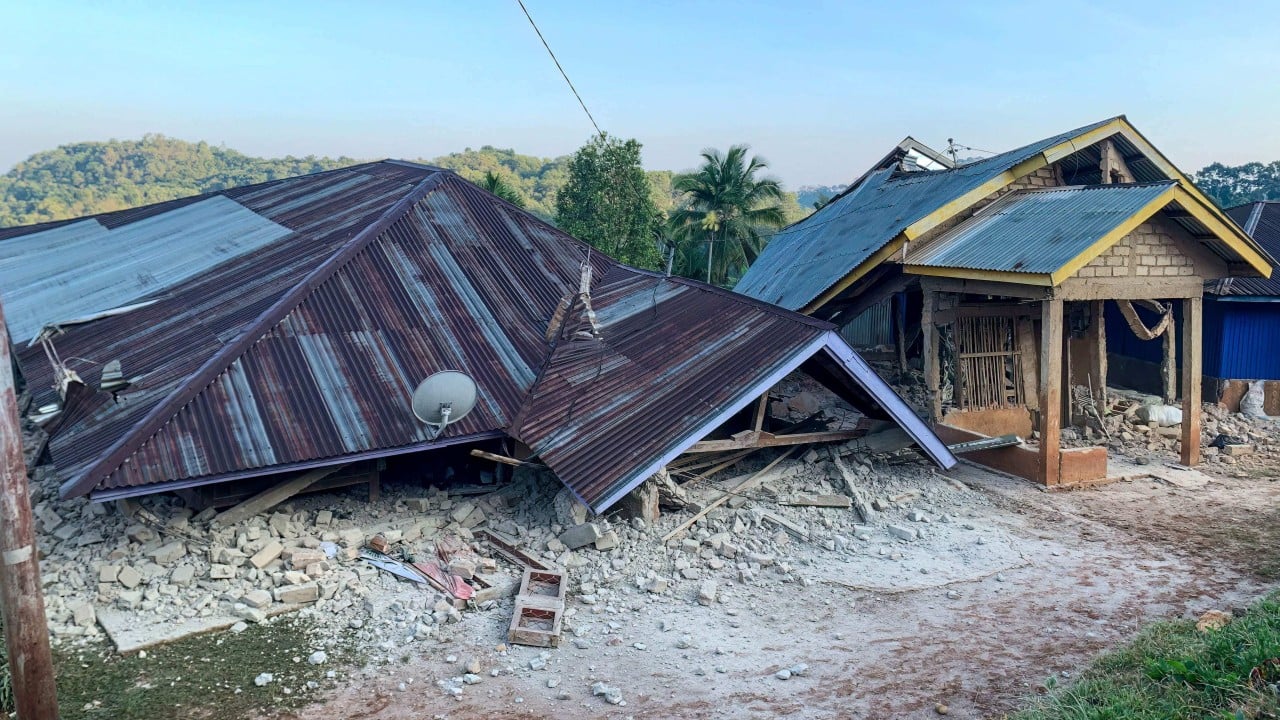
The earth doesn't warn you. It just shakes. One moment you're drinking morning coffee or putting shoes on the kids, and the next, the walls turn into weapons.
When an Indonesian earthquake strikes, standard news reports give you the statistics. They throw around Richter scales, epicenter coordinates, and preliminary death tolls like numbers on a spreadsheet. But they miss the raw reality. They miss the sudden panic of concrete ceilings giving way and the desperate scramble for open air. Also making headlines lately: Whispers on the Gulf and the Ghost Pilots of Doha.
Let's look at what actually happens when the ground rips apart. Survivors from recent tectonic violently active events across Indonesia share a common, terrifying narrative. Houses don't just shake. They collapse in seconds.
The Reality of Sudden Tectonic Chaos
Seismic activity in the Indonesian archipelago isn't an abstract geological concept. It's an everyday reality for millions living along the Sunda megathrust and the Pacific Ring of Fire. When a major quake hits, structural failure happens instantly. Further insights regarding the matter are detailed by The New York Times.
Survivors often recount the sound first. It's not a rumble. It sounds like a freight train barreling underneath your living room floor. Then comes the violent lateral jolt.
You can't stand up. Gravity stops working the way it's supposed to.
People caught inside residential buildings face an impossible math problem. You have roughly three to five seconds to react before roof tiles crash down and partition walls turn into rubble.
Why Traditional Buildings Fail
Most residential structures in rural and semi-urban Indonesian regions aren't engineered to withstand high-magnitude seismic forces. Unreinforced masonry crumbles under lateral loads. When the shaking starts, brick walls buckle outward, pulling wooden or concrete roof beams down with them.
Survivors frequently describe the terrifying moment a house collapses on them. They talk about pockets of air, dust blinding their eyes, and the absolute silence that follows the initial roar.
It's a stark reminder that modern seismic safety codes need enforcement, not just paperwork. Building retrofitting saves lives. Yet, millions of families live in homes built with cheap concrete blocks and zero structural framing.
When the ground moves, those houses turn into traps.
The Psychological Aftermath Nobody Talks About
Physical injuries heal eventually. Broken bones mend. Lacerations fade. But the mental toll of surviving a catastrophic structural collapse lingers for years.
Post-traumatic stress in disaster zones is widespread. Every minor tremor, every heavy truck rumbling down the street triggers an immediate physiological panic response. Survivors freeze. Their hearts race. They scan the ceiling for cracks.
Mental health support in post-disaster humanitarian aid packages is historically underfunded. Emergency responders bring clean water, tents, and medical supplies. They rarely bring enough trauma counselors to handle the psychological shockwaves rippling through displaced communities.
Practical Steps for Earthquake Preparedness
Knowing how to react during those critical first seconds saves lives. Stop waiting for official alerts. They often arrive after the shaking stops.
Drop, cover, and hold on. It sounds cliché, but it works. Get under a sturdy table or crouch against an interior wall away from glass windows and hanging heavy fixtures.
Do not run outside while the ground is moving. Falling roof tiles, collapsing facades, and flying glass pose a lethal hazard right outside your front door. Wait until the shaking completely stops before heading to an open assembly area.
Keep a basic emergency go-bag near your exit. Include a whistle, a flashlight, bottled water, essential medications, and copies of important identification documents wrapped in plastic.
Communities must organize local drills. Schools and neighborhood associations need to practice evacuation routes regularly. Muscle memory takes over when panic sets in. If you practice the response, you don't have to think when the floor starts rolling.
The stories coming out of Indonesia from disaster survivors aren't just news items to scroll past. They are urgent warnings. Pay attention to your local building integrity. Prepare your household today. The ground will move again. Make sure you're ready when it does.


