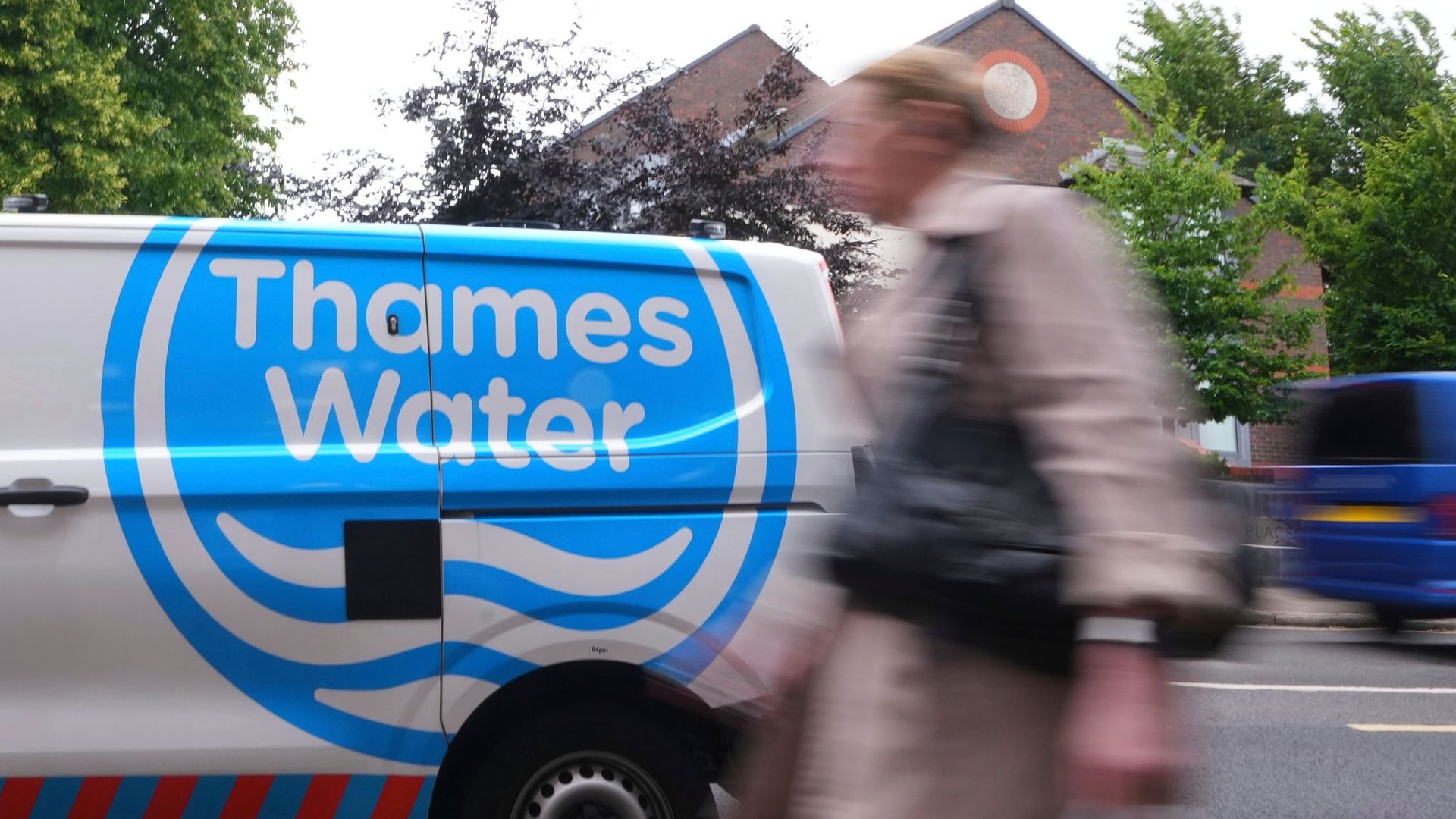
Ofwat has handed accounting giant Ernst & Young a £15 million contract to act as an independent monitor over Thames Water, installing a corporate babysitter inside Britain’s largest water utility as it teeters on the brink of financial collapse. The move places Big Four consultants directly into the daily operations of a company drowning in roughly £18 billion of debt, tasked with tracking turnaround plans, cash flow, and operational performance while regulators prepare for the real possibility of a state-backed special administration.
It is an extraordinary admission of regulatory failure. For more than three decades, the privatization of England’s water sector was sold to the public as a triumph of market discipline over state inefficiency. Instead, it produced a financial engineering experiment that stripped assets, loaded balance sheets with cheap debt, and left crumbling Victorian pipes leaking billions of liters of water every day. Now, the regulator that spent years waving through dividend payouts is paying an elite consultancy millions to watch the patient’s vital signs.
The Anatomy of a Regulatory Panic
To understand why Ofwat felt compelled to spend £15 million on outside eyes, you have to look at the sheer scale of the contagion risk. Thames Water serves roughly 16 million people across London and the Thames Valley. That is nearly a quarter of the population of England. You cannot simply let a utility of that size turn off the taps, nor can you allow its debt default to trigger a broader freeze across UK infrastructure financing.
When a regulated monopoly runs out of road, the government has a nuclear option known as the Special Administration Regime (SAR). Under an SAR, the High Court appoints administrators to run the company on behalf of ministers, keeping water flowing while restructuring the business and wiping out shareholders. Whitehall wants to avoid this at almost any cost. Putting Thames Water into special administration would effectively put billions of pounds of liabilities back onto the public balance sheet, blowing a massive hole in the Treasury's fiscal rules.
Enter EY. By appointing a formal monitor, Ofwat is trying to bridge an acute information gap. Regulators historically rely on self-reported data from the utilities they oversee, an arrangement that works fine until a company enters survival mode. When management is fighting off creditors and scrambling for emergency liquidity, optimistic projections tend to replace hard operational truths. EY’s mandate is to sit inside Thames Water’s headquarters in Reading, verify the numbers in real time, and give Ofwat an unvarnished look at whether the company can actually survive without state intervention.
How Financial Engineering Hollowed Out a Monopoly
Thames Water did not arrive at this cliff edge by accident. Its predicament is the textbook result of leveraged buyout mechanics applied to an essential public service. Following its acquisition by a consortium led by Australian investment bank Macquarie in 2006, the utility’s financial structure underwent a radical transformation.
The playbook was brutally simple. Because water companies have guaranteed, inflation-linked revenue streams—customers cannot switch water suppliers—private equity owners realized they could borrow heavily against those future cash flows. Between 2006 and 2017, Thames Water’s debt more than tripled. Much of that borrowed money did not go into upgrading sewage treatment works or replacing aging mains. It went out the door as dividends to shareholders, financed through complex webs of offshore holding companies and intercompany loans.
When interest rates hovered near zero after the 2008 financial crisis, this model looked effortless. Debt was cheap, and inflation steadily boosted the company's Regulatory Capital Value (RCV), the metric Ofwat uses to determine how much a utility can charge customers.
Then the macroeconomic tide turned. As inflation spiked in 2022 and 2023, the cost of servicing Thames Water’s massive pile of index-linked debt exploded. Roughly half of the company’s debt is tied to inflation, meaning every uptick in the Retail Prices Index automatically adds hundreds of millions of pounds to what the utility owes. Suddenly, the cash machine went into reverse. Existing shareholders balked at injecting the billions in fresh equity needed to stabilize the ship, arguing that Ofwat’s limits on customer bill increases made the investment unviable.
The Big Four Revolving Door
Paying £15 million to EY raises uncomfortable questions about the ecosystem of corporate advisory firms that profit from every stage of an infrastructure crisis. The Big Four accounting firms—Deloitte, PwC, EY, and KPMG—are deeply embedded in the UK water sector. They audit the utilities, advise the private equity funds on how to structure the debt, consult for the regulator on price controls, and then collect lucrative fees to oversee the resulting wreckage.
Consider the optics. For years, Big Four auditors signed off on the accounts of water companies as going concerns while debt-to-equity ratios climbed to unsustainable levels. Now, one of those same firms is being paid by the public regulator to police the fallout.
Defenders of the appointment argue that Ofwat simply lacks the internal headcount and specialized restructuring talent to audit a sprawling, distressed multinational enterprise on a daily basis. Civil service pay scales cannot compete with City law firms or restructuring practices. If you need forensic accountants who understand complex securitized debt structures—like Thames Water’s notorious whole-business securitization ring-fence—you have to rent them from the private sector.
That pragmatism does not erase the structural irony. The bill for EY’s £15 million contract will not be paid out of the personal pockets of the executives or investors who extracted billions from the utility. Through regulatory funding mechanisms and license fees, those costs inevitably filter down to the people who have no choice in the matter. British billpayers are effectively funding the cleanup of a mess they had no hand in creating.
What EY Will Actually Do Inside Reading
Strip away the corporate jargon about "enhanced oversight" and "turnaround governance," and EY’s job boils down to three cold, hard tasks.
First, cash burn verification. Thames Water has been surviving on dwindling cash reserves and undrawn credit facilities while negotiating emergency funding extensions with its creditors. EY will track daily liquidity, ensuring that money earmarked for capital expenditure—fixing leaks and stopping raw sewage discharges—is not quietly diverted to plug operational holes or pay advisory fees.
Second, procurement and contract scrutiny. Distressed companies frequently lose leverage with their supply chains. Contractors demand upfront payments, shorten credit terms, or walk away entirely, driving up the cost of basic maintenance. EY will audit whether Thames Water’s turnaround plan relies on fantasy cost-cutting assumptions that will collapse the moment suppliers push back.
Third, contingency mapping for administration. Despite public assurances that the monitor is there to support a market-led turnaround, any competent restructuring team prepares for failure. EY’s presence gives Ofwat and the Department for Environment, Food and Rural Affairs (Defra) a live dashboard of Thames Water’s assets, contracts, and liabilities. If the company runs out of cash, that data becomes the blueprint for executing a rapid transition into special administration without disrupting water supply to London.
The Illusion of the Turnaround Plan
Thames Water’s leadership has spent months pitching a rescue narrative built on massive customer bill hikes—initially demanding increases of more than 40 percent over five years—combined with internal cost efficiencies. They argue that only by allowing bills to rise sharply can the company attract the £3 billion or more in new equity required to repair its balance sheet.
It is a classic regulatory hostage situation. Management effectively tells Ofwat to approve higher bills, or watch the company default and force the government to take over.
Yet even with an independent monitor on site, the math remains brutal. Suppose Ofwat relents and allows significant bill increases, transferring billions of pounds from household budgets directly to Thames Water’s revenue line. There is no guarantee that new institutional investors—such as sovereign wealth funds or pension schemes—will step in to buy equity in a company saddled with £18 billion of legacy debt, facing billions in potential environmental fines, and suffering from toxic public brand damage.
Worse, the company’s debt is split into different tiers, primarily Class A (safer, senior debt) and Class B (riskier, junior debt). In a restructuring, Class B bondholders and parent-company lenders face massive haircuts or total wipeouts. Unsurprisingly, these creditors are fighting tooth and nail to protect their claims, complicating any effort to wipe the slate clean. You can put the smartest consultants in the world inside the building, and they still cannot force bondholders to voluntarily accept a loss.
Why Oversight Cannot Fix a Broken Model
The deeper flaw with the EY appointment is that it treats a structural disease as a management problem. Monitoring Thames Water assumes that tighter supervision and better spreadsheets can coax a fundamentally misaligned business model back to health.
Water is a natural monopoly with massive, lumpy capital requirements that stretch across decades. Private equity funds operate on five-to-seven-year horizons, optimizing for internal rate of return and financial leverage. When you hand a 150-year-old sewage network to investors operating on a five-year clock, the incentives are rigged against long-term resilience from day one.
Regulators have spent thirty years playing catch-up. Every five years, Ofwat conducts a Price Review, setting limits on what companies can charge and defining performance targets for leakage and pollution. Every five years, the utilities hire armies of economists and lawyers to game the formulas, outmaneuvering an under-resourced watchdog.
Installing EY as a permanent shadow inside Thames Water is an admission that the traditional five-year regulatory cycle has broken down completely. Ofwat no longer trusts the system it designed to police the industry.
The Precedent for the Rest of the Sector
The consequences of this £15 million deal extend far beyond the Thames Valley. Other English water utilities—including Southern Water, Yorkshire Water, and South East Water—are carrying heavy debt loads while facing unprecedented public anger over raw sewage dumped into rivers and coastal waters.
If Thames Water collapses into special administration, it will shatter the assumption that UK regulated utilities are bulletproof, low-risk investments. Borrowing costs across the entire sector would spike overnight, making it even more expensive for healthier water companies to finance the tens of billions of pounds needed for environmental upgrades.
Conversely, if EY’s monitoring helps cobble together a rescue deal that spares bondholders from serious losses and passes the bill onto Londoners, it will cement a dangerous moral hazard. Infrastructure investors worldwide will take note that in Britain, profits are privatized during the good times, and losses are socialized through higher bills and regulatory bailouts when the debt bill comes due.
For now, EY’s consultants are settling into their desks, meters running at a rate that will hit £15 million before the current regulatory period even finds its footing. They will produce thousands of pages of forensic reports, cash flow forecasts, and risk assessments. None of those documents will replace a single corroded pipe beneath the streets of London, nor will they erase a penny of the £18 billion debt mountain weighing down the company. When a monopoly runs out of money, watching it closely does not stop the clock.