Donald Trump’s demand that Tokyo more than triple its financial contribution for hosting American troops—pushing the annual price tag from roughly $2 billion to a staggering $19 billion—is not a routine budget negotiation. According to diplomatic reporting and accounts from former national security officials, this figure represents a fundamental challenge to the post-World War II security architecture in the Indo-Pacific. By treating a mutual defense treaty like a commercial protection contract, the demand threatens to fracture Washington’s most critical Asian alliance right as regional tensions reach a boiling point.
Numbers tell the story best. Historically, Japan has been the most generous host nation in the world when it comes to offsetting the costs of American military presence. Under the Special Measures Agreement—known colloquially in Tokyo as omoiyari yosan, or the "sympathy budget"—Japan pays approximately $2 billion a year. That money covers the salaries of more than 25,000 Japanese base workers, utility bills for sprawling military installations, and the relocation of training exercises. When you factor in land leases, tax exemptions, and massive infrastructure projects like the relocation of Marine Corps Air Station Futenma in Okinawa, independent defense analysts estimate Tokyo’s actual contribution already sits closer to $4 billion or $5 billion annually.
Demanding $19 billion changes the math entirely. That figure exceeds the entire annual defense budget of many NATO nations. In fact, it would amount to nearly a third of Japan’s own total defense spending.
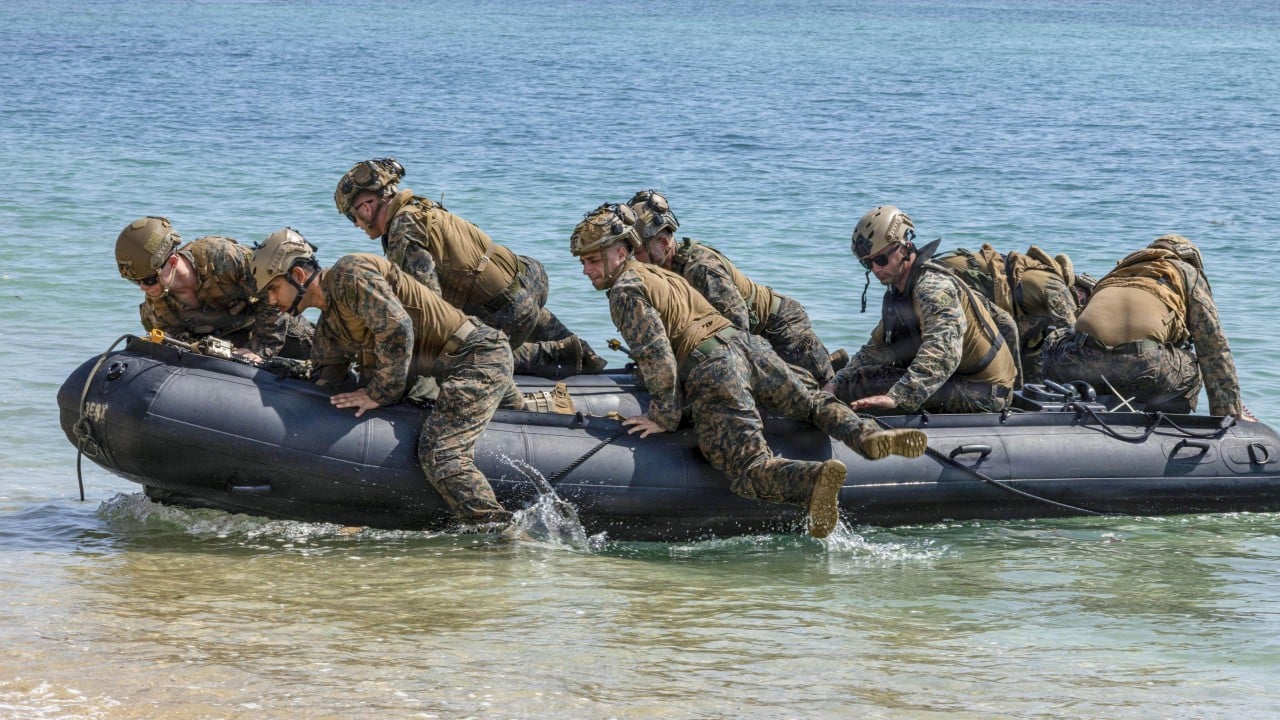
To understand why this demand is so explosive, you have to look at how the alliance actually works. Washington does not station 54,000 troops, an aircraft carrier strike group, and advanced fighter squadrons in Japan out of pure charity. Forward-deployed bases in Yokosuka, Kadena, and Misawa allow the United States to project power across the Western Pacific, monitor the Korean Peninsula, and deter Chinese aggression in the Taiwan Strait. If those forces were stationed in California or Hawaii instead, the Pentagon would still have to pay their salaries, maintain their equipment, and fund their operations—while losing weeks of transit time in a crisis.
The Mechanics of Host Nation Support
Most taxpayers hear "host nation support" and picture a foreign government writing a blank check directly to the U.S. Treasury. That is not how the system functions.
The Status of Forces Agreement (SOFA) of 1960 originally stipulated that the United States would pay to maintain its forces, while Japan would provide the land and facilities rent-free. By the late 1970s, however, Japan’s economic boom and rising labor costs prompted Tokyo to voluntarily pick up extra expenses to ease the burden on Washington. These voluntary payments were formalized into five-year Special Measures Agreements.
Every yen spent under this framework goes directly into the Japanese economy, not into Pentagon coffers. Tokyo pays Japanese construction firms to build hangars, pays Japanese utility companies to keep the lights on at Camp Foster, and pays the wages of Japanese mechanics, cooks, and clerks working on American bases.
If Washington suddenly demands $19 billion a year, there is literally nothing left in Japan for Tokyo to pay for. To hit that target, Japan would have to begin paying the actual salaries of American soldiers, sailors, and Marines, or start wiring billions in direct cash transfers to Washington. Both options are political poison in Tokyo and legally dubious under Japanese constitutional law.
Transactional Diplomacy Meets Strategic Reality
This $19 billion figure did not emerge from a Pentagon spreadsheet. Military planners at the Department of Defense have long warned against turning alliances into mercenary arrangements. Instead, the demand reflects a deeply transactional worldview championed by Trump and advisors like former National Security Advisor John Bolton, who later detailed the administration's aggressive posture toward Tokyo and Seoul in his memoir, The Room Where It Happened.
In this worldview, wealthy allies have been "ripping off" the United States for decades by sheltering under the American nuclear umbrella while spending their own money on domestic infrastructure and social programs. By throwing out an astronomical number—such as demanding South Korea pay $5 billion (a fivefold increase) and Japan pay $19 billion—the strategy relies on shock and awe to force allies to the negotiating table, hoping they will settle for a massive, albeit smaller, hike.
It is a high-stakes game of chicken. While transactional pressure has occasionally forced allies to buy more American weapons systems, applying it to base-hosting costs ignores the delicate political reality inside Japan.
Public support for the U.S. military presence in Japan is fragile, particularly in Okinawa. The southern prefecture hosts roughly 70 percent of American military facilities despite making up less than one percent of Japan’s total land area. Local residents deal daily with aircraft noise, environmental contamination, and crimes committed by military personnel. For decades, Tokyo has managed this domestic backlash by framing the alliance as a noble, mutually beneficial partnership essential for regional stability.
If Japanese voters come to believe their tax money is being extorted to pay the wages of foreign troops, that political consensus evaporates overnight.
The Domestic Trap in Tokyo
Japanese lawmakers face an impossible balancing act. On one hand, Tokyo recognizes that China’s rapid military modernization and North Korea’s expanding nuclear arsenal make the American security guarantee more vital than ever. Japan has already taken historic steps to shoulder more of its own defense burden, committing to double its defense spending to two percent of GDP and acquiring counter-strike capabilities like American-made Tomahawk cruise missiles.
On the other hand, no Japanese prime minister can survive politically by capitulating to a $19 billion demand. Japan is grappling with an aging population, a sluggish economy, and a massive public debt load that exceeds 250 percent of its GDP. Raising taxes to fund Japan’s own military buildup has already triggered fierce voter pushback in Tokyo. Raising taxes further to hand billions of dollars directly to Washington would trigger a parliamentary revolt.
Consider a hypothetical scenario where Tokyo actually agreed to a massive, multi-billion-dollar cash transfer. Opposition parties would immediately frame the government as a tributary state paying tribute to a foreign power. Nationalist factions within Japan’s own ruling Liberal Democratic Party would argue that if Japan is going to spend $19 billion a year on defense, it should spend that money on building its own independent military—and potentially even reconsider its long-standing ban on nuclear weapons.
That is the ultimate irony of the $19 billion demand. By trying to extract maximum financial value from the alliance, Washington risks accelerating the exact outcome American policymakers have spent eighty years trying to prevent: a heavily armed, strategically autonomous Japan that no longer trusts American security guarantees.
Beijing and Moscow Are Watching
Geopolitics abhors a vacuum. Every time Washington threatens to pull back troops or demands exorbitant fees from its allies, strategic rivals in Beijing and Moscow take notes.
Chinese state media routinely portrays the U.S.-Japan alliance as a Cold War relic and paints Tokyo as a compliant vassal of Washington. A bitter, public dispute over money validates Beijing’s narrative. It signals to the region that American commitment to Asian security is conditional, reversible, and ultimately for sale to the highest bidder.
Worse, it undermines deterrence. Deterrence relies entirely on credibility. Adversaries must believe without a shadow of a doubt that if they attack an American ally, the United States will intervene immediately and overwhelmingly. When the commander-in-chief openly questions the value of the alliance and threatens to walk away over a billing dispute, that credibility takes a direct hit.
Military leaders in Indo-Pacific Command understand this intimately. They know that in any potential conflict over Taiwan or the South China Sea, access to Japanese bases is the single most decisive operational advantage the United States possesses. Without Kadena Air Base in Okinawa or the deep-water port at Yokosuka, American forces would be forced to operate from Guam—more than 1,500 miles away—drastically reducing sortie rates and complicating logistics.
You cannot put a simple price tag on geographic access. Yet the $19 billion demand attempts to do precisely that, reducing a complex web of intelligence sharing, joint military exercises, and forward logistics into a single, lopsided invoice.
The Hidden Costs of Bullying Allies
Supporters of aggressive burden-sharing argue that tough talk gets results. They point out that NATO allies finally began meeting their two-percent defense spending targets only after sustained pressure from Washington, and that Japan itself eventually agreed to modest increases in its host-nation support package, rebranding it as the "Alliance Strengthening Budget."
There is truth to that. Allies often resist spending more on defense until pushed.
However, there is a distinct line between pushing an ally to invest in its own military capabilities and demanding cash payments for American troop deployments. When Japan buys F-35 fighter jets, Aegis destroyers, or Patriot missile batteries, those purchases directly strengthen deterrence and create American manufacturing jobs. When Washington demands a 400 percent hike in base-hosting fees, it produces zero additional military capability. It merely transfers wealth while breeding deep resentment among the very diplomats, generals, and politicians Washington relies on during a crisis.
Trust takes decades to build and seconds to destroy. Across Tokyo’s ministries, officials who have spent their entire careers championing the American alliance are quietly drafting contingency plans for a world where Washington is no longer a reliable partner. They are diversifying security ties with Australia, the United Kingdom, and the Philippines, hedging their bets against American unpredictability.
When an alliance is reduced to a protection racket, both sides lose. Washington gets a bitter, reluctant partner instead of a committed ally, and Tokyo starts calculating the exact moment it no longer needs America at all.