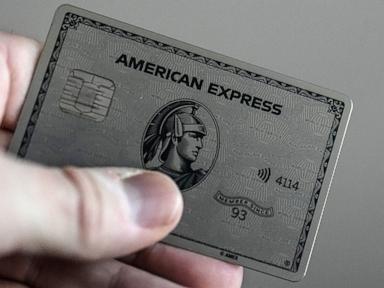
American Express profits surged in 2026 because affluent cardholders stayed loyal to the $895 annual fee on The Platinum Card, pushing net card fees up 16% year-over-year to $2.97 billion in the third quarter. Yet the surface-level victory masks a much sharper financial equation. While fee income climbs at roughly double the pace of billed business growth, the cost of funding luxury perks, lounges, and statement credits is climbing even faster.
After two decades covering credit card economics, I have watched issuers repeatedly test how much friction and sticker shock wealthy consumers will tolerate before bolting. Raising the Platinum fee from $695 to $895—a 29% jump—was never just a price adjustment. It was a high-stakes test of whether American Express has turned a payment tool into a lifestyle subscription that customers fear canceling.
How Fee Math Changed the Balance Sheet
For years, traditional card issuers treated annual fees as a modest buffer against credit losses and rewards liability. American Express has pushed that model to a different extreme. In the third quarter of 2026, total revenue net of interest expense hit $20.1 billion, up 9% from a year earlier, while diluted earnings per share jumped 31% to $5.42—or $4.68 on an adjusted basis once you strip out the gain from selling its stake in Global Business Travel Group and related restructuring charges.
Look closely at the expense lines behind that profit jump, though. In Q3 2026, net card fees rose by $418 million year-over-year. Over the exact same period, Card Member services jumped $529 million to $2.01 billion, and Card Member rewards rose $482 million to $5.09 billion. Marketing added another $171 million.
That gap matters. Raising the sticker price creates immediate top-line fee momentum and lifts average annual fee revenue per proprietary card—which climbed 14% to $136 in Q3 2026. Still, the real profit engine is not pure fee margin sitting untouched in a vault. It is the interplay between higher upfront fees, sticky spend, lower credit provisions ($985 million in Q3 2026 versus $1.29 billion a year earlier), and disciplined share buybacks that trimmed diluted share count from 693 million to 674 million.
| Metric (Q3 2026 vs. Q3 2025) | Q3 2025 | Q3 2026 | Shift |
|---|---|---|---|
| Revenue Net of Interest Expense | $18.43B | $20.06B | +9% |
| Net Card Fees | $2.55B | $2.97B | +$418M (+16%) |
| Card Member Services | $1.48B | $2.01B | +$529M |
| Card Member Rewards | $4.61B | $5.09B | +$482M |
| Average Yearly Fee Per Card | $119 | $136 | +14% |
The Breakage Trap Behind Luxury Perks
When American Express raised the fee to $895, it layered on fresh partner credits—including quarterly Resy dining credits up to $400 annually, quarterly lululemon credits up to $300 annually, digital entertainment credits, and CLEAR+ coverage—arguing total advertised value exceeds $3,500 a year.
On paper, that sounds like a bargain for anyone who travels or dines out. In practice, it relies on breakage—the gap between the theoretical value of advertised credits and what cardholders actually claim in real life.
A credit that requires remembering to enroll, using a specific merchant within a narrow quarterly window, and changing where you already shop is not free money. It is a behavioral nudge.
Consider a hypothetical cardholder who pays the $895 fee and already spends money at a participating restaurant every month. If that diner misses one quarterly Resy window because of a busy travel schedule, or forgets to use a quarterly retail credit before the calendar flips, American Express keeps the full fee while paying out less in partner reimbursements. Even when cardholders use every credit they can track, many end up shifting discretionary spend toward partner brands—which generates merchant discount revenue for Amex and reinforces card habit.
There is a flip side for the issuer, too. Partner subsidies and lounge buildouts are expensive. If cardholders become too efficient at harvesting every credit without putting meaningful everyday spend on the card, the economics tighten. That is why Amex pairs high-visibility perks with strong billed business growth—which reached $454.0 billion in Q3 2026, up 8% year-over-year—and continues to court younger affluent cohorts, with Gen Z and Millennials accounting for 65% of new global consumer accounts earlier in the year.
Why Retention Stays High When Fees Climb
Casual observers often assume a $200 fee hike will trigger mass cancellations. Experienced card executives know better. High-fee premium cards rarely suffer sudden cliff-like defections right after a price increase because renewal billing hits in waves across the calendar year and cardholders weigh sunk perks against switching friction.
Three forces keep retention remarkably sticky on a card like the $895 Platinum:
- Status and access inertia: Centurion Lounge access, hotel elite status tiers, and global dining reservations create tangible friction when you walk into an airport terminal or try to book a peak-hour table. Giving up a perk feels like surrendering status, even if you could pay cash elsewhere.
- Point lock-in: Once a cardholder accumulates a large pool of Membership Rewards points, canceling the card or dropping down the ladder can complicate transfer options or redemption flexibility. People hate feeling trapped with stranded rewards.
- Mental accounting in affluent budgets: For households earning well into the six or seven figures, $895 a year—roughly $75 a month—is debated less on strict return-on-investment spreadsheets than on convenience and identity. If the card saves two stressful airport mornings or lands one hard-to-get reservation, many buyers write it off without running a ledger.
Still, loyalty in premium cards is never permanent. Competitors constantly tweak travel credits, lounge partnerships, and dining networks to poach high-spend customers. And if lounge crowding worsens or partner credits feel like a scavenger hunt, retention can erode slowly rather than all at once.
Credit Quality and the Affluent Moat
Part of why Amex can push an $895 fee without triggering alarm bells among institutional investors is credit performance. In Q3 2026, American Express reported a net write-off rate of 1.8% overall—and 1.60% in U.S. consumer cards—comfortably below major mass-market and card-heavy peers. Balances 30 days or more past due across consumer and small business stood at 1.2%.
Affluent borrowers are not immune to inflation, layoffs, or stock market volatility, of course. High earners can carry heavy fixed housing costs and equity exposure that turn sour when markets wobble. Yet historically, prime and super-prime spenders weather economic bumps better than lower-income borrowers, giving American Express room to grow card balances and net interest income alongside fee revenue.
At the same time, investors should watch the trade-off between customer acquisition cost and service overhead. When Card Member services and rewards rise faster than fee revenue in a given quarter, the company has to prove that those higher expenses are building durable lifetime value rather than simply subsidizing perk-chasers.
What Smart Cardholders Should Do Next
If you hold—or are eyeing—an $895 Platinum Card, do not let glossy marketing or lounge photos do the math for you. Audit your actual last twelve months of spending before your next renewal date hits.
Add up only the credits and travel perks you would have paid for without the card, subtract any authorized user fees (such as the $195 fee per additional card), and compare that real number against $895. If you come out ahead effortlessly, enjoy the perks. If you find yourself forcing purchases just to "break even," downgrade or cancel before the annual fee posts—because a rewards card only works when your wallet leads, not your calendar.