The federal government is confronting a structural crisis over the creation of a $1.8 billion Anti-Weaponization Fund, a mechanism established through a Department of Justice lawsuit settlement that critics call an unconstitutional executive slush fund. While congressional Democrats mobilize a coordinated legislative and legal counter-offensive, the real disruption is a brewing rebellion among Capitol Hill Republicans who view the fund as a direct assault on the constitutional power of the purse. By utilizing the federal Judgment Fund to bypass congressional appropriations entirely, the administration has exposed a systemic vulnerability in how taxpayer money can be distributed without legislative oversight.
The crisis stems from an unprecedented legal maneuver. President Donald Trump filed a personal $10 billion lawsuit against the Internal Revenue Service over the unauthorized leak of his tax returns. Instead of mounting a standard legal defense, the Department of Justice—led by an administration the president oversees—settled the case. In similar developments, we also covered: The Real Reason the US Iran Ceasefire is Collapsing.
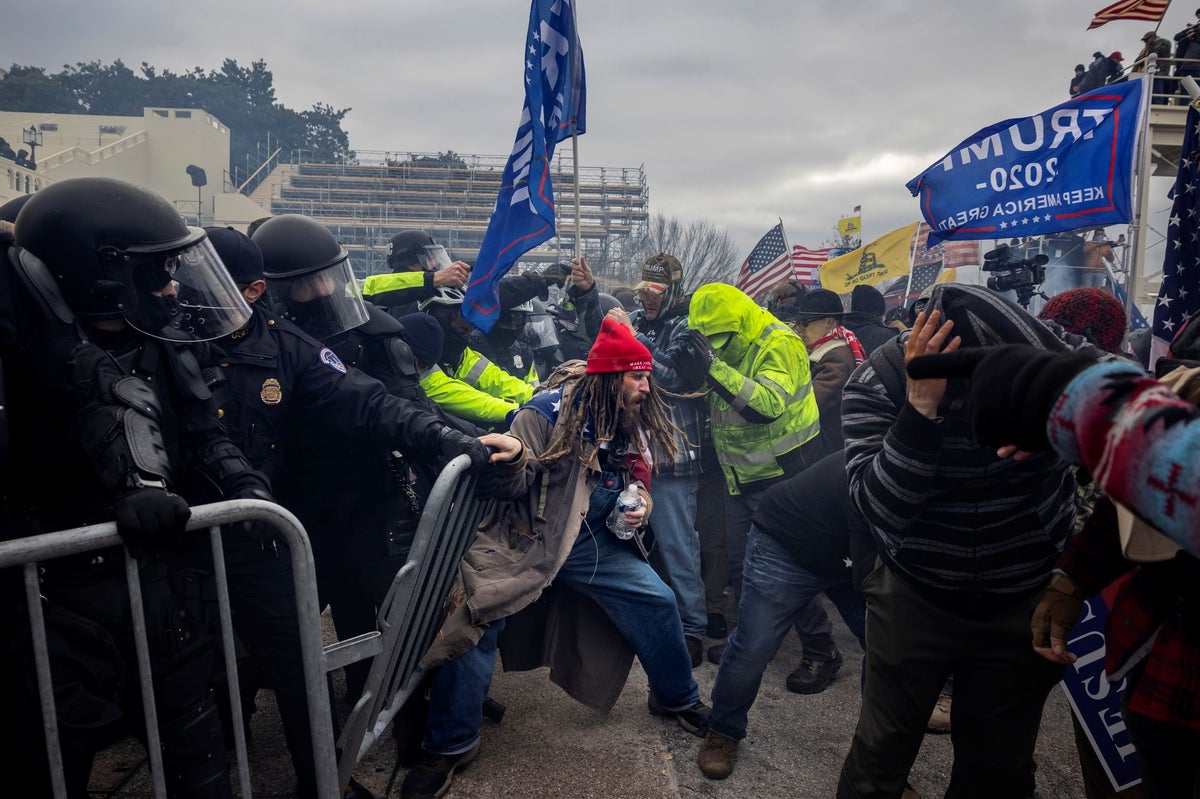
The terms of that settlement did not just resolve personal grievances. They established a $1.776 billion fund to compensate conservative political figures, activists, and potentially individuals convicted in the January 6 Capitol riot who claim they were targeted by previous administrations. Simultaneously, the agreement permanently bars the IRS from auditing the past tax returns of the president, his family, and his associated businesses.
The Exploitation of the Judgment Fund
To understand how nearly $2 billion can materialize without a single vote in Congress, one must look at the mechanics of the Judgment Fund. Created by Congress in the 1950s, this fund is a permanent, indefinite appropriation designed to pay court judgments and settlements against the United States. It exists so the government can settle routine legal liabilities without needing a separate act of Congress for every slip-and-fall at a post office. The Guardian has analyzed this fascinating subject in extensive detail.
By settling a personal lawsuit through this mechanism, the executive branch transformed a routine administrative tool into a massive financial engine under its own control. The administrative design of the new fund ensures total executive dominance.
- The Commission: Five commissioners will oversee the distribution of the money.
- The Appointments: The Attorney General appoints four commissioners, while the fifth is chosen in consultation with congressional leadership.
- The Vulnerability: The president retains the absolute authority to fire any of these commissioners at will for any reason.
- The Secrecy: The fund is not required to publicly disclose who applies for money, who receives payouts, or the legal reasoning behind the awards. Reports generated for the Attorney General remain strictly confidential.
This structure removes the traditional guardrails of public accountability. If a traditional federal agency wants to distribute grants, it must adhere to strict statutory criteria set by Congress. The Anti-Weaponization Fund operates under no such constraints.
Why the Republican Revolt is Real
Democratic opposition to the fund was entirely predictable, but the real political danger for the administration lies in a quiet, furious mutiny among congressional Republicans. Senate Republicans went as far as halting a vote on a priority immigration enforcement bill to signal their displeasure.
For institutionalist Republicans, the issue is not the ideological defense of conservative activists. It is the existential threat to legislative authority. If an administration can generate $1.8 billion out of thin air by suing itself and settling, the concept of congressional oversight becomes obsolete.
A future Democratic administration could use the exact same playbook. A progressive president could theoretically file a lawsuit against an executive agency over environmental or civil rights failures, settle the suit for billions via the Judgment Fund, and establish a secretive fund to finance progressive activist networks, climate organizations, or community groups entirely outside the control of a Republican-led House Appropriations Committee.
This realization has sent shockwaves through conservative lawmakers. They recognize that validating this mechanism strips Congress of its ultimate leverage over the executive branch.
Furthermore, the lack of exclusions for individuals convicted of violent offenses on January 6 has created severe political vulnerability for rank-and-file Republicans. Lawmakers representing moderate districts are now forced to answer whether they support taxpayer funded payouts to individuals who assaulted Capitol Police officers.
The Battle Lines in the Courts
The conflict has rapidly shifted to the federal judiciary. U.S. District Judge Leonie Brinkema issued a temporary restraining order blocking the transfer of federal funds into the account. The ruling highlights the immediate risk of irreversible disbursements before constitutional questions can be thoroughly litigated.
The administration’s legal defense relies on historical precedent, pointing to large-scale settlements reached during the Obama administration, such as the Pigford settlements with Black farmers or agreements over discriminated Native American agriculturists. Yet, legal scholars note a fundamental distinction. Those settlements resolved class-action lawsuits involving thousands of systemic, documented administrative failures against specific classes of citizens. The Anti-Weaponization Fund was birthed from a single individual's personal privacy lawsuit, yet it establishes a broad compensation apparatus for non-parties chosen by political appointees.
The ultimate hurdle for challengers is the legal doctrine of standing. To challenge a government action in federal court, a plaintiff must prove a concrete, particularized injury. The general grievance of a taxpayer upset with how public money is spent is historically insufficient to secure standing in American courts.
To circumvent this hurdle, opponents are utilizing a coalition of specific plaintiffs. The primary lawsuit features a former federal prosecutor who led January 6 investigations, a city government, and organizations like the National Abortion Federation. They argue that the fund creates concrete harms by potentially subsidizing groups or individuals that actively threaten their security or disrupt their institutional operations.
The Long Term Costs of Political Restitution
If the fund survives judicial scrutiny, it establishes a governance model driven by political cycles. The settlement stipulates that when the current presidential term ends, any remaining capital in the fund will revert to the general treasury rather than remaining available to the next administration. This design confirms that the apparatus is built exclusively for the current executive's immediate political network.
The permanent prohibition on auditing the president's past corporate and personal tax returns represents a profound shift in administrative law. By tying tax immunity to a litigation settlement, the executive branch has effectively carved out a zone of financial exceptionalism for a single family. This sets an institutional precedent where the enforcement of internal revenue laws can be bargained away by political appointees within the Department of Justice.
The focus on a coordinated Democratic attack misses the deeper reality of what is occurring in Washington. The traditional boundaries separating personal legal exposure, executive authority, and legislative funding have dissolved. The fight over the $1.8 billion fund is no longer just a standard partisan skirmish. It is a fundamental conflict over whether the executive branch can independently finance its own political priorities through the judicial back door.