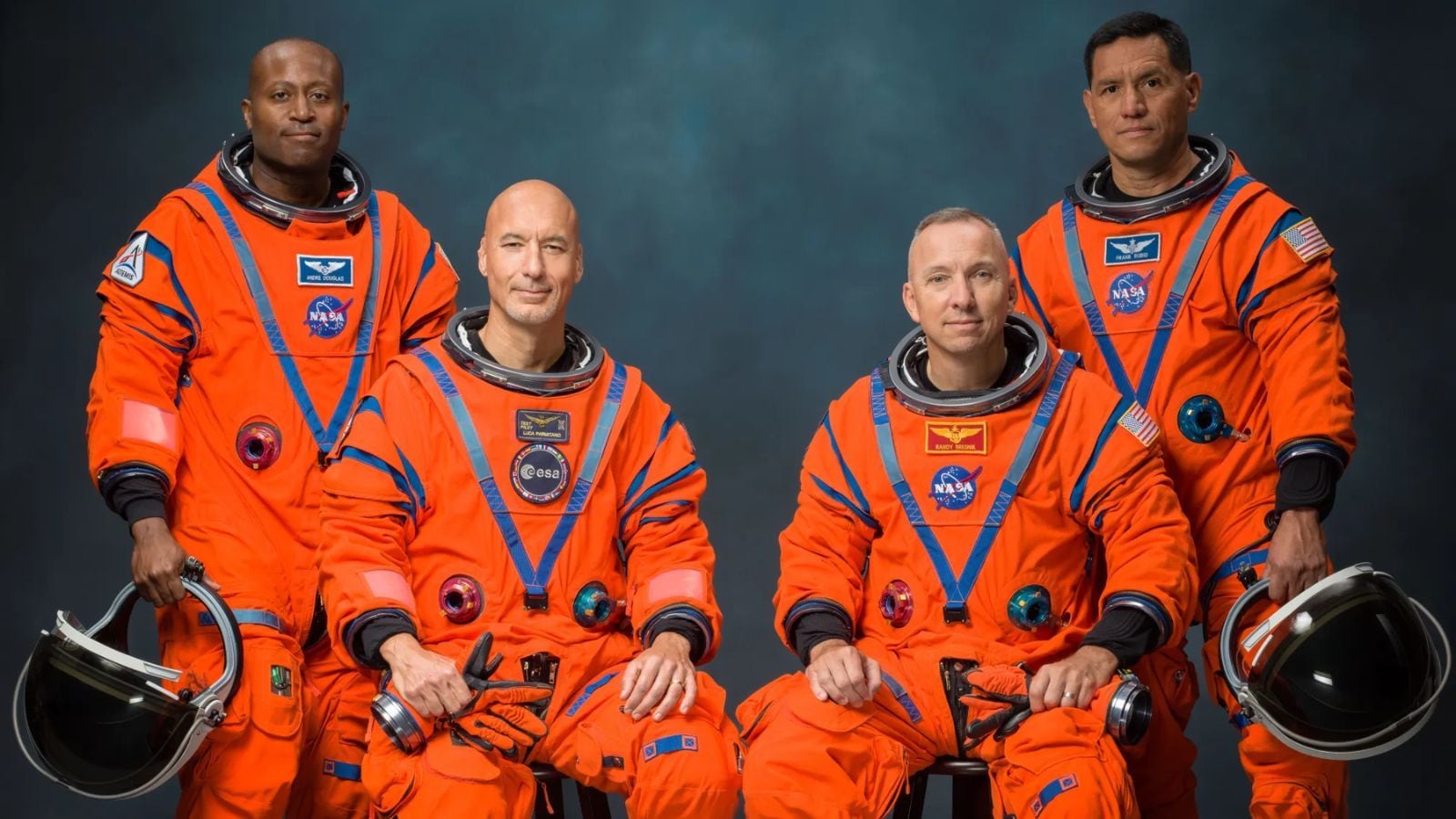
The acceptance rate sits at roughly 0.12 percent. When NASA opened applications for its 2025 astronaut class, over 8,000 hopefuls flooded the federal job portal. Only ten individuals survived the multi-stage meat grinder to report to the Johnson Space Center. This brutal mathematical filter has created a mythos around the modern spacefarer, painting them as flawless, hyper-academic super-soldiers who possess a rare mixture of military aviation ice water and Ivy League research pedigree.
But a quiet crisis is brewing inside the federal space architecture. The agency is no longer just sending test pilots to punch holes in the upper atmosphere, yet its rigid, Cold War-era framework for evaluating human capital remains dangerously out of step with the demands of long-duration deep space exploration. Learn more on a connected topic: this related article.
The Flaw in the Perfect Resume
NASA requires a master’s degree in a STEM field, three years of post-degree professional experience, and a clean bill of health. On paper, the floor seems reasonable. In practice, the agency selects candidates who have spent their lives treating the baseline requirements like an insulting minimum.
Consider the modern archetype. You find combat aviators who also hold advanced degrees in aerospace engineering, or emergency room physicians who moonlight as wilderness survival instructors. This creates an immediate paradox. The Selection Board filters for hyper-specialized, extreme overachievers, yet the actual job of an astronaut on a multi-month transit to Mars requires something entirely different. More analysis by Gizmodo delves into related views on this issue.
It requires a high tolerance for boredom.
The early days of the space race were defined by high-stakes, manual piloting decisions where a split-second reflex saved lives. Today, modern spacecraft like the SpaceX Crew Dragon or Boeing Starliner are highly automated computers with seats. The journey to the lunar south pole or a future transit to Mars involves weeks of passive monitoring. Hyper-aggressive, Type-A overachievers do not historically cope well when trapped in a metal can the size of a delivery van with five other people, doing nothing but monitoring life support telemetry for 200 days straight.
By hyper-indexing on candidates who possess flawless, unblemished resumes of constant advancement, NASA is systematically weeding out the exact psychological profiles best suited for long-duration isolation.
The Myth of the Generalist
The agency frequently touts its desire for the all-rounder, the modern polymath who can fix a carbon dioxide scrubber with a multi-tool and then sequence DNA in a microgravity glovebox. This expectation has turned the training pipeline into a sprawling, inefficient bottleneck.
Once selected, candidates spend two years in basic training learning an absurdly disparate list of skills.
- T-38 Jet Aviation: Operating high-performance aircraft to simulate high-stress decision-making.
- Neutral Buoyancy Operations: Spending hours underwater in a 300-pound spacesuit to master the physical mechanics of spacewalks.
- Russian Language Proficiency: A legacy requirement of the International Space Station era that still drains cognitive bandwidth.
- Robotics and Orbital Mechanics: Learning how to grapple visiting vehicles with a robotic arm.
This generalist model assumes that every human on the crew must be capable of executing every task. It is an outdated philosophy born from an era when crews were capped at three people.
With the emergence of commercial space infrastructure, the civilian sector is proving that specialization yields higher operational efficiency. Axiom Space and Polaris missions are proving that you can train a highly specialized payload expert or a dedicated technician in a fraction of the time it takes NASA to build a generalized astronaut. NASA's insistence on creating a uniform corporate mold for its corps is driving up training costs and delaying mission readiness.
The Expeditionary Skill Gap
The most closely guarded secret in Houston is that technical genius and physical perfection are cheap. The real filter happens in the psychological evaluation rooms, where NASA looks for what it calls expeditionary skills.
These are broken down into self-care, team care, leadership, followership, and communication. The selection board is terrified of the brilliant scientist who crumbles when they lose sleep, or the elite fighter pilot who refuses to take direction from a younger civilian colleague.
To test this, semi-finalists are put through grueling group dynamics exercises designed to trigger micro-aggressions and expose hidden character flaws under exhaustion. A hypothetical example illustrates the trap: a candidate is given an impossible logistical puzzle to solve with a team of rivals. The candidate who asserts dominance and solves the problem through sheer force of will is often the first one crossed off the list. The board prefers the individual who listens, manages the team's emotional friction, and accepts a suboptimal solution for the sake of group cohesion.
Yet, because the initial filtering mechanism relies so heavily on institutional achievements—military rank, corporate titles, academic publications—the process inherently favors people who have spent their careers practicing self-promotion and individual exceptionalism. NASA is using an individualist filter to select for a collectivist lifestyle.
The Commercial Siphon
For decades, NASA was the only game in town. If you wanted to see the curve of the Earth, you wore the meatball logo on your sleeve and accepted a federal pay scale.
That monopoly is dead.
The 2025 astronaut class will be the first to transition to an Administratively Determined pay scale, moving away from the rigid General Schedule (GS) limits in an attempt to remain competitive. It is a band-aid on a severed artery. Silicon Valley aerospace firms, commercial space station operators, and private space tourism conglomerates are actively headhunting the exact talent NASA Covets.
A military test pilot or an expert flight surgeon can now opt for a private contract that pays significantly more, offers faster flight timelines, and bypasses the years of bureaucratic desk work that active NASA astronauts must endure between missions. The active astronaut corps has shrunken dramatically from its peak of 149 in the year 2000 to just several dozen active members today. As commercial platforms scale up, NASA faces a talent drain it is structurally unequipped to fight.
The selection process is not failing because it lacks qualified applicants. It is failing because it is designed to find a mythical human archetype that can survive a bureaucratic pipeline rather than the harsh reality of deep space. Until the agency decouples its selection criteria from traditional institutional prestige, the corps will continue to produce brilliant resumes rather than resilient crews.