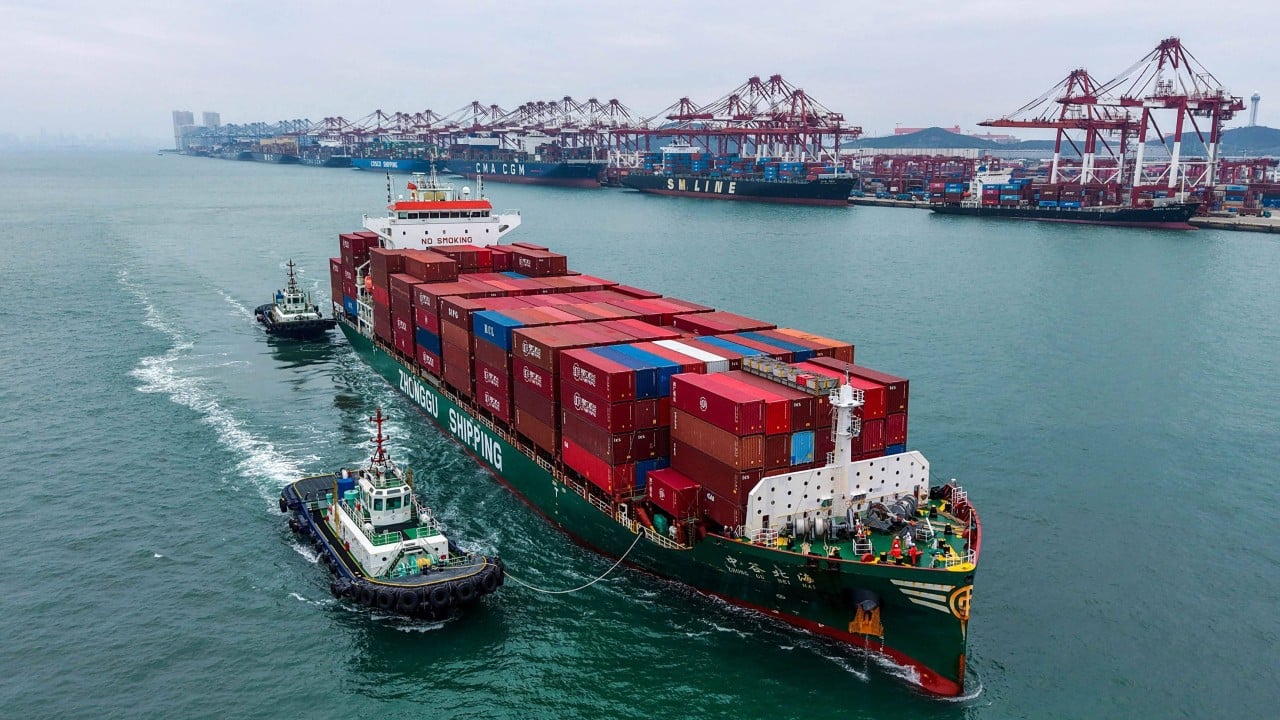
For over two decades, the instruction from Beijing to its corporate champions was clear and simple. Go outward. Build the infrastructure, string the submarine cables, pour the concrete for ports in the Indian Ocean, and secure the supply chains necessary to feed an industrial engine that refused to stop growing. That expansion was the physical manifestation of the Going Out strategy, a massive capitalization of the developing world financed by policy banks and backed by sovereign ambition.
Today, the bills for that expansion are coming due. Chinese commercial interests span from mineral extraction sites in the heart of Africa to logistics hubs in Europe and energy grids across Latin America. But a footprint of this magnitude is no longer just an economic footprint. It is a vulnerability.
Strategic analysts and policy advisors inside Beijing are pressing for a unified, institutional security architecture to protect these sprawling overseas interests. The era of commercial expansion operating independently from diplomatic, intelligence, and security coordination is officially over. The reality on the ground has turned hazardous.
The Cost of Unprotected Ambition
When state-directed capital outpaces the mechanisms designed to protect it, disaster follows. Consider a hypothetical scenario involving a mining conglomerate operating in a volatile frontier market. A sudden political upheaval, shifting local labor regulations, or a targeted sanctions regime can turn a profitable extraction asset into a stranded liability overnight. Without centralized intelligence sharing, real-time risk assessment, and integrated diplomatic backstops, corporate managers on the ground are left guessing.
The vulnerabilities are not theoretical. Across multiple continents, Chinese enterprises face sudden investment restrictions, asset freezes, targeted local backlash, and complex legal warfare.
The primary friction stems from a historical mismatch. For years, Chinese outbound investment operated through fragmented channels. State-owned enterprises acted independently from private technology firms, and neither maintained structural operational links with China's diplomatic missions or intelligence apparatus. When local security crises erupted, the response was reactive, ad-hoc, and painfully slow.
The Mechanics of a Unified Global Shield
The proposed solution floating through policy circles involves the creation of a centralized, data-driven security and early-warning apparatus. This proposed architecture relies on integrating satellite remote sensing, artificial intelligence analytics, and big data feeds to monitor global hotspots, critical transit corridors, and key overseas projects.
This is not merely about deploying private security contractors or increasing embassy guards. True protection requires a bureaucratic plumbing job. It means harmonizing the data streams between the Ministry of Commerce, the Ministry of Foreign Affairs, state-backed insurance institutions, and the corporate headquarters managing the assets.
When a geopolitical flashpoint flares up near a vital logistics corridor, the system should theoretically trigger automatic protocols. These protocols would range from rerouting maritime shipping lanes to advising asset managers on immediate capital repatriation strategies before local currency controls slam shut.
Yet, building this integrated framework invites friction of its own. Centralizing oversight over thousands of independent corporate actors invites bureaucratic drag. State control can suffocate the agility that made private Chinese multinationals competitive in the first place. Furthermore, host nations often view centralized intelligence platforms and heightened security coordination with deep suspicion, fearing that commercial protection is merely a precursor to deeper strategic and military entanglement.
Navigating the Gray Zone
The debate inside analytical circles is ultimately about maturity. A superpower cannot project vast economic weight without simultaneously developing the institutional maturity to defend it. Traditional Western models relied on a mixture of long-standing naval dominance, multilateral institution-building, and private intelligence networks to secure capital. Beijing is attempting to construct an alternative model on the fly, balancing non-interference doctrines with the urgent necessity of asset preservation.
The margin for error is shrinking. As global economic fragmentation accelerates and protectionism becomes the default posture of Western economies, the external environment will only grow more hostile. The transition from unchecked expansion to defensive consolidation is messy, expensive, and fraught with diplomatic landmines.
The institutional architects in Beijing understand that leaving trillion-dollar overseas investments at the mercy of local political volatility is no longer tenable. How they execute this structural pivot will determine whether the legacy of the outbound economic expansion becomes a global network of resilient, protected assets or a sprawling archipelago of stranded liabilities.


