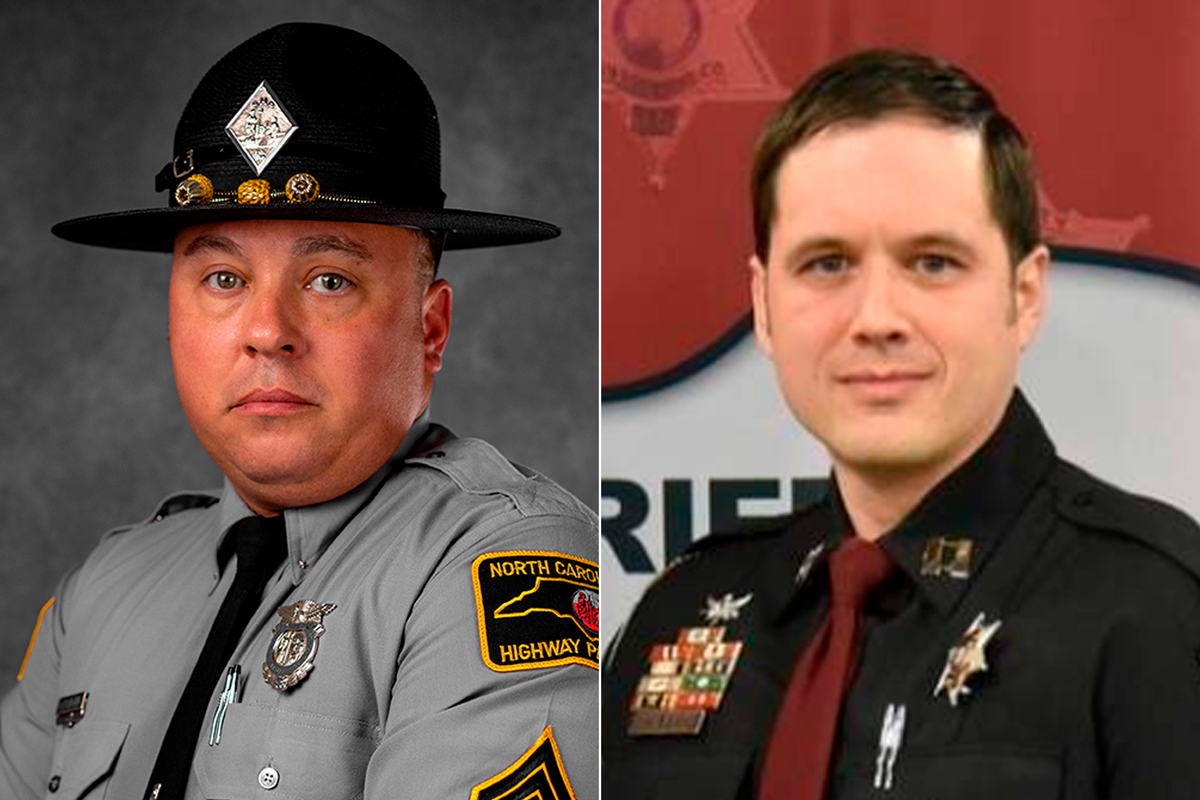
When North Carolina State Highway Patrol Trooper Nekime Oxendine allegedly fired his weapon outside a Hope Mills residence, he did not just end the life of Cumberland County Sheriff's Office Captain Adam Bean. He shattered the insular code of silence that often governs personal accountability within municipal and state policing. The March 27 shooting, which culminated in Oxendine's first-degree murder indictment, exposes a toxic undercurrent of unchecked personal obsession festering behind administrative badges. This was not merely a domestic dispute that accidentally turned violent. It was the predictable collision of professional privilege, unmitigated jealousy, and the dangerous assumption that badge-holders operate above the rules of civil society until a grand jury forces their hand.
Anatomy of an Interdepartmental Crisis
The narrative leading up to that fatal night in March reads like a dark psychological thriller, anchored by institutional proximity. Both men wore uniforms, commanded respect, and held positions of authority within overlapping jurisdictions in Cumberland County. Captain Adam Bean served as an assistant chief of detectives for the sheriff's office, a man trusted with untangling complex criminal motives. Sergeant Nekime Oxendine operated as a state trooper, trained in highway interdiction, rapid tactical assessment, and high-stress command.
At the center of the dynamic was Tara Whitman, a lieutenant with the Cumberland County Sheriff's Office and sister to a high-ranking highway patrol commander. Whitman had cycled through relationships with both men over a multi-year period. She spent years living with Bean in a domestic partnership before breaking off the arrangement and returning to a relationship with Oxendine.
What followed was a digital trail of possessive text messages that foreshadowed disaster. Search warrants later revealed that Oxendine had bombarded Whitman with hostile inquiries regarding her lingering ties to Bean, at one point threatening Bean directly via electronic correspondence. The workspace boundaries that separate professional duty from private volatility had completely dissolved. When law enforcement personnel treat personal relationships with the same tactical aggression they bring to the streets, tragedy ceases to be an accident and becomes an inevitability.
The Confrontation at the Residence
On the night of the shooting, the simmering tensions boiled over into physical reality. Bean arrived at Whitman's Hope Mills home late in the evening after communication broke down, frustrated to find Oxendine's patrol vehicle parked in the driveway. Agitated and feeling sidelined, Bean threatened to sound his horn and create a public disturbance if Whitman refused to come outside.
When Whitman and Oxendine stepped out to confront him, the situation deteriorated within seconds. According to accounts detailed in subsequent investigative findings, Bean advanced aggressively toward Oxendine. Oxendine responded by firing two initial warning shots into the ground. When Bean failed to retreat and continued his advance, Oxendine drew a bead and fired multiple fatal rounds.
The immediate aftermath underscored the raw, visceral nature of the conflict. As Bean lay dying in the front yard, Whitman knelt beside him, administering mouth-to-mouth resuscitation. For an officer trained to maintain emotional detachment, watching a former partner attempt to revive a rival ignited a secondary wave of friction. Yet, despite shooting and killing a high-ranking fellow member of local law enforcement on his own front lawn, Oxendine was not immediately taken into custody at the scene.
The Privilege of the Shield
The most damning aspect of the preliminary investigation was not the shooting itself, but the immediate institutional inertia that followed. For months, community advocates and local observers pointed out a glaring double standard. A civilian who shot and killed an unarmed or advancing individual during a domestic dispute would almost certainly have faced immediate arrest, booking, and standard pretrial detention. Instead, Oxendine was placed on administrative leave, retaining a degree of institutional protection while the wheels of justice ground forward at an agonizingly slow pace.
This hesitancy forced structural shifts in oversight. The local district attorney promptly recused himself to avoid any appearance of conflict of interest, handing the inquiry over to the North Carolina State Bureau of Investigation (SBI). The case required review by the state's Conference of District Attorneys before formal accountability could be established. Months ticked by with Oxendine walking free, fueling public skepticism about whether law enforcement agencies could objectively police their own ranks when a murder charge was on the table.
Grand juries operate on evidence, however, and the weight of the digital threats, the absence of an immediate operational justification for deadly force during a personal dispute, and the sheer finality of a dead colleague eventually pierced the armor of institutional grace. The recent grand jury indictment for first-degree murder finally stripped away the administrative buffer, landing Oxendine behind bars without bond while he awaits his day in court.
Psychological Pressures and Internal Blind Spots
Law enforcement agencies across the country routinely fail to screen for or address the intense psychological burdens carried by personnel. Officers live in a hyper-vigilant state where control is currency. When that control is challenged in domestic settings—where professional authority holds no legal weight—the cognitive dissonance can manifest in catastrophic ways.
Oxendine and Bean spent their careers managing volatility, yet neither possessed the emotional infrastructure to walk away from a personal triangle. The tools of their trade—firearms, tactical positioning, and the authorization to use lethal force—were imported directly into a personal dispute with fatal results. Departments invest heavily in marksmanship and tactical driving, but allocate virtually zero resources toward recognizing domestic obsession, professional egoism, and toxic possessiveness among elite troopers and detectives.
As the case moves toward trial, the focus shifts away from the lurid details of the romance and toward the systemic failures that allowed two armed representatives of the state to reach a point of mutual destruction. Accountability for a badge-holder who takes a life must match the severity of the act, free from the institutional courtesy that historically delayed justice in Cumberland County.