The math of modern major college athletics has transformed head football coaches from high-paid executives into high-frequency financial liabilities. Entering the 2026 college football season, a handful of prominent managers walk the sideline knowing that a three-game losing streak does not just trigger fan forums; it threatens institutional insolvency. When programs carry nine-figure athletic department debt alongside multi-million dollar roster maintenance costs through name, image, and likeness collectives, patience evaporates overnight.
The traditional grace period of a five-year rebuilding plan is dead. Athletic directors working under the crushing weight of expanded playoff mandates and direct revenue sharing with players can no longer afford moral victories. If you are paying a coach an eight-figure buyout while simultaneously servicing stadium renovation loans, the incentive structure flips. Firing a marquee name stops looking like a risk and starts looking like a necessary cost of doing business.
The Florida State Spiral and Mike Norvell
No situation illustrates this structural panic better than Florida State and Mike Norvell. Two years removed from an undefeated regular season that ended in a controversial playoff omission, the Seminoles cratered into consecutive multi-loss campaigns that exposed deep roster fragility. Behind the public statements of support lies a staggering financial reality. Florida State closed recent fiscal years staring at hundreds of millions of dollars in athletics-related debt, much of it tied directly to capital projects like Doak Campbell Stadium upgrades.
When a program sits atop a debt mountain of that magnitude, sub-standard autumn afternoons are intolerable. Norvell took over play-calling duties himself in an act of desperation designed to jump-start an offense that lost its identity. Yet the margin for error in Tallahassee has shrunk to zero. Boosters who poured millions into the collective expect an immediate return on investment. If the Seminoles stumble out of the gate against early-season competition, the administrative calculus changes instantly, regardless of what an estimated forty-eight-million-dollar buyout might cost on paper.
Wisconsin and the Cost of Cultural Mismatch
Up north, Luke Fickell faces a different kind of executioner at Wisconsin. The marriage between a historic powerhouse built on smash-mouth identity and Fickell’s initial attempts to modernize the scheme resulted in back-to-back regression. Big Ten opponents handled the Badgers with relative ease, and recruiting metrics stalled out relative to elite conference peers.
Wisconsin athletic directors historically prize stability above almost everything else. That patience wore thin following consecutive seasons that strayed far from the program's traditional brand of football. With an estimated nineteen-million-dollar buyout looming, the university chose restraint over a pink slip in the previous cycle. That restraint is conditional. Athletic departments are absorbing new revenue-sharing models that siphon tens of millions directly from operating budgets to athletes. Sparing cash for buyouts gets harder when schools must simultaneously fund player rosters directly. Fickell needs an immediate upward trajectory, or fiscal pragmatism will override institutional loyalty in Madison.
The Calculus of Direct Revenue Sharing
To understand why 2026 feels uniquely lethal for coaches on the bubble, look beyond the win-loss columns and examine the ledger. The implementation of direct revenue sharing between athletic departments and players fundamentally alters the economics of firing a coach.
For decades, an athletic director could justify keeping an underperforming coach simply because absorbing a massive buyout meant sacrificing facility upgrades or administrative salaries. Today, every dollar spent paying a fired coach not to work is a dollar diverted away from roster talent acquisition. If a program's collective cannot out-spend conference rivals, the head coach becomes the primary variable under direct control.
Consider the plight of coaches like Baylor's Dave Aranda or Boston College's Bill O'Brien. Both inherit divisions where opponent spending has accelerated past traditional baselines. When a team drops below expectations while cycling through transfer portal classes to patch foundational roster holes, the blame lands squarely on the coaching staff's ability to maximize return on finite resources. The transfer portal offers a quick fix, but it also strips away the excuse of needing time to develop high school talent. Win immediately with your imported roster, or clear the desk.
The Illusion of Long-Term Security
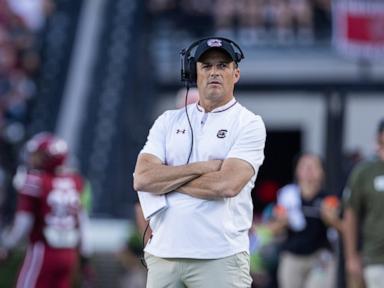
Contract extensions signed in panic no longer offer real protection. South Carolina handed Shane Beamer an extension through the end of the decade, only to watch the team slide backward into a disappointing campaign that forced wholesale assistant coaching turnover. Publicly, administrators preach continuity. Privately, search firms are already vetting candidates by October.
The expanded playoff format was supposed to relieve pressure by creating more pathways to the postseason. Instead, it raised the baseline expectation for what constitutes a successful season. Missing the twelve-team field is no longer viewed as a respectable finish for programs with major resources; it is treated as an organizational failure. Coaches entering this autumn carrying a history of regression or stagnant recruiting metrics are not just fighting for wins on Saturdays. They are racing against a balance sheet that views their continued employment as an unacceptable drag on the bottom line.