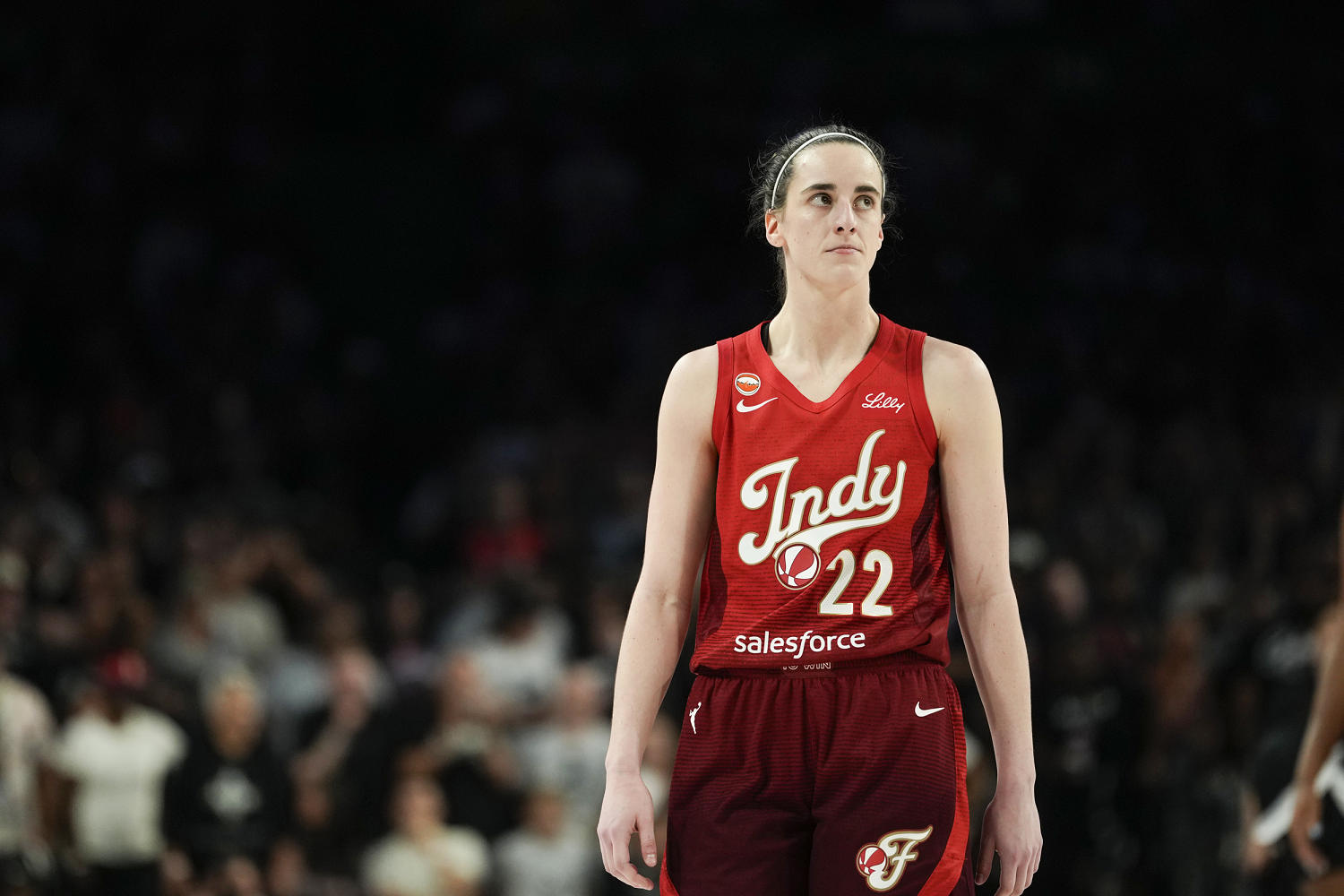
The narrative machine moves with predictable, mechanical cruelty. Another autumn arrives, another early postseason exit strikes the Indiana Fever, and the hot takes flood the digital ecosystem like a broken main. Pundits who spent six months treating every regular-season box score like holy scripture pivot instantly to a new conclusion. Caitlin Clark, they whisper with feigned objectivity, cannot win when the lights burn brightest. Her legacy, they argue, is somehow incomplete because a third-year roster has yet to hoist a championship trophy.
It is a remarkably lazy diagnosis. It ignores the structural realities of professional basketball, misinterprets the data, and fundamentally misunderstands how historical greatness is built in the WNBA. If you enjoyed this article, you should look at: this related article.
To
The Pressure Cooker Postseason Why Caitlin Clark and the WNBA Face a High Stakes Reality Check
sports
not_found For another angle on this story, see the latest update from CBS Sports.
The narrative surrounding Caitlin Clark often reads like a hyper-accelerated script written by executives who have never spent a Tuesday night in a cramped, humid gym watching tape. Following another early exit from the postseason, the chorus of instant hot takes reached a predictable crescendo. Critics point to the empty trophy case at the professional level and ask the easy question. Why has the most dominant offensive engine in modern basketball history failed to secure a championship ring or even a deep playoff run?
The answer is not a sudden evaporation of talent, nor is it a sign that her historic collegiate dominance was an anomaly. The reality is far more complex, rooted in the brutal structural realities of professional basketball, the rapid evolution of scouting, and the unique burden of carrying an entire media ecosystem on a rookie frame.
When a player enters the league with the gravitational pull of Caitlin Clark, opposing coaches stop sleeping. In the WNBA, defensive schemes are notoriously punishing. Unlike the collegiate game where offensive systems can often rely on individual athletic disparities, the professional tier operates on microscopic margins. Every screen is hedged with physical violence. Every passing lane is scouted to the millimeter.
During her postseason appearances, opposing defenses deployed hybrid box-and-one coverages, aggressive traps 35 feet from the basket, and persistent physical contact designed to exhaust her before she even crossed half-court. This is playoff basketball in its purest, most unforgiving form. Veterans who have spent a decade learning how to survive the trenches understand how to neutralize a singular threat through sheer collective physicality. Clark's early postseason exits are a masterclass in how professional defenses adapt when given a seven-game or three-game series to dissect a single player's tendencies.
To understand her current playoff drought, one must look closely at the roster construction and organizational timelines that surround her. Basketball is uniquely resistant to individual miracles. Michael Jordan spent years absorbing brutal playoff sweeps from the Detroit Pistons before he learned how to break through the wall. LeBron James dragged overmatched Cleveland Cavaliers rosters to the finals only to run into brick walls of organizational depth.
Expectations for modern superstars have become completely detached from historical timelines. Fans and media demand immediate dynasties, ignoring the fact that building a sustainable contender requires years of front-office precision, defensive infrastructure, and complementary tier-one talent. Plucking a generational point guard out of college and dropping her into an expanding franchise does not instantly bypass the necessary years of collective chemistry and roster iteration.
The physical toll of the WNBA schedule also cannot be overstated. The modern calendar compresses high-intensity competition into a relentless window of travel, back-to-back fixtures, and minimal recovery time. By the time October arrives, bodies that have absorbed months of relentless double-teams are operating on pure adrenaline.
When we evaluate Caitlin Clark's lack of postseason success, we are looking at a snapshot of a career that has barely begun. The narrative that she is somehow missing a clutch gene or failing to deliver when it matters ignores the statistical reality of her fourth-quarter production and her willingness to take high-pressure shots.
The pressure cooker of professional sports will continue to scrutinize every misstep, every turnover, and every early exit. But history suggests that the greatest competitors use these exact playoff failures as architectural blueprints. The losses sting, the film sessions are brutal, and the offseason adjustments are comprehensive.
The early playoff exits are not the final verdict on a career. They are merely the opening chapters of a much longer, harder story about what it takes to transform individual brilliance into championship gold.