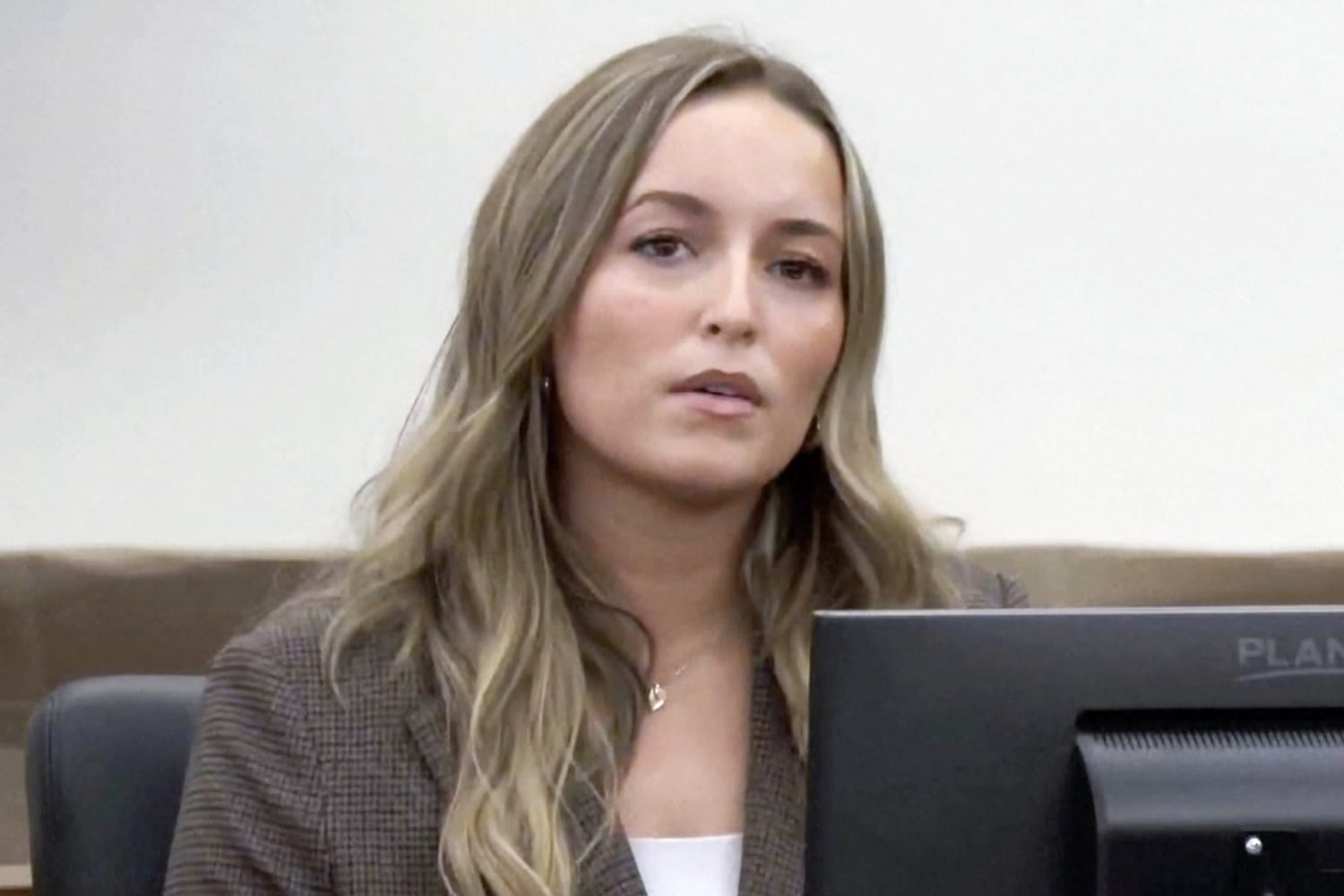
The courtroom in Troy, Ohio, smelled of damp autumn coats and institutional floor wax. On the stand, Alleigha Botner described a romance born in the administrative hum of a local church and ending in cold-blooded homicide.
When former music pastor and brief American Idol contestant Caleb Flynn shot his wife, Ashley, twice in the back of the head as she slept on February 16, he did not just shatter a family. He exposed the terrifying velocity at which compartmentalized deception mutates into physical violence. Legal analysts spent weeks debating whether Botner would face criminal exposure for her text message exchanges or the digital cleanup of her devices. But the fixation on whether the mistress would sit in the dock obscured a far more urgent inquiry: how an outwardly charming community leader manufactured a narrative of domestic execution and expected the world to swallow it whole.
The Anatomy of an Affair and an Alibi
Affairs rarely implode in silence. More often, they rot from the inside out under the weight of hollow ultimatums. Botner testified that she had grown tired of waiting for Flynn to untangle his marriage. She demanded action. Text messages retrieved by state investigators laid bare a toxic dynamic where Flynn allegedly complained about feeling trapped, eventually texting Botner that he had spent hours calculating how to murder his wife without facing prison or eternal damnation.
"If I could literally kill her and not go to hell, I would do it in a heartbeat," Flynn texted his twenty-year-old lover.
In the cold light of a courtroom, defense attorneys tried to frame these chilling admissions as hyperbole. They argued that a desperate man seeking to placate an impatient mistress might say grotesque things he never intended to execute. It is a standard defense playbook tactic: write off literal expressions of malice as figurative venting. Yet juries tend to lose patience with figurative interpretations when a corpse turns up in the master bedroom with bullet wounds to the cranium.
Staging the Scene of a Nightmare
The choreography of the crime scene revealed a staggering level of arrogance. Prosecutors laid out how Flynn meticulously staged his Tipp City home to resemble the aftermath of a violent home invasion. He dialed 911 with a theatrical panic designed to cast himself as the grieving survivor of a random intrusion.
The weapon vanished. The narrative was locked in. But modern criminal investigations do not rely solely on what is left at the scene; they feed on the digital exhaust trailing every suspect. Cell tower pings, digital timestamps, and frantic messaging threads paint an unyielding portrait of guilt that hollow stagecraft cannot conceal. Flynn’s tears during police interviews felt less like genuine grief and more like the performance of a man realizing his stage directions had failed.
The Legal Reality of Complicity
Much of the early public fascination centered on Botner’s potential criminal liability. Legal experts weighed the implications of her deleted messages and misplaced electronics. In high-profile homicide investigations involving extramarital affairs, prosecutors routinely squeeze secondary players to flip them or secure corroboration.
Yet, charging a paramour requires clear evidence of active participation in the planning or cover-up of the felony. While Botner’s panic on the morning of the murder—texting Flynn to ask if he was involved—showed acute suspicion, the state ultimately treated her as a pivotal witness rather than a co-conspirator. Her testimony provided the prosecution with the vital psychological roadmap inside Flynn's head during the weeks leading up to the slaughter. She was the mirror reflecting his descent from compartmentalized infidelity to premeditated murder.
The Collapse of the Façade
When the jury returned its verdict of guilty on charges including murder, felonious assault, and tampering with evidence, it closed a grim chapter for a community that had trusted Flynn from the pulpit. At his sentencing hearing, Flynn offered a structured apology to his victims' families, speaking of broken vows while stubbornly maintaining his innocence regarding the actual pull of the trigger.
It was a final, discordant note from a man who spent years performing roles for different audiences—church congregant, reality television hopeful, secret paramour, and finally, convicted killer. The judge handed down a sentence of life without parole, ensuring that Flynn's remaining years will be spent behind maximum-security walls far away from the applause and the altars. The legal wrangling over accessories and digital footprints has faded, leaving behind the stark reality of an unmoored life
The Caleb Flynn Case Why Legal Obstacles Shield Accomplices in High Profile Murders
news, celebs
When a high-profile murder investigation dominates the headlines, public outrage usually focuses on swift retribution. People want arrests, perp walks, and maximum sentences. Yet, the legal machinery operating behind closed doors moves to a different rhythm. This dynamic stands out starkly in the ongoing scrutiny surrounding the Caleb Flynn homicide probe, where speculation persists regarding why his former mistress likely escapes criminal charges in connection with his wife's murder.
To the untrained eye, association with a killer or a conspiracy suggests guilt. Prosecutors, however, face a steep evidentiary wall. Proving murder conspiracy or accessory after the fact requires more than suspicion, bad text messages, or unsavory personal choices. It demands ironclad proof of criminal intent.
The High Bar of Intent and Conspiracy
In criminal law, association does not equal conspiracy. District attorneys cannot secure indictments based on moral failing or toxic relationships. They need direct evidence that a suspect actively planned, facilitated, or covered up a murder with explicit knowledge of the plot.
When legal analysts examine the Caleb Flynn case files, the central obstacle becomes clear. A romantic partner may lie, manipulate, or possess questionable character, but none of those behaviors constitute a felony. Prosecutors must establish a meeting of the minds. They must show that the mistress knowingly aided the execution of the crime. Without transactional proof—such as money changing hands for a hit, recorded admissions of planning, or shared procurement of a weapon—cases dissolve under scrutiny.
Grand juries reject guesswork. Defense attorneys dismantle circumstantial webs built entirely on character assassination. If a prosecutor takes a weak conspiracy charge to trial, an acquittal risks exonerating someone who might otherwise provide valuable testimony later.
The Mechanics of Immunity and Cooperation
In complex homicide investigations, law enforcement often faces a strategic dilemma. Do they charge every peripheral player with minor offenses, or do they offer leniency to the secondary figure in exchange for testimony against the primary perpetrator?
This principle applies directly to the trajectory of the Caleb Flynn investigation. Prosecutors routinely prioritize the core shooter or the mastermind. If the former mistress possesses information that solidifies the case against the primary defendant, the state will trade immunity or reduced exposure for cooperation.
This pragmatic approach frustrates the public. Observers view non-prosecution as a miscarriage of justice. Within the prosecutorial ecosystem, it functions as a necessary compromise. Securing a life sentence for the main architect of a murder takes precedence over convicting an associate on a lesser obstruction charge.
Legal systems favor structural leverage over emotional satisfaction. If cutting a deal with an accomplice guarantees a conviction for the individual who pulled the trigger, district attorneys make that calculation without hesitation.
Evidentiary Black Holes and Digital Footprints
Modern murder investigations rely heavily on digital forensics. Investigators comb through cell phone towers, encrypted messaging applications, and deleted search histories. Even with terabytes of data, gaps remain.
If text messages between Caleb Flynn and his former mistress center on emotional turmoil, broken promises, or mutual grievances, investigators see drama. They do not necessarily see a murder blueprint. People express violent anger during messy breakups every day without acting on it. Crossing the threshold from angry hyperbole to active conspiracy requires concrete action items.
If the digital audit trail shows the mistress maintained distance from the actual timeline of the murder, establishing criminal liability becomes nearly impossible. Alibis check out. Cell phone pings place her miles away from the crime scene. Financial records show no suspicious funding for contract killers. Without those markers, the state's case collapses before it reaches a courtroom.
The Reality of Prosecutorial Discretion
The public often misunderstands the role of a district attorney. Prosecutors operate under an ethical obligation to file charges only when reasonable probability supports a conviction. Bringing charges to appease media pressure or public fury violates professional standards and wastes taxpayer resources.
Legal experts surveying the Caleb Flynn investigation recognize this reality. The absence of an indictment does not signal a lack of effort by law enforcement. It reflects the cold calculus of criminal procedure. When evidence falls short of the statutory definition for conspiracy or accessory liability, ethical prosecutors close that line of inquiry and focus their energy where convictions remain viable.
Justice in high-profile murder cases rarely mirrors television dramas. It unfolds as a methodical, often frustrating exercise in evidentiary limits. The protection surrounding peripheral figures stems not from favoritism, but from the stringent constitutional requirements designed to prevent wrongful prosecutions. The legal threshold remains high for a reason, ensuring the state proves every element of a crime beyond a reasonable doubt, regardless of public demand for wider accountability