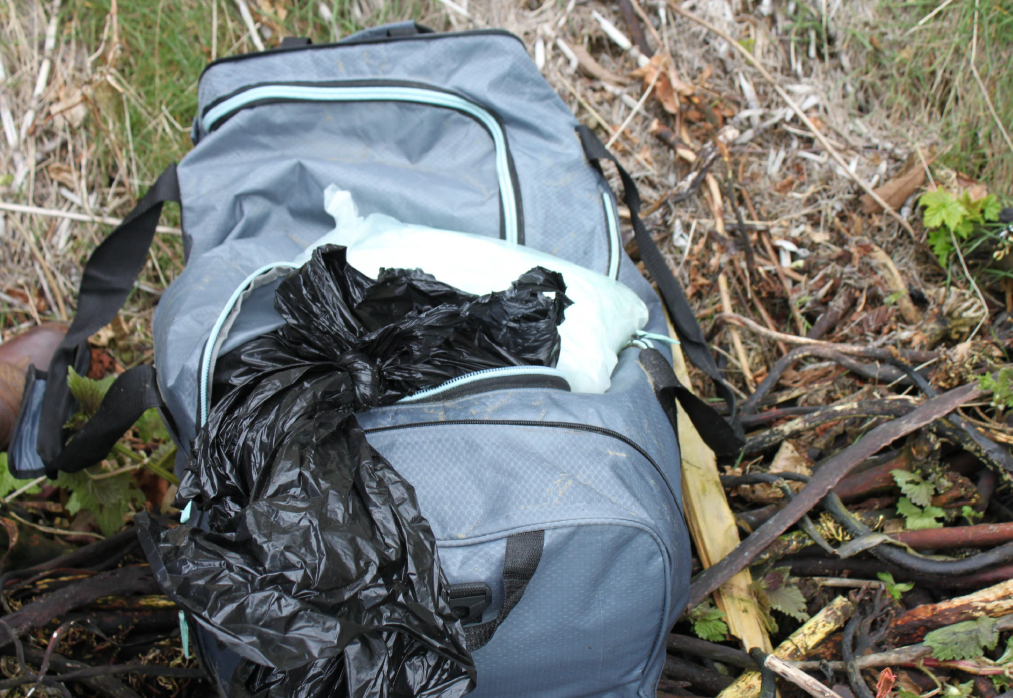
A federal judge handed down a 15-year prison sentence to an American citizen caught trying to move a massive shipment of illicit narcotics across the northern border into Canada. The conviction closes one case file, but it exposes a glaring vulnerability along the world’s longest undefended border. While public attention remains fixated on southern entry points, organized crime networks are quietly exploiting northern transit routes, capitalizing on sprawling geography, limited physical barriers, and asymmetric enforcement priorities between Washington and Ottawa.
The northern border spans nearly 5,525 miles. Monitoring that expanse presents a monumental logistical nightmare. Criminal syndicates know this. They recognize that while southern checkpoints feature heavy infrastructure and dense manpower, northern crossings rely heavily on remote terrain and targeted intelligence. When intelligence misses, tons of contraband slip through unnoticed.
How Transnational Syndicates Exploit the Northern Gap
Smuggling illicit substances into Canada is high-reward business. Street prices for cocaine, methamphetamine, and synthetic opioids in Canadian urban centers often trade at a significant premium compared to U.S. markets. That price differential creates an irresistible profit margin for cartels and regional gangs willing to take the risk.
The logistics are surprisingly straightforward. Traffickers utilize commercial transport trucks, personal vehicles with hidden compartments, and low-flying uncrewed aerial vehicles. In rural stretches along the 49th parallel, the border is often nothing more than a shallow ditch or a clearing in the trees. A vehicle can stop for thirty seconds, swap duffel bags, and drive away before local law enforcement even receives a dispatch call.
The Port of Entry Problem
Official ports of entry are not immune either. Intelligence-led policing means border officers rely heavily on risk-scoring systems to flag high-risk vehicles. Yet, the sheer volume of commercial traffic flowing through major arteries like the Ambassador Bridge or the Peace Arch border crossing makes inspecting every container impossible. Inspecting everything would grind bilateral trade to a halt. Smugglers know the math. They blend in with legitimate supply chains, accepting occasional seizures as a routine cost of doing business.
Consider a hypothetical scenario where a mid-level coordinator hires a clean driver with no prior criminal record to haul legitimate freight across the border. Hidden inside the structural frame of the trailer are fifty kilograms of high-purity narcotics. Unless law enforcement receives a direct tip or a random secondary inspection catches a microscopic anomaly, that truck passes through in minutes.
The Asymmetry of Law Enforcement Resources
The disparity in border enforcement is stark. For decades, United States Customs and Border Protection focused the vast majority of its tactical assets, funding, and personnel along the southern frontier. The northern border received a fraction of those resources.
On the Canadian side, the Canada Border Services Agency and the Royal Canadian Mounted Police face similar resource constraints spread over immense distances.
- Geographic Vulnerability: Thousands of miles of open land remain unmonitored by fixed radar or ground sensors.
- Resource Allocation: Federal law enforcement manpower prioritizes high-density urban areas over rural border patrols.
- Intelligence Gaps: Real-time information sharing between local U.S. sheriff offices and Canadian authorities often suffers from bureaucratic delays.
This asymmetry creates blind spots. Organized crime groups monitor law enforcement patrol schedules, track drone deployment patterns, and adjust their routes in real time. They operate with agile, corporate-style flexibility while law enforcement struggles against bureaucratic red tape.
Synthetic Drugs Shift the Economic Calculations
The nature of what is moving across the border has fundamentally changed. The trade is no longer confined to plant-based drugs like cocaine or marijuana. Synthetic narcotics, engineered in illicit laboratories using precursor chemicals sourced globally, have altered the security equation.
Synthetics are compact. They are cheap to produce. A package small enough to fit inside a spare tire can contain tens of thousands of lethal doses. This high potency-to-volume ratio means smugglers do not need massive shipping containers to turn a massive profit. A single passenger car can carry millions of dollars worth of inventory.
Smuggling Logistics Shift:
[Bulk Plant Narcotics]  -->  Requires large trucks/containers  --> High visibility
[Synthetic Narcotics]   -->  Fits in small hidden compartments --> Low visibility / High value
This chemical shift renders traditional interdiction methods largely obsolete. Sniffer dogs require specific training for synthetic variants, and standard X-ray imaging can easily miss thin, flat packages concealed behind door panels or inside fuel tanks.
Deterrence Failure and the Limits of Prison Sentences
Handing down a 15-year prison term sends a strong signal from the bench, but history shows that punitive sentencing alone rarely disrupts established supply chains. In the economics of organized crime, lower-level couriers are inherently expendable.
When a driver gets caught, the network absorbs the financial loss within hours. The recruitment machinery immediately identifies a replacement driver, offers a higher payout to cover the perceived increase in risk, and dispatches the next shipment. The syndicate considers a driver serving fifteen years as nothing more than a line-item write-off on an income statement.
Until law enforcement focuses systematically on dismantling the financial infrastructure and chemical supply lines that fuel these networks, long prison sentences for individual drivers will remain a symbolic fix for a structural disease.