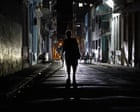
The collapse of Cuba's national electric grid at midday on Monday left roughly ten million people in total darkness, a systemic failure that represents far more than a routine infrastructure hiccup. This total blackout, confirmed by the state utility Unión Eléctrica, marks the latest and most severe in a relentless series of grid failures that have paralyzed the island. While official channels often point to isolated boiler leaks or transient weather patterns, the reality is a multi-layered structural implosion. Decades of deferred maintenance on Soviet-era thermal plants, combined with an aggressive diplomatic isolation campaign that has choked off fuel imports, have turned the island's power infrastructure into an unsustainable liability.
The breakdown did not occur in a vacuum. It is the direct consequence of an energy model built on borrowing time, cheap crude, and external patrons that no longer exist. When the main switches tripped, they did not just cut power to household refrigerators and streetlights. They exposed the absolute exhaustion of a state-managed centralized system that can no longer guarantee the most basic requirements of modern life.
The Mechanics of Total Grid Failure
To understand why the Cuban grid fails with such catastrophic frequency, one must look at the physical architecture of the National Electric System. The backbone of the island's power generation relies on seven large, terrestrial thermoelectric plants that are, on average, more than four decades old. These facilities were designed to run on specific grades of fuel oil, engineered with technology provided by the Soviet bloc, Czechoslovakia, and Japan during the late Cold War.
When a single major node in this hyper-centralized network goes offline unexpectedly, it creates an instantaneous supply deficit. Because the transmission lines are poorly insulated and suffer from massive resistance losses, the sudden imbalance between demand and generation triggers an automatic safety trip across neighboring substations. This cascading failure is exactly what occurred when the Antonio Guiteras plant in Matanzas went dark.
The Fragility of Soviet Thermoelectric Technology
The Antonio Guiteras facility is the single most important power generation asset on the island. Located on the northern coast, its proximity to deep-water ports allows it to receive heavy domestic crude directly, but this domestic oil is highly corrosive. The fuel contains high concentrations of sulfur, which accelerates the degradation of internal boiler tubes, superheaters, and turbines.
Engineers at the Matanzas plant are forced to operate a continuous cycle of patchwork repairs. A typical repair involves cutting away ruptured sections of high-pressure pipe and welding in recycled components from defunct units. This structural wear creates a permanent operational hazard where a minor drop in water pressure or a subtle shift in boiler temperature can force an emergency shutdown. When the Guiteras plant trips, the rest of the island’s interconnected grid lacks the spinning reserve capacity to absorb the shock, leading to an immediate, nationwide blackout.
The Matanzas Chokepoint
The reliance on a few concentrated nodes means that regional vulnerabilities quickly become national emergencies. In western and central Cuba, the margin between peak demand and maximum available generation has shrunk to zero. The state cannot afford the specialized metallurgical alloys required to rebuild these boilers properly. Instead, technicians rely on manual interventions and secondary diagnostic equipment that is frequently blind to micro-fractures in the steam loops. The result is a system running constantly at its absolute mechanical limit, where any deviation from nominal operation guarantees a structural fracture.
The Geopolitical Asphyxiation of Cuban Fuel
The mechanical decay of the generation plants is only half of the equation. A power plant without fuel is nothing more than a monument to industrial decline, and Cuba’s fuel supply lines have collapsed with astonishing speed over the last twelve months. Historically, the island survived on deeply subsidized oil shipments from long-term political allies, a strategy that insulated the domestic economy from international market shocks. That insulation has vanished.
The international environment turned hostile following the political shifts in Venezuela earlier this year. The sudden interruption of Caracas's oil diplomacy left Havana without its primary source of crude, forcing the government to look to the spot market where it lacks the hard currency to compete. Simultaneously, tighter restrictions on international maritime shipping have penalized tankers attempting to dock at Cuban ports, creating a severe logistical barrier that few commercial fleets are willing to risk.
The Fall of the Venezuelan Supply Line
For more than two decades, the energy alliance between Caracas and Havana formed the foundational basis of Cuba’s economic planning. The daily arrival of thousands of barrels of oil kept the domestic thermal units functioning, even as their mechanical efficiency dropped. The removal of this supply line earlier this year meant that Cuba's fuel reserves dropped to near-zero levels within weeks.
Mexico and Russia attempted to fill the deficit with sporadic shipments, but these efforts have proven structurally insufficient. Russian tankers must navigate protracted maritime routes, and their arrivals are timed to meet immediate crises rather than build up sustainable national reserves. Mexican exports, previously provided under flexible credit terms, faced intense domestic political scrutiny and legislative shifts that ultimately restricted the flow of oil to the island. Without a predictable, high-volume source of heavy crude, the state-run power company has resorted to burning whatever unrefined domestic oil it can extract, worsening the physical damage to the plants.
The Failed Experiments with Floating Power Generation
To compensate for the decay of its land-based infrastructure, the government increasingly turned to mobile generation solutions, specifically leasing Turkish floating power barges known as powerships. These massive vessels, moored off the coast of Havana and Mariel, were supposed to provide a flexible buffer, injecting hundreds of megawatts directly into the western grid without requiring long-term infrastructure investment.
The floating barge strategy was flawed from its inception because it did not solve the underlying fuel crisis. The powerships require specialized, highly refined fuel oil to operate efficiently. When the national fuel supply tightened, the state was forced to divert its scarce diesel and light crude reserves from domestic public transportation and agricultural sectors to keep the foreign-owned barges online. Furthermore, these contracts require regular payments in foreign currency. As tourist arrivals plummeted by more than half following flight cancellations from major international hubs, the state’s cash reserves dried up, leaving it unable to honor its financial commitments to international energy providers.
The Human Toll of Structural Decay
A nationwide blackout in Cuba is not an inconvenience; it is an existential threat to the basic functioning of civic life. When the grid collapses, the breakdown ripples through every critical sector of the economy, showing how deeply intertwined electrical access is with public health, food distribution, and basic survival.
The modern Cuban economy has shifted toward decentralized, private food suppliers and small-scale cold storage facilities to offset the failures of state distribution. These operations depend entirely on a stable electrical feed. When the power stays off for twenty-nine hours or more, tons of imported meat, dairy, and medicine rot in non-refrigerated warehouses. The financial losses are absorbed by small entrepreneurs who cannot afford to rebuild their inventories, further choking the domestic supply of essential goods.
The Atrophy of Essential Infrastructure
The electrical crisis directly impairs the island’s water distribution networks. Most urban centers, including large swaths of Havana, rely on high-power electric pumps to move water from subterranean aquifers into municipal aqueducts. When the grid fails, the pumps stop, leaving millions of residents without running water for days at a time. Citizens are forced to rely on expensive private water trucks or manually haul water from communal cisterns, creating a secondary public health crisis as sanitation standards deteriorate.
+--------------------------------------------------------+
|           THE CASCADING INFRASTRUCTURE FAILURE         |
+--------------------------------------------------------+
|                                                        |
|  [ FUEL BLOCKADE / SUPPLY LOSS ]                       |
|                │                                       |
|                ▼                                       |
|  [ THERMAL PLANT TRIP (Antonio Guiteras) ]             |
|                │                                       |
|                ▼                                       |
|  [ NATIONAL GRID COLLAPSE ]                            |
|                │                                       |
|                ├─► [ WATER PUMPS STOP ]                |
|                │         │                             |
|                │         ▼                             |
|                │   (Sanitation & Supply Crisis)        |
|                │                                       |
|                └─► [ REFRIGERATION FAILS ]             |
|                          │                             |
|                          ▼                             |
|                    (Food Spoilage & Medical Shortages) |
+--------------------------------------------------------+
Hospitals face the most acute dangers. While major surgical centers possess emergency diesel generators, these units are designed for short-term disruptions, not prolonged, multi-day operations. The scarcity of diesel means that hospital administrators must constantly ration fuel, choosing between keeping life-support systems active or running the climate control systems necessary to prevent the spread of tropical pathogens in surgical wards.
The Breaking Point of Social Compliance
The frequency of these blackouts has fundamentally altered the relationship between the population and the state. For decades, social stability was maintained through a complex social contract where economic hardships were endured in exchange for basic stability and state-provided services. The total absence of electricity for eighteen to twenty hours a day removes the possibility of normal life, making it impossible to sleep in the intense summer heat or prepare meals for children.
The government’s response has historically focused on emergency management, suspending schools, halting non-essential bureaucratic work, and ordering workers to stay home to reduce demand on the failing grid. These measures are no longer effective. They don't address the core issue: the physical assets required to generate electricity are dying. Patching a boiler tube in Matanzas or waiting for a single oil tanker from a sympathetic nation will not change the structural math. The island requires billions of dollars in capital investment to transition away from its broken thermal infrastructure, an outcome that remains impossible under the current economic and diplomatic configuration.