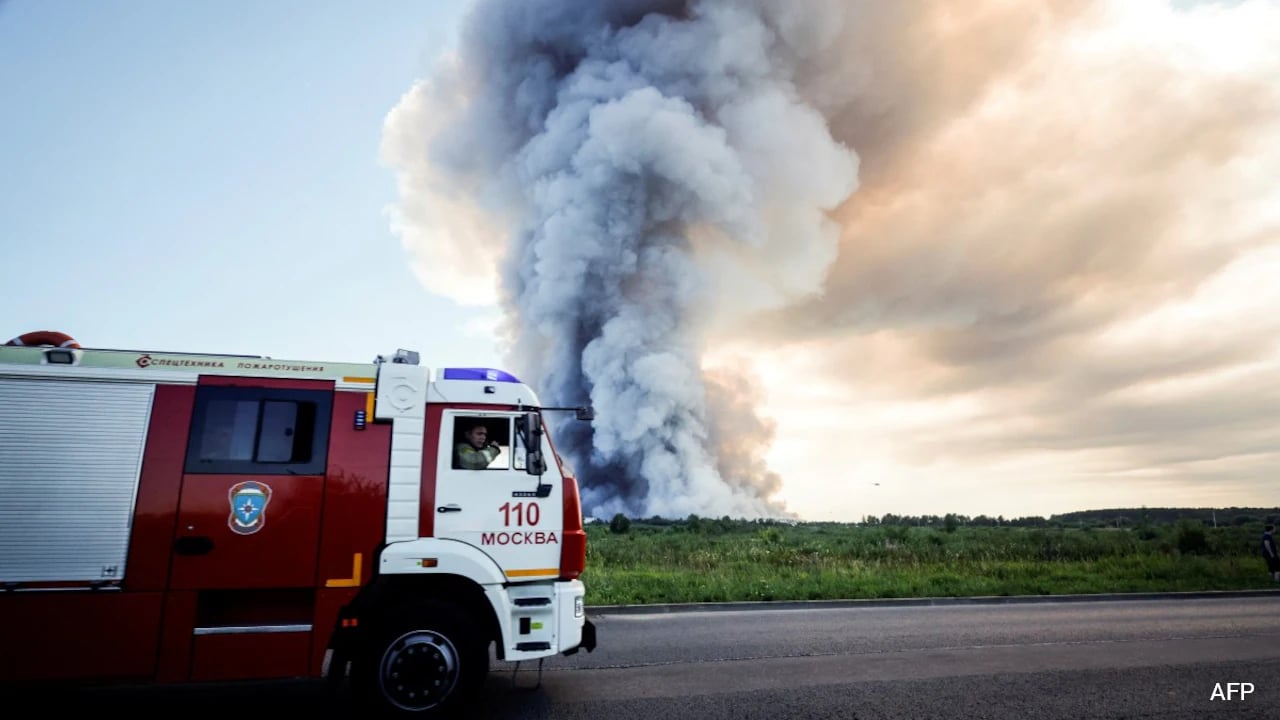
The threshold was crossed in the pre-dawn hours. A long-range unmanned aerial vehicle struck a residential block far from the front lines, flattening apartments and killing thirteen civilians, including a young child. This event marks a grim milestone in the evolution of long-range aerial warfare, shifting the physical and psychological geography of the conflict into heavily populated civilian centers inside Russia.
For months, military analysts debated the operational capacity of long-range unmanned systems. Doubts lingered about payload weights, navigation reliability over hundreds of miles of electronic jamming, and the sheer logistical footprint required to launch strikes deep into sovereign territory. Those doubts evaporated in a cascade of shattered concrete and fuel-air fire. The strike that claimed thirteen lives is not an isolated anomaly. It is the bloody manifestation of an industrial-scale pivot in modern attrition warfare.
The Technological Leap in Long-Range Strike Architecture
The mechanics behind these deep-penetration attacks reveal a quiet revolution in autonomous navigation. Early iterations of long-range loitering munitions relied heavily on satellite guidance systems that proved vulnerable to regional electronic countermeasures. When GNSS signals are spoofed or jammed, primitive guidance systems wander off course, crashing harmlessly into fields or empty forests.
Engineers adapted. Modern systems deployed in these deep strikes integrate inertial navigation systems backed by optical terrain contour matching. The drone looks at the ground beneath it, compares optical feed against pre-loaded topographical maps, and corrects its trajectory without touching a satellite network. This autonomy renders traditional jamming corridors ineffective.
Payload capacity scaled upward in parallel. The airframes carrying ordnance hundreds of miles across borders are no longer fragile hobbyist conversions duct-taped together in garages. They are standardized composite airframes powered by small internal combustion engines, manufactured on assembly lines with state subsidies and private venture capital.
The Strategic Calculus of Escalation
Military strategy operates on a ledger of calculated risk and proportional response. When one side possesses sanctuary, the adversary faces an impossible tactical dilemma. By absorbing strikes on critical infrastructure and military depots for years without possessing the means to retaliate symmetrically, the strategic posture became untenable.
The deployment of deep-strike capabilities into Russian territory shatters the psychological safety of the interior. Citizens living hundreds of miles from the trenches now experience the visceral terror of air raid sirens, concussive blasts, and the burning ruins of their neighbors' homes. This compression of distance alters the domestic political calculus.
Governments at war rely on a quiet bargain with their populations. Bread and stability are exchanged for tacit approval of state policy. When apartment buildings in regional capitals begin absorbing ordnance, that bargain fractures. The state must either acknowledge the vulnerability of its interior or expend massive air defense assets to protect civilian hubs—assets that are desperately needed at the actual front lines.
The Air Defense Dilemma
Defending a country spanning millions of square kilometers against low-flying, autonomous threats is a logistical nightmare. Modern air defense architecture was designed during the Cold War to intercept supersonic ballistic missiles and high-altitude strategic bombers flying predictable parabolic arcs.
A low-signature, piston-driven drone cruising at low altitude below radar horizons behaves nothing like a ballistic missile. It moves slowly, hugging tree lines and river valleys. Radar operators face severe clutter issues, mistaking flocks of birds or ground vehicles for airborne threats.
Deploying advanced surface-to-air battery systems around every major city, fuel depot, and industrial center is mathematically impossible. There are simply not enough high-end interceptor missiles in existence. Each interceptor battery costs millions of dollars per launch, while the attacking airframes often cost a fraction of that figure. This economic asymmetry creates a fiscal bleeding wound for any nation forced to defend against saturation attacks.
+-------------------------------------------------------------+
|               The Asymmetric Cost Equation                  |
+-------------------------------------------------------------+
| Attack Drone Unit Cost:    $20,000 to $50,000               |
| Interceptor Missile Cost:  $1,000,000 to $4,000,000         |
| Strategic Defensive Ratio: Unsustainable over time          |
+-------------------------------------------------------------+
When air defenses fail to intercept a swarm, the cost is measured in human lives. The thirteen dead in this latest strike, including a child whose name and face now circulate through grief-stricken social networks, are collateral damage in a grinding technological race where defense is always playing catch-up to offense.
The Psychological Aftermath on the Home Front
In regions accustomed to viewing conflict through the sanitized lens of state television broadcasts, the physical arrival of war is a profound shock. Panic buying at fuel stations, runs on cash machines, and spontaneous migrations away from border-adjacent and industrial regions signal a growing erosion of trust in official security narratives.
Local authorities struggle to manage the information flow. Initial reports from state-run media frequently minimize casualties or attribute structural collapses to domestic gas explosions rather than enemy ordnance. Residents holding smartphone footage of burning wreckage instantly upload the reality to decentralized messaging channels, rendering official obfuscation transparent and corrosive to state credibility.
This friction between sanitized broadcast reality and raw, unedited trauma generates a volatile domestic climate. Hardliners demand total mobilization and unrestrained retaliation, while quiet anti-war sentiment simmers among those who realize their neighborhoods could be next on the target list.
The Industrialization of Modern Conflict
What began as an artisanal cottage industry of improvised munitions has matured into a terrifyingly efficient global supply chain. Components flow through gray-market intermediaries across multiple continents. Microprocessors, optical sensors, and commercial-grade telemetry modules are sourced from open markets, assembled by contract labor, and delivered to launch sites with military precision.
This democratization of long-range strike capability permanently alters the character of future state-on-state violence. Any nation with a modest industrial base and technical competence can now project lethal force across vast distances at minimal cost. The monopoly that superpowers held over long-range precision strike assets has dissolved.
As the smoke clears from the ruined apartment block where thirteen lives ended in an instant, the broader geopolitical horizon darkens. The war has migrated home. The distance between the front line and the kitchen table no longer exists, and the architects of this conflict must reckon with a new reality where no sanctuary remains.
:max_bytes(150000):strip_icc()/ar-American-Cheese-taste-test-horizon-4x3-54cc339550cd44b9a818c17bdfd5428d.jpg)