At least 60 Orthodox Christians were killed in targeted attacks across Ethiopia’s Oromia region, according to reports from the Ethiopian Orthodox Tewahedo Church, highlighting a deepening crisis of religious and ethnic violence that federal authorities have repeatedly failed to contain. While initial headlines treat these killings as sudden eruptions of sectarian hostility, the reality on the ground is far more calculated. Militant insurgencies, deeply fractured regional politics, and a chronic security vacuum have turned rural parishes into soft targets in a broader struggle over land, identity, and state control.
The Anatomy of a Predictable Tragedy
The violence did not materialize out of nowhere. In regions like Arsi, West Arsi, and East Shewa, religious identity and ethnic politics have become dangerously entangled over the last decade. When church officials report the deaths of dozens of parishioners, priests, and deacons in coordinated raids, they are documenting the latest chapter in a slow-burning conflict that international observers frequently mischaracterize. You might also find this similar article useful: When the Sirens Stop in Belgrade (And the Hard Part Begins).
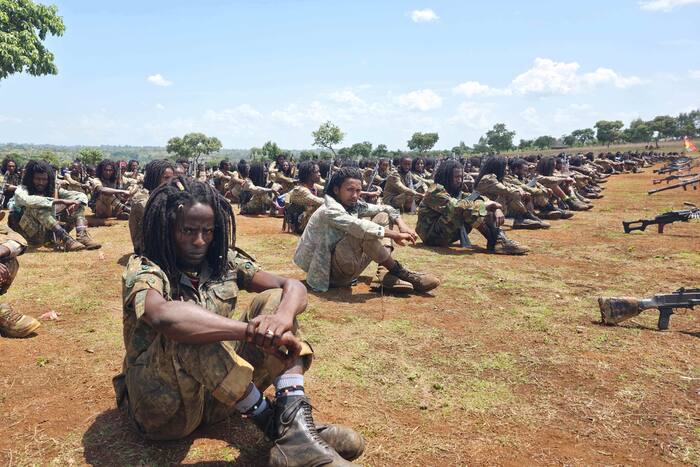
Foreign press coverage often reduces these incidents to simple religious clashes. That framing misses the structural mechanics driving the bloodshed. The attackers—frequently identified by local survivors and church leaders as armed factions operating under the banner of the Oromo Liberation Army (OLA), locally referred to as Shene—are rarely motivated by theological disputes. Instead, they view the Ethiopian Orthodox Tewahedo Church (EOTC) as an institutional proxy for historical Amhara dominance and centralized state power.
To understand why a rural parish becomes a battlefield, you have to look at how local grievances are weaponized. For decades, Ethiopia’s system of ethnic federalism organized regional states along linguistic and ethnic lines. While intended to empower historically marginalized groups, the system inadvertently created rigid boundaries of belonging. In Oromia, non-Oromo minorities and institutions associated with the old imperial center—chief among them the Orthodox Church—are routinely cast as outsiders by radicalized ethno-nationalist groups. As discussed in latest coverage by NPR, the results are widespread.
Where Federal Authority Vanishes
A massive gap exists between Addis Ababa’s official statements and the lived reality of villagers living just a few hours outside the capital. The federal government, led by Prime Minister Abiy Ahmed, has spent years fighting multi-front wars—first in Tigray, and now across Amhara and Oromia. That overextension has hollowed out local policing.
In the rural districts where these massacres occur, state security forces are often absent, under-equipped, or paralyzed by divided loyalties. Local militias and regional special forces sometimes stand down during raids, either out of fear of ambushes or due to tacit sympathy with the insurgents' political goals. When armed groups descend on a community at night, residents have no functional emergency response to call upon.
The church has repeatedly accused regional officials of negligence, pointing out that warnings of imminent attacks often go unheeded. Parish priests in vulnerable zones have documented patterns of intimidation—extortion demands, burning of crops, and threats against clergy—weeks before mass killings take place. Yet, preventive deployments rarely arrive. Once the casualties are counted and buried in mass graves, federal forces typically launch brief, heavy-handed sweep operations that fail to dismantle the insurgent networks and often alienate the local civilian population further.
The Internal Schism That Weakened the Church
Any honest assessment of the crisis must also examine how internal divisions within the Ethiopian Orthodox Tewahedo Church itself have compounded its vulnerability. In early 2023, a group of breakaway archbishops in Oromia declared the formation of an independent synod, citing linguistic discrimination and a lack of Oromo representation in the church’s upper hierarchy.
Although a fragile reconciliation was brokered in Addis Ababa, the rupture exposed deep fault lines. Militant groups exploited the controversy, framing the mainstream patriarchate as an oppressive, anti-Oromo institution. Overnight, clergy loyal to the central Holy Synod found themselves painted as political enemies rather than spiritual leaders.
The schism achieved what years of militant propaganda could not. It fractured local community solidarity, turning neighbors against one another and stripping rural churches of the traditional social protections they once enjoyed. Even in villages where Orthodox Christians and Muslims—or Oromo and Amhara residents—had coexisted peacefully for generations, the politicization of church governance injected fatal levels of distrust.
Why Official Casualty Figures Remain Contested
Getting an exact death toll in rural Ethiopia is notoriously difficult, and the figure of 60 dead reported by the church likely represents a conservative baseline. Communications blackouts, destroyed roads, and the sheer fear of reprisal prevent many families from reporting casualties to central church authorities or independent human rights monitors.
The Ethiopian Human Rights Commission (EHRC) has consistently documented similar patterns of extrajudicial killings in Oromia, noting that civilians are routinely targeted based on their perceived ethnic or religious affiliations. However, regional government spokespeople frequently downplay the numbers, attributing the violence to "anti-peace elements" while disputing the church’s characterization of the attacks as systematic religious persecution. This statistical tug-of-war allows authorities to treat massacres as isolated criminal incidents rather than an organized campaign of displacement.
The Economic Engine Behind the Violence
Beneath the banners of ethnic liberation and religious defense lies a far more prosaic driver of conflict—money and land. Oromia is Ethiopia’s economic heartland, rich in agricultural land and sitting astride the critical trade corridors connecting Addis Ababa to the rest of the Horn of Africa.
Armed groups operating in the region rely on extortion, kidnapping for ransom, and the seizure of agricultural assets to fund their operations. Orthodox churches, which historically hold significant tracts of land and collect tithes from their congregations, are viewed as lucrative targets. Driving out established farming communities also frees up valuable land that can be redistributed to local loyalists, cementing the insurgents' control over territory.
When families flee after an attack, they rarely return. Whole parishes have been emptied across parts of West Arsi and Guji, altering the demographic makeup of the region permanently. What looks like chaotic rural banditry is, in practice, a methodical process of demographic engineering achieved through terror.
What International Observers Get Wrong
Western diplomats and international media outlets often struggle to process the violence in Oromia because it does not fit neatly into the dominant narratives of the region. Following the 2022 Pretoria Agreement that ended the devastating war in Tigray, many foreign capitals were eager to declare Ethiopia back on the path to stability. Acknowledging that mass killings of religious minorities are continuing unabated in the country’s largest region complicates diplomatic re-engagement and economic aid packages.
Furthermore, the lack of sustained foreign press access to rural Oromia creates an information vacuum. Journalists stationed in Addis Ababa rely heavily on press releases from the patriarchate on one side and terse denials from government communications offices on the other. Without independent investigators on the ground, the nuanced reality—where state security forces, Oromo insurgents, and local ethnic militias all commit abuses—gets flattened into competing propaganda narratives.
The Failure of Security-Only Solutions
Addis Ababa’s default response to insurgency has always been military force. Drone strikes and troop deployments are used to clear towns, yet they consistently fail to hold territory once the army moves on. A purely kinetic approach cannot solve a crisis rooted in constitutional design and broken local governance.
Until regional authorities are held legally accountable for failing to protect minority populations, local officials will continue to look the other way when militias mobilize. Security sector reform is equally urgent; without integrating local policing structures and purging elements complicit in sectarian violence, federal deployments will remain temporary band-aids over a hemorrhaging wound.
The Heavy Cost of Impunity
The pattern is now rigidly established. A warning goes ignored, a village is surrounded at dawn, dozens of unarmed worshippers are slaughtered, and the survivors are left to bury their dead in churchyards that have become cemeteries. Days later, statements of condolence are issued from the capital, promises of investigations are made, and the cycle resets.
No high-ranking regional official or militant commander has faced meaningful, transparent prosecution for the systematic attacks on Orthodox communities over the past several years. That absolute impunity signals to armed groups that rural parishes can be raided without consequence, leaving millions of ordinary Ethiopians to wonder which village will be next when night falls.