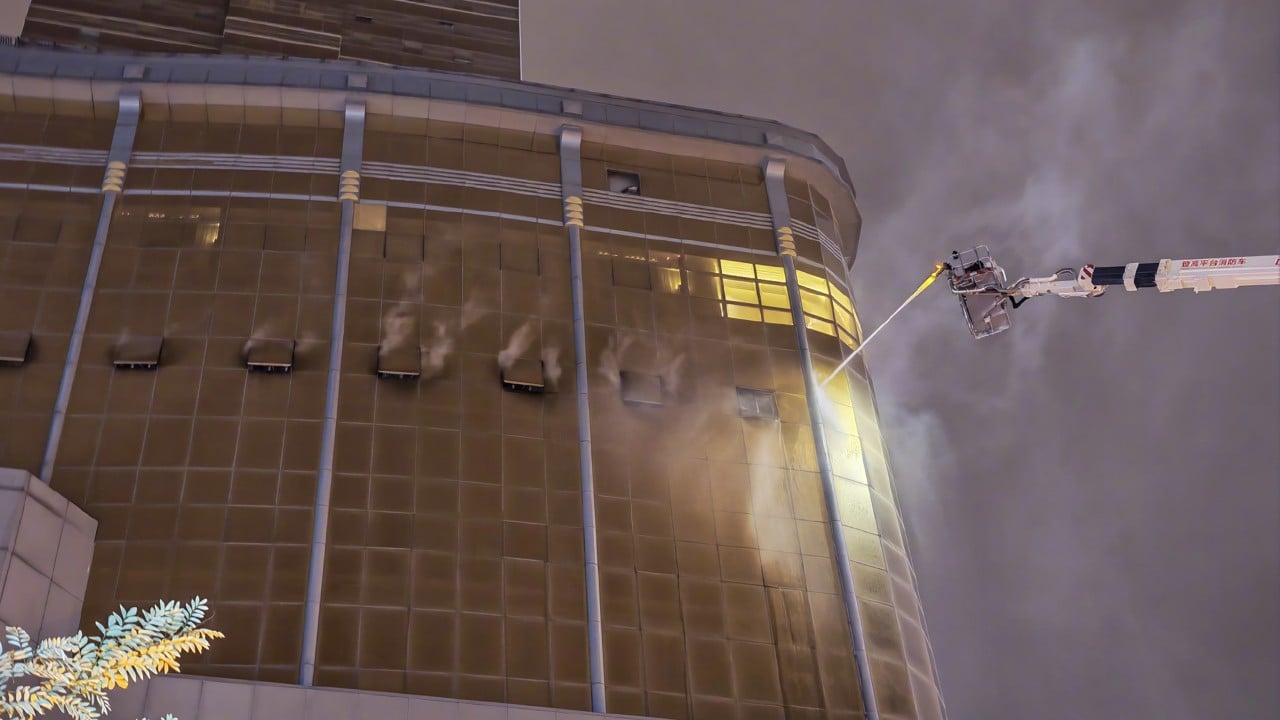
A blaze tearing through a residential high-rise in northern China has left at least 14 people dead and dozens more hospitalized, exposing a systemic vulnerability in the nation's rapidly built vertical cities. While initial dispatches from local authorities focus on the immediate rescue operation and casualty figures, the recurring pattern of lethal tower fires points toward deeper structural failures in building insulation, unauthorized renovations, and the physical limits of municipal firefighting equipment.
High-rise fires in northern China present a distinct engineering hazard compared to those in warmer coastal regions. Extreme winter temperatures across provinces like Hebei, Heilongjiang, Jilin, and Liaoning mandate heavy exterior thermal insulation on residential towers. When cost-cutting contractors substitute fire-retardant mineral wool with cheap, flammable polyurethane or extruded polystyrene foam, an entire 30-story facade becomes a vertical fuse. If you enjoyed this piece, you should look at: this related article.
Anatomy of a Vertical Chimney
Fire behaves differently inside a tall building than it does in a low-rise structure. Once a blaze breaches a window or ignites exterior cladding, the structure itself begins to work against the people trapped inside.
The stack effect drives much of the lethality in these incidents. During cold northern winters, warm air inside heated apartments naturally rises through elevator shafts, stairwells, and utility conduits, creating a powerful upward draft. If a fire starts on a lower floor, this pressure differential pulls superheated air and toxic smoke upward at speeds that outrun residents trying to evacuate on foot. For another angle on this development, refer to the recent coverage from USA Today.
A single open fire door turns a concrete stairwell into a blast furnace. Residents rarely die from direct contact with flames in these events; instead, carbon monoxide and hydrogen cyanide from burning synthetic furniture and plastic insulation incapacitate people within seconds.
The Cladding Trap
Exterior insulation and finish systems are supposed to keep heat inside apartments during sub-zero winters. In practice, thousands of residential blocks constructed during China's massive urbanization booms between 2000 and 2015 were wrapped in combustible foam boards covered by a thin layer of cement mortar.
Over time, weather exposure and structural settling crack that outer mortar shell. Once a spark—often from an improperly parked electric scooter or a discarded cigarette—reaches the exposed foam behind the mortar, the fire travels inside the wall cavity. Water sprayed from street level bounces off the intact outer mortar while the foam burns furiously behind it, melting and dripping flaming plastic onto lower floors.
Why Modern Fire Ladders Cannot Reach the Top
Public outrage following high-rise tragedies frequently centers on perceived delays by emergency responders. The reality on the ground is governed by basic physics and urban layout rather than crew response times.
Standard municipal ladder trucks across most cities max out between 32 and 54 meters, roughly equivalent to the 10th to 18th floors of a standard residential tower. While specialized aerial platforms can reach up to 100 meters, these massive vehicles weigh upwards of 60 tons and require wide, reinforced stabilization outriggers.
Older residential compounds in northern China were not designed for heavy emergency apparatus. Narrow internal access roads, choked with private cars parked illegally along the curbs, routinely block fire engines hundreds of meters away from the burning tower. Even when a 100-meter truck reaches the courtyard, overhead utility wires and landscaped plazas lacking load-bearing concrete prevent crews from deploying the outriggers safely.
Firefighters are forced to abandon external aerial rescues and fight the blaze internally. Carrying heavy hoses, breathing apparatus, and thermal imaging gear up 25 flights of smoke-filled stairs exhausts crews before they even reach the fire floor.
The Hidden Catalyst in Residential Courtyards
Investigations into deadly residential fires across China over the past decade repeatedly trace the point of origin to a single consumer technology: lithium-ion batteries powering electric bicycles and scooters.
Millions of commuters rely on two-wheeled electric vehicles for daily transport. Because public charging stations in older apartment complexes are either scarce or cost money to use, residents routinely wheel their scooters into building lobbies or take detachable battery packs up into their apartments to charge overnight.
A failing lithium-ion cell undergoes thermal runaway, a violent chemical chain reaction that generates its own oxygen and cannot be extinguished with standard water or dry-chemical extinguishers. Within seconds of ignition, a scooter battery releases jet-like flames and thick, acrid smoke that fills a ground-floor lobby. Because the lobby is the primary exit route for the entire building, a single burning scooter effectively seals hundreds of residents inside a burning tower.
The Regulatory Whack-a-Mole
National safety authorities have repeatedly issued strict directives banning electric vehicles and their batteries from building lobbies, stairwells, and elevators. Some modern residential complexes have installed optical sensors inside elevators that refuse to close their doors if a camera detects a scooter rolling inside.
Enforcement breaks down in older, lower-income neighborhoods where property management companies are underfunded or absent altogether. Residents bypass elevator sensors by covering cameras or detaching the heavy battery packs and carrying them upstairs in backpacks. Without subsidized, convenient outdoor charging infrastructure, punitive bans merely push the hazard out of sight behind closed apartment doors.
Systemic Gaps in Building Maintenance and Retrofit
China possesses some of the strictest written fire codes in the world for new construction. Modern super-tall skyscrapers in major financial hubs feature pressurized stairwells, automated sprinkler systems on every floor, and dedicated refuge levels every 15 stories.
The crisis sits squarely in the aging mid-tier residential stock built over the last three decades. Many of these towers fall into a regulatory gray zone: tall enough to exceed the reach of standard fire ladders, yet built before modern sprinkler mandates were rigorously enforced in residential units.
Maintenance of existing fire suppression systems suffers from fractured accountability. In many residential compounds, the housing maintenance fund—money collected from homeowners specifically for major structural repairs—remains locked behind complex bureaucratic approval processes requiring supermajority votes from residents.
When a building's internal standpipe loses water pressure due to a rusted valve, or when fire alarm control panels are silenced because faulty sensors trigger false alarms, those systems often remain broken for years. During an actual emergency, firefighters connect their hoses to the building's internal dry risers only to discover no water reaches the upper floors.
The Realities of Self-Rescue in a High-Rise Blaze
When external rescue is physically impossible and internal suppression systems fail, survival depends entirely on building compartmentalization and occupant behavior. Fire safety engineers emphasize that a concrete apartment unit is designed to act as a fire-rated box, typically capable of holding back flames for one to two hours if the entry door remains closed.
Panic drives the majority of fatalities. Seeing smoke in the hallway, residents instinctively open their doors and attempt to run down the stairs toward street level. Once inside the stairwell, they encounter rising toxic gases and zero visibility.
A hypothetical scenario illustrates this fatal trap: a fire breaks out on the eighth floor of a 28-story apartment building at 2:00 AM. Smoke enters the central stairwell through a propped-open fire door. Residents on the 22nd floor wake up, smell smoke, and enter the stairwell to escape downward. By the time they reach the 14th floor, carbon monoxide concentration spikes, causing disorientation and collapse long before they reach the fire floor. Meanwhile, a neighbor on the 22nd floor who stays inside their apartment, stuffs wet towels into the gaps around the front door, and waits by an open window away from the smoke column survives until firefighters clear the building three hours later.
Accountability and the Inspection Cycle
Every major fatal fire in northern China triggers an immediate, high-profile campaign of safety inspections. Municipal officials fan out across cities, padlocking blocked fire exits, fining property managers, and clearing parked cars from fire lanes.
These campaign-style crackdowns produce visible short-term results but rarely alter the underlying economics of building safety. Replacing flammable exterior cladding across thousands of aging apartment towers requires tens of billions of yuan that neither cash-strapped local municipal governments nor working-class homeowners can easily afford.
Property management companies operate on razor-thin margins, often struggling to collect basic monthly maintenance fees from residents. Investing in 24-hour fire watch personnel, upgrading aging electrical grids to handle modern appliance loads, or retrofitting pressurized smoke-control fans into older stairwells remains financially out of reach for the very buildings most at risk.
True fire safety in dense vertical housing requires shifting from reactive crackdowns to permanent physical upgrades: wrapping exposed exterior foam in non-combustible barriers, installing subsidized outdoor battery-swapping cabinets at every residential gate, and enforcing hard mechanical locks that keep stairwell fire doors closed at all times. Until those physical realities change, millions of residents living above the 18th floor remain one faulty wire or overheated battery away from a vertical trap.