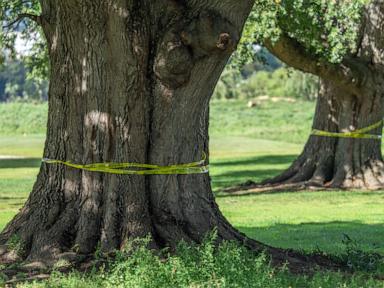
U.S. District Judge Ana Reyes ordered the Trump administration on October 26, 2026, to halt further tree removal at East Potomac Park and give the court at least ten business days' notice before closing any part of the historic Washington golf grounds. That October order set the stage for a much larger showdown over East Potomac Golf Links and the future of Hains Point. When the administration moved toward a 15-month closure slated for November 15, 2026, Reyes stepped in again on November 14 with a temporary restraining order running through November 28 to block the park shutdown while litigation continues.
Chainsaws stopped before championship greens could be built. That is the surface story everyone is repeating.
Dig past the headlines and the real fight looks nothing like a tidy zoning dispute. It is a collision between administrative law, public park stewardship, and a long-running push to reshape federal land in Washington into signature monuments. Every tree felled along the Potomac River carries legal weight because federal land in the capital is governed by strict statutory rules, public-access expectations, and preservation reviews that do not bend easily to executive urgency.
What Happened Before the Courtroom Clashes Escalated
East Potomac Park sits on a peninsula jutting into the Potomac River and Washington Channel roughly two miles south of the White House. For generations, East Potomac Golf Links has offered affordable public golf alongside driving ranges, walking paths, bike routes, and riverfront views that draw both serious players and casual parkgoers.
President Donald Trump has pushed to overhaul the property into a single 18-hole championship layout designed by architect Tom Fazio. Proponents argue the site could eventually host major events such as the U.S. Open or Ryder Cup while remaining open to the public, with pledges of discounted greens fees for local residents.
Opponents see something very different. The DC Preservation League and local golfers filed suit in February 2026, arguing that the plan threatens historic park character, removes mature trees, absorbs space used by cyclists, joggers, and picnickers, and risks turning an accessible neighborhood staple into a high-cost showpiece.
Why Seawall Safety Became a Legal Flashpoint
When legal pressure mounted in late October 2026, the government's rationale shifted in ways that drew sharp scrutiny in court. In an October 28 filing, the administration pointed to severe safety hazards from a seawall described as crumbling into the Potomac River, asserting that closing the park south of Buckeye Drive would be necessary regardless of golf renovations.
Plaintiffs called that safety argument a pretext. They pointed to public statements from Trump—including an October 26 post stating the site would close on November 15 to renovate and rebuild—as proof that the closure was tied directly to the golf overhaul rather than an independent emergency shutdown.
Courts watch for inconsistencies between what lawyers say in briefs and what officials say in public. When a government agency claims an urgent public-safety closure is unavoidable while the president publicly links the exact same closure date to a major construction project, judges take notice. Even after Reyes issued her November 14 restraining order preserving park access through November 28, the Interior Department signaled upcoming solicitation steps tied to seawall work.
| Issue at Stake | Administration Position | Challengers' Argument | Practical Impact on the Public |
|---|---|---|---|
| Tree Removal | Framed as part of site management and grounds upkeep | Seen as premature clearing ahead of an unapproved redesign | Immediate canopy loss and friction with preservationists |
| Park Closure | Tied to crumbling seawall safety hazards along the river | Viewed as a pretext to clear the way for a 15-month rebuild | Threatens golf, bike paths, and open park space south of Buckeye Drive |
| Course Identity | Envisioned as a Fazio-designed championship venue for major events | Feared to alter historic layout and long-term affordability | Shifts balance from casual everyday play to high-profile destination golf |
The Overlooked Golf Economics Nobody Mentions
Anyone who has covered municipal golf for twenty years knows a quiet truth about public courses. Building a championship-caliber layout is only half the equation; keeping it financially sustainable without pricing out everyday players is the hard part.
Existing public courses like East Potomac serve a vital civic role that private clubs and prestige venues rarely replicate. They give beginners a place to learn, give retirees and working residents steady tee times, and keep golf connected to the surrounding city rather than cordoned off behind high fees.
A course designed to impress tour pros and tournament broadcasters solves a prestige problem, not necessarily a neighborhood access problem.
There is also a regional market reality. The Washington metropolitan area already features high-profile courses—including Trump National Golf Club Washington, D.C. across the river in Virginia, which was also designed by Fazio and has hosted major golf events. Adding another ambitious championship layout on federal parkland raises fair questions about demand, maintenance costs, flood and riverfront exposure, and whether public land is the right canvas for a trophy project.
What Gray Areas Remain on Both Sides
Neither side has a monopoly on simple answers. Anyone who has walked East Potomac knows the grounds have long needed capital investment, drainage upgrades, and infrastructure care. Neglecting aging public facilities year after year is not a virtue; deferred maintenance eventually turns small repairs into expensive crises.
At the same time, halting work via temporary restraining orders pauses construction without magically fixing aging riverfront infrastructure or resolving long-term funding questions. Legal injunctions buy time for review and accountability, but they do not pour concrete or repair seawalls on their own.
How to Read Every Next Move in This Fight
Watch three concrete signals over the coming weeks rather than trading slogans:
- Court docket rulings past November 28: Look at whether the restraining order extends into a preliminary injunction or narrows to specific construction activities.
- Administrative record filings: Check whether the government produces independent engineering assessments that separate genuine seawall hazards from golf-course redesign plans.
- Scope of public access: Track whether trails, open green space, and affordable tee times are protected if any phased work eventually moves forward.
Federal parks belong to the public first, and every square foot along the Potomac carries a history older than any single administration's blueprint.


