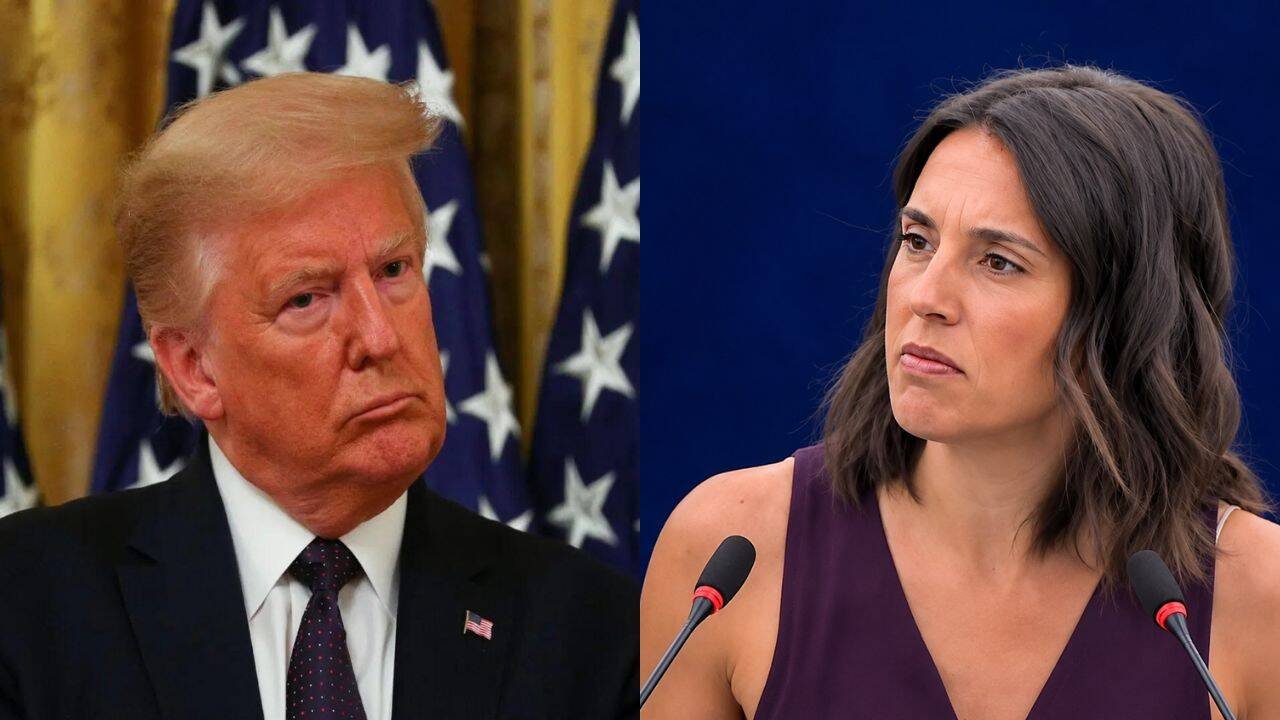
A viral video clip showing Spanish politician Irene Montero singing a satirical rendition of Happy Birthday to US President Donald Trump inside the European Parliament has sparked intense online debate. Montero, an MEP for Spain’s left-wing Podemos party and a former Minister of Equality, used her designated speaking time during a Middle East policy debate to target Trump following his 80th birthday celebrations on June 14. Mimicking Marilyn Monroe’s famous 1962 performance for John F. Kennedy, Montero concluded her speech by singing to an empty chamber, changing the lyrics to mock Trump as "Mr. Genocide" while criticizing European foreign policy.
Beneath the sensational headlines and the immediate explosion of social media commentary lies a deeper, far more significant shift in how international diplomacy and legislative bodies operate. The incident was not an isolated burst of political passion. It was a carefully orchestrated piece of modern performance art designed specifically to exploit the algorithmic realities of internet culture, masking a severe institutional paralysis within the European Union itself.
The Anatomy of the Stunt
To understand why a veteran Spanish leftist chose to croon a decades-old American pop-culture reference in Brussels, one must look at the mechanics of contemporary electoral politics. Irene Montero is no amateur. As a leading figure in Podemos, a party that rose to prominence on the wave of anti-austere, populist anger in Spain, she knows that attention is the ultimate currency.
The speech began in Spanish, aimed squarely at Kaja Kallas, the European Union foreign policy chief. Montero fiercely questioned Europe’s role in global affairs, demanding to know if the bloc had successfully prevented devastation or held international powers accountable. She pointedly asked if the EU had stopped military actions or broken diplomatic relations with Israel.
Then came the pivot. Switching to English to ensure maximum global reach, Montero mocked Trump’s milestone birthday, comparing the American festivities to a Roman Empire spectacle where gladiators beat each other for entertainment. The finale, an airy imitation of Monroe's birthday song, delivered the explosive punchline.
For the average viewer scrolling through a social media feed, it appeared to be a dramatic, high-stakes confrontation. The reality on the ground was starkly different. Montero delivered her remarks to a virtually empty room. The rows of seats around her were vacant, populated only by a handful of staffers and a stoic Kallas, who remained focused entirely on her notes, refusing to offer a verbal response.
The Empty Chamber and the Algorithm
This contrast between the physical emptiness of the parliamentary hall and the crowded digital arena reveals the true intent behind the performance. Traditional legislative work is tedious. It involves hours of committee meetings, dense texts, and incremental compromises that rarely make the evening news. For populist movements on both the left and the right, this slow grind yields diminishing returns.
By staging a performance that appeals directly to the internet, politicians bypass the traditional gatekeepers of news and media. The video was edited, uploaded, and distributed within minutes, finding an audience of millions who would never otherwise watch a European Parliament debate on foreign policy. The actual lawmakers in the room did not matter; the camera on the podium was the only audience that counted.
This represents a profound transformation in how elected officials perceive their mandates. When the legislative floor becomes a television studio, the primary goal shifts from passing effective policy to generating viral engagement. The immediate feedback loop of likes, shares, and outraged comments creates a powerful incentive to prioritize shocking rhetoric over constructive diplomacy.
Europe’s Geopolitical Impotence
Beyond the theater, Montero’s performance touched on a raw nerve regarding the European Union's actual influence on the global stage. Her criticisms, though delivered through satire, highlighted a growing frustration among certain political factions regarding the bloc's inability to dictate outcomes in international crises.
The European Union frequently struggles to project a unified voice on foreign policy. With 27 member states, each possessing its own national interests, historical alliances, and domestic pressures, achieving consensus on complex Middle Eastern geopolitics is remarkably difficult. While Washington acts decisively, Brussels often finds itself trapped in endless rounds of statements, expressions of concern, and minor sanctions packages.
Montero used this structural weakness to frame the EU as a passive observer rather than a global leader. By questioning Kallas directly, she sought to expose the gap between Europe’s lofty moral rhetoric and its practical diplomatic limitations. The song was a blunt instrument used to hammer home a perception of European weakness, suggesting that while the world changes rapidly, Europe merely watches.
The Weaponization of Outrage
The immediate reactions to the viral clip followed a predictable script. Supporters praised Montero for her boldness, celebrating her willingness to use a public platform to challenge powerful global figures and break diplomatic decorum. To her base, she was speaking truth to power in a system that often feels sanitized and detached from public sentiment.
Critics, however, dismissed the entire display as a hollow gesture that degraded the seriousness of the institution. They argued that singing parodies in an empty chamber does nothing to help civilians in conflict zones or alter the path of international diplomacy. Instead, they viewed it as self-serving political theater designed to bolster Montero’s personal brand and rally her domestic followers in Spain.
This deep division illustrates how outrage has been weaponized as a standard political strategy. In a polarized media ecosystem, nuance is a liability. A calculated stunt that angers opponents while electrifying supporters is far more effective for fundraising and voter mobilization than a reasoned policy proposal. The content of the protest matters less than the friction it generates.
The Long Decline of Diplomatic Decorum
The European Parliament has long been a venue for unconventional protests, but the nature of these actions has evolved significantly. In past decades, protests usually involved holding up signs, wearing specific shirts, or occasionally interrupting a speaker. These were collective actions meant to signal a shared stance among a faction of lawmakers.
What we see today is the rise of the individualized political brand. The modern MEP operates as an independent content creator, using the prestige and resources of the parliament to feed their personal digital platforms. The institution itself provides the authoritative backdrop that validates the performance, lending a veneer of gravity to actions that are fundamentally designed for digital amusement.
This erosion of traditional decorum changes the nature of diplomatic dialogue. When political figures view each other as characters in a broader media war rather than colleagues engaged in governance, the space for compromise shrinks. Trust is replaced by suspicion, and the capacity for quiet, effective negotiation vanishes.
Moving Beyond the Noise
The true danger of this political shift is not the offense caused by a song, but the distraction it creates. While the public debates the appropriateness of Montero's Marilyn Monroe imitation, the complex realities of international relations remain unaddressed. The structural challenges facing European foreign policy cannot be resolved by viral moments, nor can they be ignored by pretending the digital arena does not exist.
The European Union faces serious questions about its relevance in a changing global order. Answering those questions requires rigorous analysis, strategic clarity, and difficult political choices. So long as the public and the media remain fixated on the theater of the empty chamber, the substantive debates that actually affect lives will continue to happen behind closed doors, far away from the cameras.