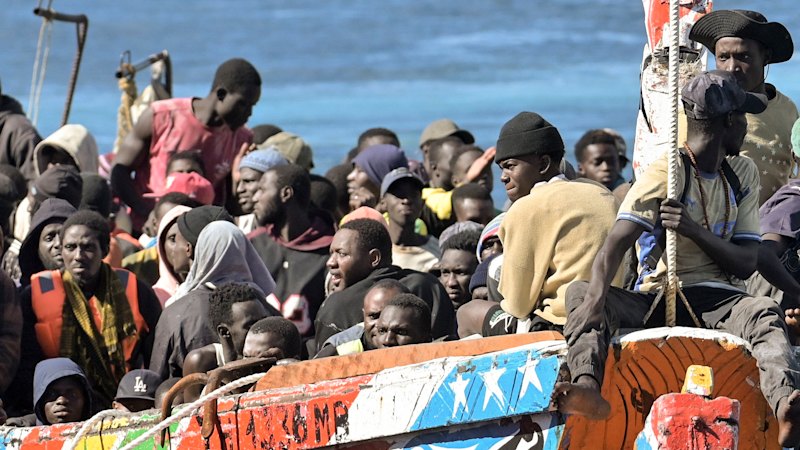
European governments are increasingly adopting offshore asylum processing—inspired by Australia’s controversial "Pacific Solution"—to deter irregular migration and appease domestic voters. While politicians promote externalized detention as a silver bullet to break smuggling networks and stop unauthorized boat crossings, operational realities reveal an expensive, legally fraught system. Copying Canberra’s remote island model ignores vast geographic differences, clashes directly with European human rights courts, and carries staggering financial costs that rarely deliver the promised deterrence.
The Anatomy of the Australian Model
To understand what Brussels, Rome, and London are attempting to replicate, you have to look at what Australia actually built. It wasn't a single policy. It was an interlocking machine of naval interdiction, mandatory offshore detention, and strict legislative excision designed to ensure that no one arriving by boat without a visa would ever settle on Australian soil. Expanding on this topic, you can also read: Celebrating the Death of the Guadalajara Cartel Founder Misses the Real Threat.
The architecture began in 2001 under Prime Minister John Howard, following the rescue of over four hundred asylum seekers by the Norwegian freighter MV Tampa. Canberra refused the ship entry, deployed special forces, and hastily passed laws excising thousands of outlying islands from Australia’s migration zone. Suddenly, landing on Christmas Island no longer legally counted as arriving in Australia for the purposes of claiming asylum.
Canberra then struck financial deals with impoverished Pacific neighbors—specifically the tiny island nation of Nauru and Papua New Guinea’s Manus Island—to house intercepted migrants in isolated processing centers. After a brief dismantling by a Labor government in 2008 led to a surge in boat arrivals, the policy returned with even sharper teeth in 2013 under Operation Sovereign Borders. Experts at The Washington Post have provided expertise on this situation.
The military took command of border protection. Naval vessels intercepted smuggling boats at sea, transferred passengers onto bright orange, unsinkable lifeboats, and towed them back toward Indonesian waters. Those who could not be turned back were flown to Nauru or Manus Island with a stark, uncompromising message broadcast across transit countries in multiple languages: You will never make Australia home.
On purely statistical terms regarding boat arrivals, the blockade worked. Irregular maritime arrivals dropped from over twenty thousand in 2013 to virtually zero within eighteen months. Smuggling syndicates lost their primary selling point because they could no longer guarantee entry into the Australian mainland.
Yet the human and financial ledger tells a far darker story. Maintaining detention facilities on remote tropical islands required shipping in everything from bottled water to private security contractors. Australian parliamentary inquiries and budget documents repeatedly revealed costs running into hundreds of thousands of dollars per detainee per year. Meanwhile, indefinite detention in stifling conditions triggered severe mental health crises, riots, self-harm, and fatalities, drawing sustained condemnation from the United Nations and medical associations.
Why European Leaders Are Reaching for the Playbook
For decades, mainstream European politicians dismissed Australia’s approach as an extreme outlier incompatible with European values. That consensus has shattered. Driven by sustained irregular arrivals across the Mediterranean, overwhelmed municipal reception systems, and the steady electoral rise of nationalist parties, European capitals are desperate for visible, decisive action.
The numbers explain the political panic. While irregular arrivals into the European Union remain well below the peak of the 2015 crisis, steady flows along the Central Mediterranean, Western Balkan, and Atlantic routes have strained housing, healthcare, and asylum adjudication courts. Voters see strained public services and stalled deportations; governments see an existential threat to their survival at the ballot box.
In response, the political center has shifted hard to the right on border enforcement.
- The United Kingdom’s Rwanda Scheme: Before its cancellation following the 2024 general election, the British government spent hundreds of millions of pounds trying to establish a one-way deportation pipeline to Kigali. The premise mirrored Canberra’s core deterrent: remove the prospect of settlement in Britain, and people will stop paying smugglers to cross the English Channel in small boats.
- Italy’s Albanian Protocol: Prime Minister Giorgia Meloni bypassed the stalled consensus in Brussels by signing a bilateral agreement with Tirana. Under this arrangement, migrants intercepted by Italian vessels in international waters—specifically adult men from countries deemed "safe"—are transported to Italian-run detention centers in the Albanian port of Shëngjin and the inland base of Gjadër for accelerated processing.
- The EU Pact on Migration and Asylum: While stopping short of full Australian-style externalization, the bloc’s sweeping legislative overhaul introduced mandatory border screening, accelerated procedures, and expanded concepts of "safe third countries," signaling a broad institutional pivot toward containment at the perimeter.
- The Coalition of the Willing: Over a dozen EU member states have formally petitioned the European Commission to explore "innovative solutions," diplomatic shorthand for funding return hubs and offshore processing centers outside the bloc’s borders.
Politicians love the Australian model because it offers a simple, muscular narrative. Instead of explaining the tedious mechanics of consular negotiations, readmission agreements, and asylum backlogs, a leader can point to an offshore facility and project absolute control.
Geography Is Destiny
Here is where the political sales pitch collides with physical reality. Australia is an island continent surrounded by vast stretches of open ocean, with no land borders and a relatively small number of maritime departure points in Indonesia and Sri Lanka. Intercepting a wooden vessel in the Timor Sea is a difficult naval operation, but the theater of operations is bounded and predictable.
Europe is the exact opposite. It is a densely populated peninsula connected by land to Asia, separated from North Africa by a narrow, heavily trafficked sea, and fringed by thousands of miles of jagged coastline and scattered islands.
Consider the Central Mediterranean route between Tunisia, Libya, and southern Italy. At its narrowest point, the Strait of Sicily is roughly ninety miles wide. Smugglers launch cheap metal or fiberglass skiffs simultaneously from dozens of coves along the North African coast, deliberately timing departures to overwhelm coast guard radars.
Tow-backs—the cornerstone of Australia’s maritime deterrence—are virtually impossible in the Mediterranean. Turning a migrant boat back toward Libya violates the foundational principle of non-refoulement, which prohibits returning individuals to places where they face torture, arbitrary detention, or persecution. Libya is fractured by militia rule and widely documented for horrific abuses in migrant detention centers. Even Tunisia, despite signing cash-for-control deals with Brussels, lacks the coastal capacity and political willingness to accept mass pushbacks of sub-Saharan nationals.
Without the ability to physically turn boats around at sea, offshore processing in Europe becomes an expensive logistical detour rather than a closed border. Every intercepted person must still be rescued, disembarked, medically screened, transported to a third country, housed, guarded, and given access to legal appeals.
The Legal Wall in Strasbourg and Luxembourg
Australia operates without a national bill of rights and is not subject to a supranational human rights court capable of striking down domestic legislation. When the Australian High Court challenged aspects of offshore detention, Canberra simply passed retrospective legislation to close the legal loopholes.
European nations do not have that luxury. Every EU member state is bound by the European Convention on Human Rights (ECHR), enforced by the European Court of Human Rights in Strasbourg, alongside the EU’s own Charter of Fundamental Rights, policed by the Court of Justice of the European Union in Luxembourg.
These legal frameworks do not stop at the water's edge. Jurisprudence from Strasbourg has firmly established that whenever a state exercises "effective control" over individuals—whether on a coast guard cutter in international waters or inside a fenced compound leased in a foreign country—that state’s human rights obligations apply in full.
We have already seen this legal reality dismantle European offshore initiatives in real time.
When the UK government attempted to put the first asylum seekers on a charter flight to Kigali, an eleventh-hour injunction from a single judge in Strasbourg grounded the plane on the tarmac. The UK Supreme Court subsequently ruled the entire scheme unlawful, concluding that Rwanda could not be reliably considered a safe third country because of risks that asylum seekers might be wrongly returned to their countries of origin.
Italy’s Albanian centers hit a similar judicial brick wall almost immediately upon opening. Italian judges refused to validate the detention of the very first group of men transferred to Gjadër, citing a European Court of Justice ruling regarding what constitutes a "safe" country of origin. Because the judges ruled that Egypt and Bangladesh did not meet the strict EU legal criteria for safety across their entire territories, the men could not be kept in fast-track offshore detention. Italian naval vessels had to ferry them right back to mainland Italy.
To make an Australian model truly function in Europe, governments would have to either withdraw from the European Convention on Human Rights—a move that would unravel the Good Friday Agreement in Northern Ireland and isolate a nation diplomatically—or rewrite foundational EU treaties, which requires unanimous consent across twenty-seven member states. Neither is happening anytime soon.
Follow the Money
If the legal hurdles are daunting, the financial math is downright brutal. Offshore processing is not a budget-saving measure; it is one of the most expensive ways imaginable to manage a border.
Let’s look at the hard numbers from existing experiments. Britain committed hundreds of millions of pounds to Rwanda before a single asylum seeker was forcibly relocated there. Internal government impact assessments estimated that relocating each individual would cost well over one hundred thousand pounds more than processing and housing them domestically in the UK.
Italy allocated roughly six hundred and seventy million euros over five years to build and operate its two facilities in Albania. Those centers have a maximum capacity of three thousand people at any given time—a drop in the ocean compared to the more than one hundred thousand irregular arrivals Italy recorded in peak recent years. Factor in the fuel and operational costs of deploying Italian Navy ships to shuttle small groups of detainees back and forth across the Adriatic Sea, and the per-capita cost skyrockets.
Compare this to the unglamorous, domestic alternatives that rarely make headlines:
- Hiring Asylum Caseworkers: Backlogs happen because governments starved adjudication agencies of staff during periods of low arrivals. Paying civil servants to process claims within sixty days costs a fraction of flying detainees to a third country.
- Expanding Reception Infrastructure: Purpose-built reception centers are vastly cheaper than emergency contracts with private hotels, which have drained billions from European treasuries due to poor planning.
- Diplomatic Return Agreements: Rejected asylum seekers often remain in Europe because their home countries refuse to issue travel documents. Leveraging trade, visa access, and development aid to secure functional readmission treaties solves the actual bottleneck—deportation—without needing an offshore island.
Taxpayers are essentially being asked to fund luxury-tier detention logistics in foreign jurisdictions to create the illusion of toughness, while domestic asylum courts remain chronically underfunded.
The Geopolitical Trap of Outsourcing Borders
There is a hidden strategic cost to the Australian blueprint that European analysts frequently overlook: geopolitical leverage.
When a wealthy nation pays a poorer neighbor to hold unwanted migrants, the power dynamic flips overnight. The host country quickly realizes it holds a vital domestic political lifeline for the paying government. It can—and will—extract escalating financial and diplomatic concessions to keep the gates closed.
Australia experienced this repeatedly with Nauru and Papua New Guinea, where contract renewals with private security firms and host governments ballooned into multi-billion-dollar commitments. Europe has already tasted this vulnerability closer to home. In 2020, Turkish President Recep Tayyip Erdoğan unilaterally declared his borders with Greece open, busing thousands of migrants to the frontier to extract more funding and political backing from Brussels. Similarly, authoritarian figures in Belarus have weaponized migration routes across the Polish and Lithuanian borders to destabilize the EU.
By setting up offshore processing hubs in non-EU states, European capitals hand foreign leaders a permanent lever of coercion. If a host government demands more cash, visa liberalization, or silence on its domestic human rights abuses, what is Europe’s fallback? Bringing thousands of detainees back onto European soil would trigger an immediate domestic political collapse for the government in power. You cannot outsource your border without outsourcing your sovereignty along with it.
What Actually Works When the Rhetoric Fades
Strip away the campaign slogans, and migration management comes down to boring, unsexy administrative competence. Irregular migration surges when smuggling networks can promise two things: high odds of physical entry and a high probability that, even if an asylum claim is rejected, the host country will fail to deport the individual.
Right now, European states deport fewer than a quarter of the non-EU citizens ordered to leave the bloc. That enforcement gap—not the lack of an offshore island—is the real magnet. When people know that an unsuccessful asylum claim still results in years of de facto residency in the informal economy, the perilous journey remains a rational gamble.
Closing that gap does not require violating international law or leasing foreign military bases. It requires relentless focus on three operational pillars:
- Front-Loaded Adjudication: Separating genuine refugees from economic migrants within weeks rather than years. People with valid claims get integrated and put to work immediately; those without valid claims enter removal proceedings before they establish deep community ties.
- Targeted Enforcement Against Smuggling Finance: Smuggling networks operate as transnational businesses. Tracking illicit financial flows, seizing maritime engines and inflatable hulls in transit hubs before they reach the coast, and prosecuting the financiers disrupt operations far more effectively than detaining their customers after the fact.
- Coordinated EU Return Diplomacy: Individual European countries get ignored when they ask a third country to take back its nationals. When the entire European Union ties Schengen visa issuance and preferential trade tariffs directly to readmission cooperation, reluctant governments suddenly find the administrative will to issue passports for deportees.
Europe’s fascination with the Australian model is a classic case of political magical thinking—the belief that a complex, structural demographic and geopolitical challenge can be solved by copying a radically different country’s geography-dependent playbook. Until European leaders invest in the hard, domestic machinery of fast courts, functional diplomacy, and enforceable returns, offshore detention centers will remain nothing more than billion-dollar monuments to political theater.