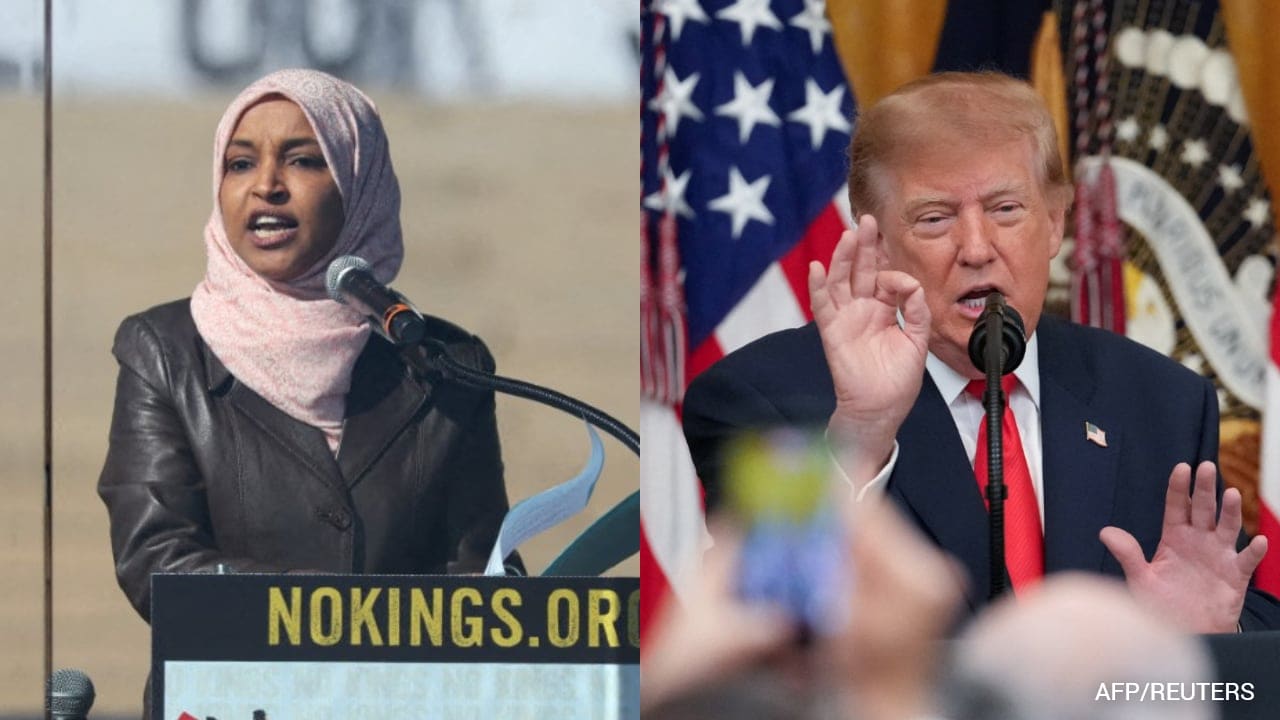
The federal search warrant executed at the Washington, D.C., residence of Representative Ilhan Omar by Homeland Security Investigations (HSI) marks a chilling escalation in modern American executive power. When roughly two dozen agents descended on the home of a sitting member of Congress, seizing electronic devices, notebooks, and personal effects, it signaled more than a routine criminal inquiry. It laid bare the unsettling reality of how decades-old immigration paperwork can be retroactively weaponized in the high-stakes theater of federal politics.
For months, the administration and its allies have targeted Omar, reviving long-standing allegations concerning her family's background, her childhood entry into the United States, and historical claims regarding her immigration and citizenship status. Investigators are reportedly examining whether false information was provided on historical forms decades ago. Yet, treating this solely as a paperwork dispute ignores the broader structural mechanics at play. The intersection of immigration bureaucracy and federal criminal enforcement has always possessed discretionary fault lines, making it uniquely vulnerable to political direction.
When federal agencies investigate a sitting lawmaker over childhood documentation, the threshold for public transparency must be exceptionally high. Instead, the process has been opaque. While federal judges debate the partial unsealing of the search warrant affidavits, the public is left navigating a murky landscape of leaks, political posturing, and partisan recrimination. Omar has denounced the raid as a blatant attempt by her political opponents to silence a prominent critic. Meanwhile, executive branch officials maintain that the inquiry is standard procedure under an ongoing criminal mandate.
The legal mechanisms governing citizenship revocation and immigration fraud prosecutions are complex. Historical naturalization records rarely undergo this level of intense scrutiny unless a coordinated inter-agency directive prioritizes them. By routing the investigation through Homeland Security Investigations rather than traditional congressional ethics committees or standard DOJ channels, the administration has introduced a heavy-handed enforcement posture into legislative politics.
This creates a dangerous precedent. If historical family migration records and childhood documentation can be exhumed years later to target polarizing political figures, no naturalized citizen in public life is truly insulated from retrospective audits. The machinery of the state is vast, and its documentation requirements are labyrinthine. When those mechanisms align with political animus, the resulting friction threatens the foundational separation of powers.
As the judicial battle over the unsealing of court documents continues, the core issue remains whether this enforcement action represents a good-faith pursuit of justice or an institutional overreach designed to intimidate dissent. The fallout from this raid will stretch far beyond Capitol Hill, redefining the boundaries of how immigration law interacts with political accountability.
What we know about ICE's raid at Ilhan Omar's home
This video provides additional context regarding the federal investigation and the sequence of events surrounding the Homeland Security Investigations raid on Representative Ilhan Omar's residence.