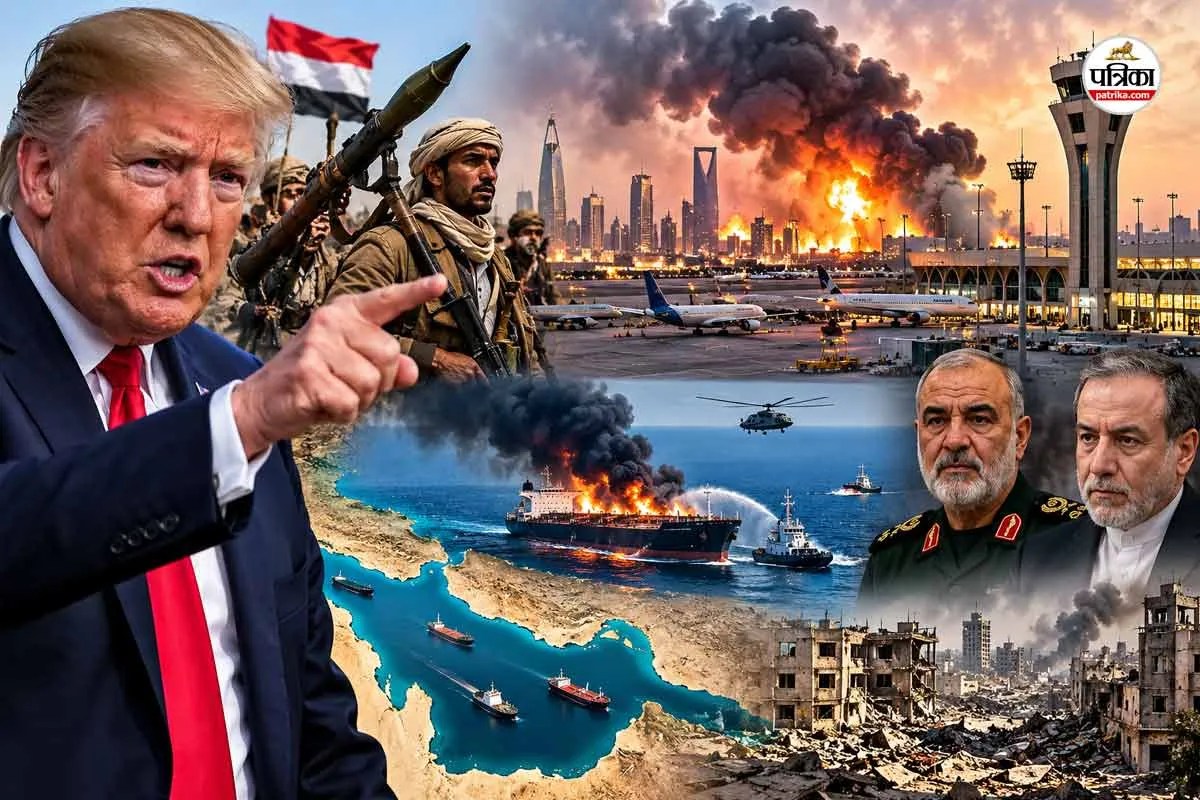
Houthi attacks on Saudi airports have shattered the fragile calm around Riyadh and exposed how quickly a regional standoff can turn into a wider Gulf crisis. For years, analysts treated drone and missile barrages against Saudi hubs as background noise to broader Middle East friction. That illusion died when projectiles struck King Khalid International Airport in Riyadh, forcing flight disruptions, rattling diplomatic missions, and prompting sharp warnings from U.S. President Donald Trump toward the Iran-aligned militants in Yemen.
Watch the runways first. Commercial aviation is the canary in the Gulf coal mine, and when air traffic near a capital city stalls or reroutes, everything from executive travel to supply chains starts seizing up. Recently making headlines in related news: What Most People Miss About Jamaica Third Country Deportees.
I have covered Gulf security long enough to know that headlines about "escalating tensions" usually arrive after the real shift has already happened. What looks like a sudden flare-up over airport strikes is actually the collision of asymmetric drone warfare, strained air defenses, shifting Washington calculations, and oil chokepoints that remain far more vulnerable than their sleek glass skylines suggest.
Why Airports Became Prime Targets in the Gulf
Airports sit at an awkward intersection of military risk and economic visibility. A strike on a remote desert outpost barely registers on global markets. A strike near or on a major international hub like King Khalid International Airport in Riyadh immediately ripples through aviation insurance, airline schedules, and diplomatic advisories. Additional insights on this are detailed by NBC News.
That visibility is the point. The Houthis do not need to permanently destroy a terminal to claim a strategic win. Disrupting flight operations, forcing partial closures or rerouting through secondary airports, and triggering emergency alerts achieve outsized psychological and economic pressure at a fraction of the cost of conventional military hardware.
The math favors cheap saturation. Ballistic missiles get the dramatic footage, yet low-cost drones and cruise missiles complicate defense planning because radar networks and interceptors have to track multiple vectors simultaneously. Even high interception rates carry a catch: every interceptor fired costs vastly more than the incoming drone or basic rocket it knocks down.
Over the past decade of conflict in Yemen—dating back to the Houthis seizing Sanaa in 2014 and the Saudi-led coalition intervening in 2015—both sides have adapted. Riyadh invested heavily in layered air defenses and civil defense protocols. The Houthis expanded their range, refined targeting, and turned civilian-adjacent infrastructure into leverage.
| Threat Dimension | What Happens on the Ground | Why It Matters to the Gulf |
|---|---|---|
| Airport & Aviation Pressure | Strikes or alerts near major hubs cause delays, suspensions, or reroutes. | Undermines confidence in Gulf cities as safe global transit and business hubs. |
| Energy & Pipeline Exposure | Attacks target oil facilities, tankers, or pipeline infrastructure. | Spikes shipping risk premiums and threatens export arteries even without total blockades. |
| Diplomatic & Staff Drawdowns | Embassies issue alerts or pull non-essential personnel. | Signals that Washington or allies see acute near-term escalation risks. |
| Air Defense Attrition | Interceptors engage drones and missiles across wide areas. | Strains stockpiles and forces costly tradeoffs between protecting cities and oil sites. |
Aviation regulators notice these patterns fast. When advisories warn airlines of conflict-zone risks across wider Middle East airspaces, carriers weigh fuel burn from longer detours against passenger safety and schedule reliability. Even when airspace stays open rather than closed, friction compounds.
Washington's Warning and the Limits of Deterrence
When President Trump issues stern warnings to the Houthis following attacks on Saudi infrastructure, markets and allies look for one thing: whether words will turn into sustained kinetic action or remain calibrated leverage. A warning works best when the target believes the threat is immediate and the cost of ignoring it exceeds any political gain.
That credibility test is harder than it sounds. The United States has long weighed the pull of protecting Gulf partners and maritime trade against the risk of getting bogged down in another expensive, open-ended campaign in the region.
Retaliatory strikes can degrade launch sites, radar nodes, or weapons caches. They rarely erase an entrenched movement's ability to fire smaller systems from dispersed locations.
Meanwhile, Saudi Arabia faces its own balancing act. Protecting its territory and citizens is non-negotiable, yet every round of escalation risks drawing the kingdom deeper into multi-front instability while it tries to keep economic transformation plans on track. A hypothetical example makes the trade-off plain: if Riyadh launches heavy retaliatory strikes that hit targets tied to wider regional backers, the response could spill over from Yemen-Saudi exchanges into broader maritime or energy harassment across the Gulf.
What Most Coverage Misses About the Gulf Crisis
Standard news reports tend to frame Houthi attacks on Saudi airports as an isolated episode or a simple proxy clash. That framing misses two bigger mechanics shaping the Gulf crisis right now.
1. The Cost Asymmetry Behind Every Interception
Modern air defense is an engineering triumph. It is also an economic grind.
Sophisticated interceptor missiles are built for high-probability kills against demanding targets. Firing multi-million-dollar interceptors repeatedly at lower-cost drones or cruise missiles creates a budget and production squeeze that no single ally can ignore indefinitely.
- Stockpile pacing matters as much as radar range. Industrial production lines for advanced interceptors take time to scale, whereas drone assembly leans on modular components and distributed workshops.
- Coverage trade-offs force hard choices. Defending a capital city, an international airport, desalination plants, and oil terminals all at once stretches batteries thin across vast geography.
- Psychological wear sets in even when defenses succeed. Sirens, alerts, and intercepted debris still disrupt daily life and rattle investors.
2. Maritime Chokepoints and Energy Nervousness
A Gulf crisis rarely stays confined to land borders. Shipping lanes and oil infrastructure act like connected pipes; squeeze one section and pressure builds somewhere else.
Even when tankers keep moving, threats to vessels, ports, or pipelines raise war-risk insurance costs and force shippers to price in delays. Energy traders do not wait for a complete closure of a waterway to react. A credible pattern of strikes against energy assets or transit routes is enough to inject a risk premium into crude and refined fuels.
Here is the uncomfortable reality for policymakers: deterrence in the Gulf is not a single switch you flip on. It is a continuous tug-of-war between military reach, diplomatic off-ramps, and economic endurance.
How Analysts and Businesses Read the Next Phase
If you are tracking this crisis rather than reacting to every alarming social media post, focus on verifiable operational signals. Claims of "direct hits" or massive damage appear frequently during active exchanges, and independent verification often lags behind official statements from both sides.
- Track commercial flight operations, not just rhetoric. Sustained normal schedules at major hubs mean airlines judge the operational risk manageable; repeated suspensions or rerouting signal real strain.
- Watch diplomatic posture and travel advisories. Changes to embassy staffing or official travel restrictions reflect real-time threat assessments from security agencies.
- Monitor energy infrastructure and shipping alerts. Attacks near pipelines, export terminals, or sea lanes carry broader economic consequences than border skirmishes.
- Separate tactical strikes from strategic shifts. A single retaliatory raid or warning does not automatically mean a lasting truce or a full-scale regional war.
There is also plenty of gray area that confident pundits gloss over. Backchannel talks can coexist with missile exchanges, and tough public language from Washington or Riyadh can serve domestic audiences and deterrence at the same time without locking in a single military path.
For anyone operating in or trading with the Gulf, preparation beats guessing. Review contingency routing for flights and freight, verify that emergency communication protocols are current, and treat calm stretches as windows to build slack rather than proof the danger has passed.