Twenty million tons. Think about that weight for a moment. It is enough material to bury entire metropolitan districts under layers of compacted industrial refuse, chemical sludge, and contaminated soil. Since 1996, the Hanford landfill site has swallowed twenty million tons of waste, quietly expanding its footprint while the surrounding communities in Washington state grapple with a legacy that refuses to stay buried.
Operating under the unassuming title of the Environmental Restoration Disposal Facility, or ERDF, this massive engineered trench system serves as the primary receptacle for low-level radioactive and hazardous waste generated during the ongoing cleanup of the Hanford Nuclear Reservation. When the facility first opened its massive gates nearly three decades ago, planners envisioned a finite timeline and a contained scope. They miscalculated. Or perhaps they simply understood the sheer scale of the atomic mess left behind by the Manhattan Project better than they cared to admit publicly. Meanwhile, you can explore related events here: The River That Waited Half a Century to Breathe Again.
Today, the landfill is not just operating; it is growing larger. The expansion reflects a grim reality about nuclear remediation. Cleaning up the nuclear age creates mountains of secondary waste that must go somewhere.
The Mechanics of an Atomic Dumpster
To understand why the Hanford landfill keeps expanding, you have to look at what is actually going into the trenches. We are not talking about household garbage or standard municipal refuse. ERDF handles contaminated soil, demolition debris from former plutonium processing reactors, pipes, concrete, and heavy machinery that absorbed decades of radioactive isotopes. To see the bigger picture, check out the detailed article by NBC News.
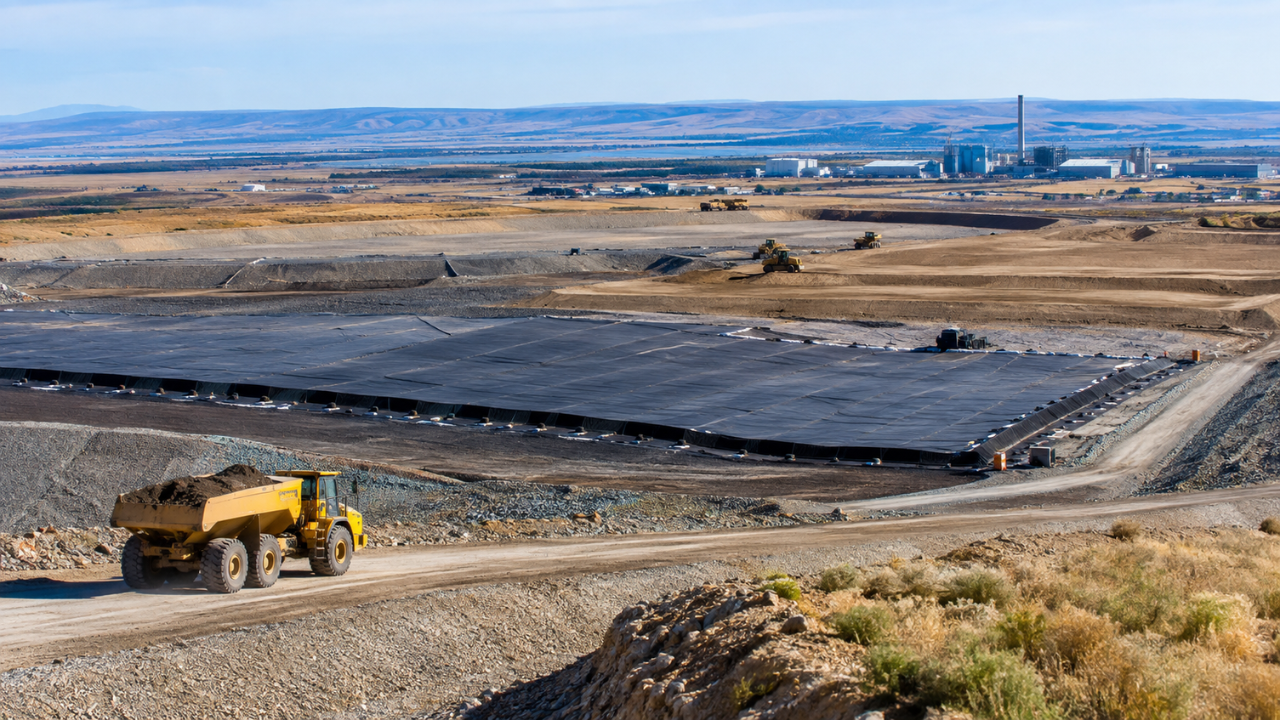
Every cubic yard of debris brought into the facility requires massive logistical coordination. Heavy dump trucks rumble across dedicated haul roads, depositing contaminated material into colossal lined cells designed to prevent leachate from reaching the groundwater table. These liners are marvels of modern civil engineering, constructed from multiple layers of high-density polyethylene, geosynthetic clay, and drainage networks.
Yet engineering has limits. Landfill liners degrade over centuries, while some of the isotopes buried inside remain hazardous for millennia. The expansion project involves building entirely new disposal cells to accommodate millions more tons of projected waste from the crumbling plutonium production facilities nearby.
State regulators and federal contractors often frame these expansions as milestones of progress. More capacity means more cleanup work is actively happening. But veteran observers of the Hanford site recognize a different pattern. Expansion is often the default symptom of an indefinite timeline. When decontamination projects stall or encounter technical nightmares, the volume of secondary waste balloons. Every building torn down spawns thousands of tons of low-level waste that heads straight for the landfill trenches.