Roughly ninety American citizens remain unaccounted for following catastrophic flash floods and mudflows that tore through the rugged borderlands between Nepal and the Tibet Autonomous Region of China. Triggered by a sudden environmental collapse high in the mountains, the wall of water and debris descended upon remote valleys with terrifying speed, obliterating roads, bridges, and guesthouses.
As families in the United States frantically dial emergency lines and comb social media for signs of life, a grim picture emerges of an unfolding crisis along a major international pilgrimage and trekking route.
The Anatomy of a High Altitude Catastrophe
The disaster struck without warning on a Wednesday morning. High above the valleys of the Rasuwa district in Nepal and neighboring Gyirong in Tibet, a glacial collapse and subsequent landslide sent millions of tons of water, mud, and rock crashing down narrow gorges.
The geography of the region acts as a natural funnel. Steep Himalayan slopes drop precipitously into roaring river corridors like the Trishuli and Bhotekoshi. When a massive wall of debris enters these confined channels, energy concentrates exponentially.
Buildings are swept off their foundations in seconds. Infrastructure vanishes under twenty feet of silt.
Local authorities and international tour agencies report that hundreds of individuals are missing, including travelers from dozens of countries. Among them are citizens drawn to the region for high-altitude spiritual journeys, specifically groups traveling toward Mount Kailash.
Pilgrims Caught in the Surge
Many of the missing Americans were part of organized tour groups or spiritual excursions heading toward Mount Kailash, a sacred peak revered by Hindus, Buddhists, and Jains. Organizations such as the Isha Foundation confirmed that dozens of participants traveling through the region were caught at border immigration checkpoints when the torrent hit.
For families back home, the silence is agonizing. Relatives have shared last-known communications—a quick video message from a hotel room near the border, a cheerful update sent hours before communications towers were sheared away by the flood.
The U.S. State Department has acknowledged that approximately ninety Americans are presently marked as unaccounted for or directly impacted, though the number shifts constantly as rescue coordinators verify names. While three U.S. citizens have been successfully rescued from isolated pockets, official confirmation of deaths among foreign nationals remains fluid as recovery teams struggle to access blocked zones.
The Logistics of an Impossible Rescue
Reaching the disaster zone requires navigating terrain that is hostile under normal conditions and nearly impassable now. Deep valleys, washed-out suspension bridges, and continuous landslides render heavy machinery useless.
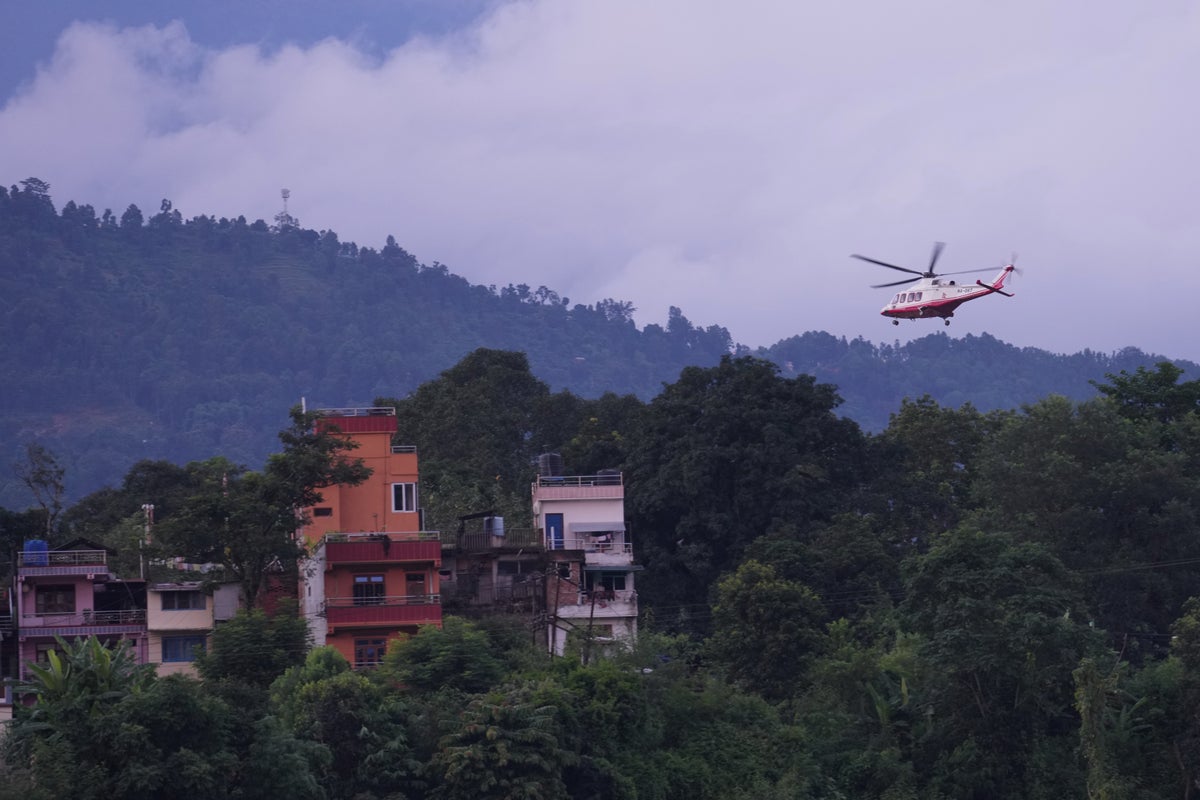
Military helicopters from the Nepalese Army attempt to fly reconnaissance and extraction missions, but low-hanging cloud cover and heavy debris fields frequently force pilots to turn back. Ground crews are forced on foot over treacherous paths, carrying basic extraction gear while dodging unstable hillsides.
Communication lines remain severely compromised. Cell towers in Nuwakot and Rasuwa districts were flattened or washed away, cutting off remote villages from the outside world. This isolation means that people who survived the initial surge are now stranded without power, clean water, or medical supplies, waiting for a rescue chain that is moving at the absolute limit of human capability.
Governments are pledging support, with the White House offering immediate assistance to Nepalese leadership. Yet, diplomatic promises translate slowly on the ground when roads are buried under boulders the size of houses.
The Blind Spots of Himalayan Tourism
This disaster exposes a systemic vulnerability in the booming Himalayan adventure tourism sector. Thousands of international travelers flock to remote border zones every season, often relying on localized communication networks and outdated early-warning infrastructure.
Climate scientists have repeatedly warned that rising global temperatures destabilize high-altitude glaciers and permafrost. When these frozen masses fail, they unleash glacial lake outburst floods that give downstream communities virtually zero reaction time.
Tour operators, local governments, and international insurance providers have long struggled to balance the economic lifeblood of tourism with the volatile reality of high-mountain meteorology. Safety protocols frequently lag behind environmental shifts.
As search teams continue combing the banks of the Trishuli River for any sign of survivors, the true scale of the tragedy remains obscured by mud, distance, and time.