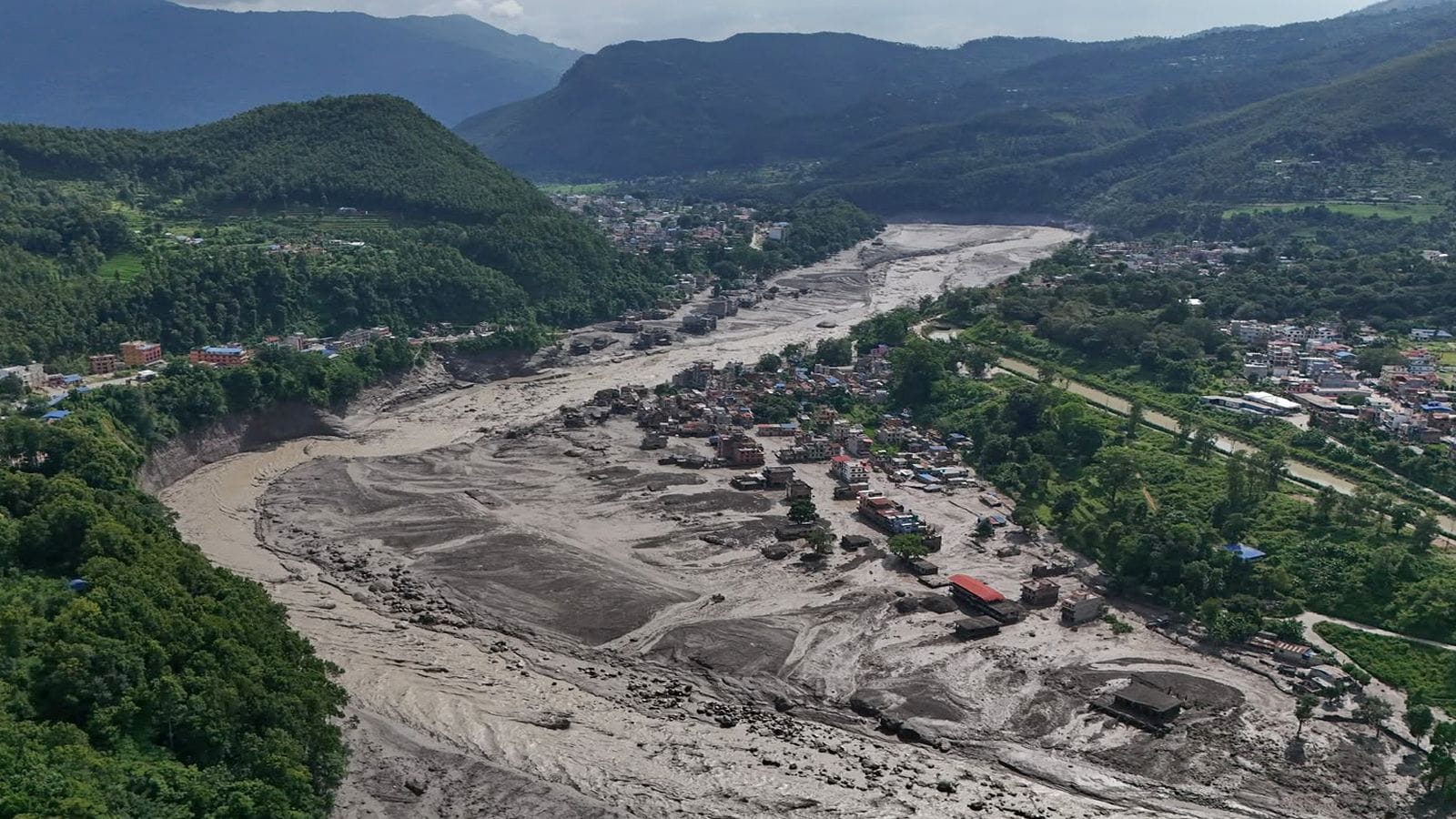
At least 95 people are confirmed dead and hundreds remain missing following a catastrophic flash flood that tore through northern Nepal, sweeping away villages, bridges, and critical hydropower infrastructure near the Tibet border. Among the unaccounted for are over a hundred Indian nationals and dozens of other foreign tourists who were caught in the path of a sudden, violent wall of water and debris. The disaster unfolded with terrifying speed, laying bare the fragile ecosystem of the high-altitude Himalayan borderlands and exposing deep vulnerabilities in regional disaster response frameworks.
The calamity began upstream when seismic activity in the Tibetan region triggered a massive ice-rock avalanche and landslide. This sudden displacement of earth slammed into the high-altitude tributaries of the Lhende Khola and the Bhote Koshi River. Geological surveys indicate that the debris temporarily formed a dense, unstable natural dam. When that barrier gave way, it unleashed an apocalyptic torrent of mud, boulders, and supercharged water down the steep mountain gorges into Nepal's Rasuwa district.
Communities in low-lying pockets like Timure and Syabrubesi had virtually no warning. Eyewitness footage captured on security systems and mobile phones shows people desperately fleeing just seconds before a towering wall of grey sludge obliterated homes, commercial structures, and vehicles. The torrent then surged downstream into the Trishuli River basin, affecting Nuwakot and Dhading districts and triggering downstream flood alerts as far away as the Indian plains of Bihar and Uttar Pradesh.
The Human Toll and International Fallout
Official figures from the National Disaster Risk Reduction and Management Authority continue to shift as rescue teams push into isolated valleys. Alongside the mounting death toll, more than 400 individuals are listed as missing. This grim roster includes over 130 Indian citizens—many of them pilgrims and travelers—alongside tourists from the United States, Europe, and various other nations. Dozens of security personnel, including members of the Nepal Army deployed to border posts, are also unaccounted for.
Diplomatic channels have swung into high gear. Indian Prime Minister Narendra Modi spoke directly with Nepal Prime Minister Balendra Shah, offering immediate humanitarian aid and disaster relief assets. Transport aircraft carrying tons of emergency relief material have been readied by the Indian Air Force, while specialized consular cells in Kathmandu and Beijing work around the clock to field frantic calls from families searching for missing loved ones.
Yet, rescue operations face severe logistical bottlenecks. The geography that makes the region breathtaking also makes it a graveyard for infrastructure.
Engineering Vulnerabilities in Extreme Terrain
The disaster has dealt a devastating blow to Nepal's energy independence. More than a dozen operational and under-construction hydropower projects along the Bhote Koshi and Trishuli corridors sustained catastrophic damage. Turbines were choked with silt, transmission towers were snapped like toothpicks, and access roads were entirely erased, wiping out millions of dollars in energy investments and cutting off power supply to large swaths of the region.
For decades, developers have rushed to harness the immense kinetic energy of Himalayan rivers. Heavy engineering projects have proliferated in narrow, geologically volatile gorges. Environmental scientists have long warned that these tight river valleys act as natural funnels, magnifying the velocity and destructive potential of any upstream breach. When a glacial outburst or landslide occurs, concrete barrages and penstocks offer little resistance against millions of tons of moving rock and water. Instead, they often exacerbate the accumulation of debris, turning infrastructure into secondary projectiles.
Compounding the physical destruction, communication lines were instantly severed. Landslides blocked the vital 42-kilometer highway connecting Nuwakot with the Rasuwagadhi border crossing, turning the disaster zone into an island. Heavy rescue helicopters chartered by the government have been grounded or forced to turn back due to zero-visibility conditions, continuous rain, and the lack of safe landing zones amid the churning mud.
The Looming Threat Upstream
As emergency crews recover bodies from riverbanks downstream, hydrologists are sounding alarms about secondary hazards. Reports from the field indicate that residual debris may still be clogging parts of the Lhende Khola gorge, creating the threat of secondary flash floods if trapped water breaches remaining blockages.
Authorities have issued urgent directives ordering residents and remaining field workers to evacuate riverbanks immediately and seek refuge on high ground. Meteorological departments in both Nepal and neighboring countries are ramping up cross-border data-sharing protocols to monitor glacial lakes susceptible to sudden temperature shifts and seismic triggers.
Emergency shelters are swelling with displaced families as medical teams treat trauma injuries and hypothermia. The path to recovery will take years, forcing a brutal reckoning over how infrastructure is planned, built, and inhabited in one of the most volatile geological zones on Earth.