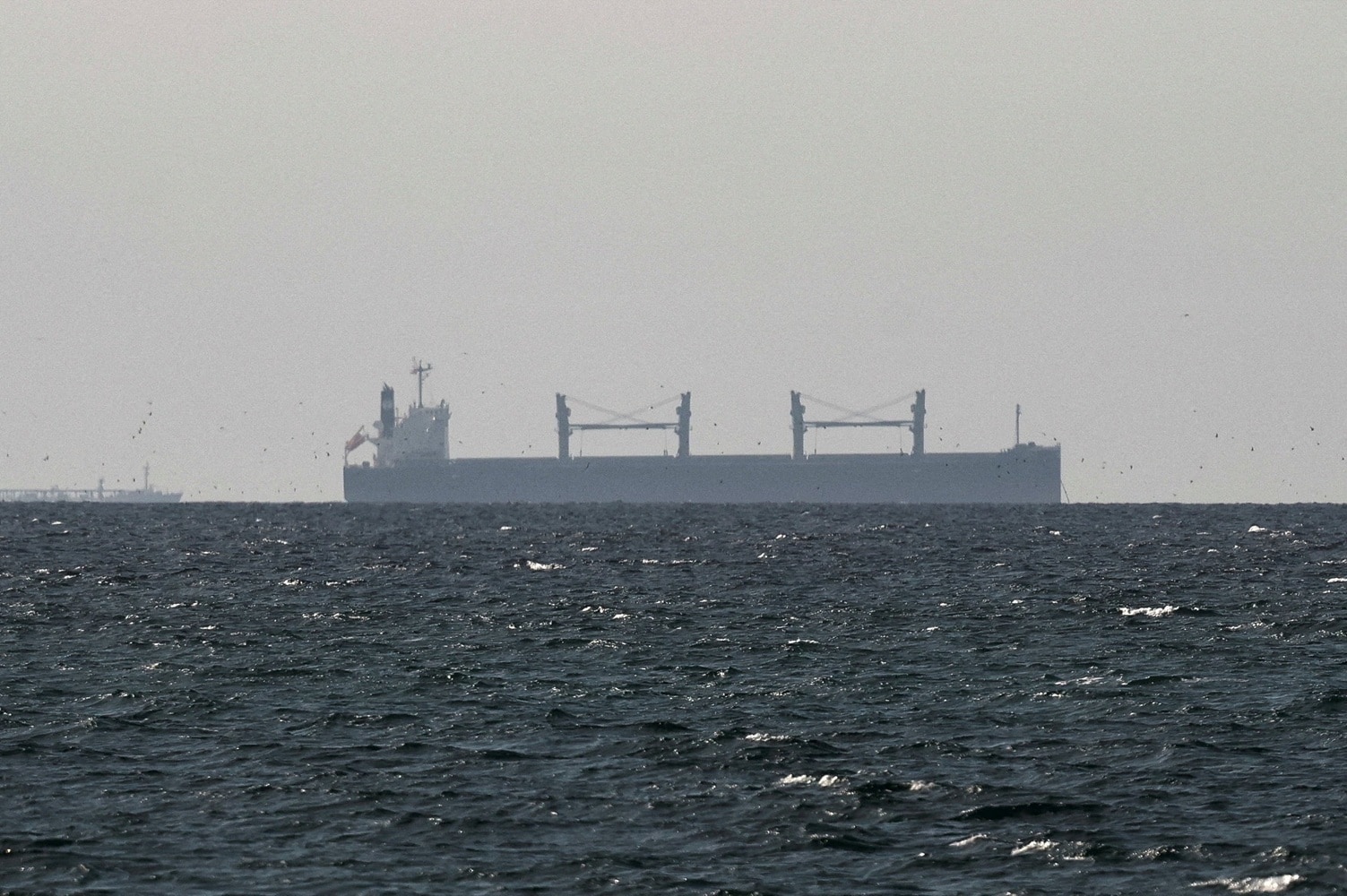
The United States military begins a formal blockade of all maritime traffic to and from Iranian ports at 7:30 pm IST today, a move that effectively turns the Strait of Hormuz into a high-stakes toll booth controlled by the Pentagon. Following the spectacular collapse of peace talks in Islamabad, President Donald Trump ordered the Navy to interdict any vessel attempting to enter or exit Iranian coastal waters, including those that have paid "illegal tolls" to the Islamic Revolutionary Guard Corps (IRGC). This is not just a military maneuver; it is a frontal assault on a burgeoning "shadow economy" where Tehran has been using Chinese yuan to bypass the US dollar.
By 7:30 pm, the rules of engagement in the world’s most critical energy artery change. While the White House insists that freedom of navigation remains for ships headed to non-Iranian ports, the reality on the water is far more chaotic. Iran has already spent weeks seeding the channel with sea mines and demanding "protection fees" of up to $2 million per vessel for safe passage. The US Navy is now tasked with a dual mission: clearing those mines and physically stopping any tanker that has played ball with Tehran’s extortion racket.
The Islamabad Collapse and the Nuclear Deadlock
The road to this blockade was paved by forty-eight hours of futile negotiation in Pakistan. Vice President JD Vance led an American delegation that demanded a total surrender of Iran's highly enriched uranium stockpile. Iran countered with a demand for war reparations pulled from frozen oil revenues, a non-starter for a Trump administration that views any concession as a sign of weakness.
The failure was not just about nuclear centrifuges. It was about who owns the water. Iran’s parliament speaker, Mohammad Bagher Ghalibaf, mocked the blockade on social media, posting an image of gas prices near the White House. He warned that Americans would soon be "nostalgic" for $5-a-gallon fuel. The math is brutal. Roughly 20 percent of the world’s petroleum liquids pass through this 21-mile-wide neck of water. With the US now enforcing its own filter on that flow, the insurance markets are in a state of cardiac arrest.
War Risk Premiums and the Insurance Chokehold
The blockade doesn't just stop ships with guns; it stops them with paperwork. Within 48 hours of the initial air strikes on February 28, war risk premiums surged fivefold. Major marine insurers have since cancelled coverage for any vessel entering the Gulf of Oman without explicit US Navy guarantees.
For a merchant captain, the Strait of Hormuz has become a gauntlet of impossibilities. On one side, the IRGC threatens drone strikes against any vessel that doesn't pay their toll. On the other, the US Navy now promises to seize any ship that does. This creates a legal and financial vacuum where the world’s most essential commodity is effectively "stranded" in the Persian Gulf. QatarEnergy has already declared force majeure on LNG exports, and the knock-on effects are gutting the balance sheets of energy-intensive industries from Munich to Seoul.
The Petrodollar War
The most overlooked factor in this escalation is the currency. For decades, the "petrodollar" system ensured that global oil was traded in US currency, underpinning American financial hegemony. In recent weeks, however, Iran has been aggressively pushing for transactions in Chinese yuan.
The US Treasury Department has tracked a "shadow fleet" of tankers using AIS-spoofing technology to hide their movements while settling trades in Beijing’s currency. This blockade is a direct physical intervention against that financial shift. By interdicting these vessels, the US is attempting to prevent a permanent fracture in the global financial order. It is a gamble that military might can preserve the dollar's status in a world increasingly eager to diversify.
The Humanitarian and Economic Fallout
The cost is already being measured in calories. The Gulf Cooperation Council (GCC) states rely on the Strait for over 80 percent of their food intake. A "grocery supply emergency" is unfolding across the region, with some staples seeing price hikes of 120 percent. Retailers are resorting to airlifting grain and meat, a solution that is unsustainable for a population of millions.
Iran’s own economy is projected to shrink by at least 10 percent this year. While the US-Israeli air campaign has decimated 66 percent of Iran’s missile and naval production sites, the clerical regime has shown no signs of internal collapse. Instead, the pressure appears to be radicalizing the IRGC’s remaining naval elements, who have lost track of their own minefields, making the water a graveyard for the unwary.
Navigating the Minefield
The US Central Command (CENTCOM) claims it can differentiate between Iranian-bound traffic and neutral shipping. This is a logistical nightmare. In the narrow shipping lanes of the Strait, identifying the ultimate destination of a tanker—often owned by a shell company in the Marshall Islands and managed by a firm in Greece—requires more than just a radio call.
The US Navy’s mine-clearance operations are now the world’s most dangerous job. Iran’s "mathematical" warnings aren't just rhetoric; they are a preview of an asymmetric war designed to bleed the US economy through the gas pump. Every time a US destroyer moves to intercept a tanker, it enters a "hazardous area" where Iranian sea drones and unmapped mines are waiting.
The 7:30 pm deadline marks the end of the diplomatic phase. We are no longer talking about sanctions or "maximum pressure." We are witnessing a physical decoupling of a nation from the global trade network, enforced by the most powerful navy in history. Whether the world economy can survive the surgery remains to be seen.
The blockade is now live.