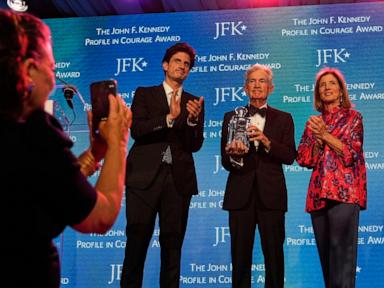
Jerome Powell spent eight years as the most powerful economic actor on earth, absorbing a relentless barrage of public insults from the executive branch while quietly steering global monetary policy. Now, just weeks after handing the keys of the Federal Reserve over to his successor, Kevin Warsh, Powell has broken his silence. Accepting the John F. Kennedy Profile in Courage Award in Boston, the former central bank chief did something far more significant than give a standard thank-you speech. He issued a stark, systematic warning that America’s core independent institutions are currently failing a historic stress test. Powell’s decision to transition into a regular Fed governor rather than retreating to a lucrative Wall Street retirement confirms that the battle over economic autonomy is no longer a theoretical debate among academics, but an active constitutional crisis.
The Quiet Rebellion of Governor Powell
When a former Federal Reserve chair finishes a term, tradition dictates that they vanish from the central bank’s halls. They write memoirs, command six-figure speaking fees, and offer vague commentary on macroeconomic trends from a safe distance.
Powell broke that unwritten rule. By choosing to stay on the Federal Reserve Board as a governor until his term expires in January 2028, he executed a bureaucratic maneuver without modern precedent. It is a defensive perimeter set up inside the central bank itself.
The motivation behind this choice became clear during his address at the JFK Presidential Library. Standing before an audience overlooking Boston Harbor, Powell framed the central bank not merely as an economic steering wheel, but as part of a vital triad of independent anchors that includes the court system and higher education. When an administration attempts to systematically dismantle these buffers, the stability of the entire democratic apparatus begins to unravel.
Politicians naturally operate on two- to four-year cycles, driven by the immediate necessity of winning elections. Monetary policy requires a horizon of a decade or more. If an administration can simply fire a central banker over a disagreement regarding interest rates, the concept of long-term economic stability disappears. Future administrations would inevitably follow the same playbook, turning the value of the American dollar into a short-term campaign tool.
The Mechanics of the Modern Institutional Stress Test
The primary threat to institutional autonomy is rarely a sudden, dramatic legislative overhaul. Instead, it occurs through a steady, grinding erosion of norms and targeted legal pressure.
Consider the recent tactical maneuvers aimed at the central bank. The Executive Branch recently utilized the Justice Department to initiate a criminal investigation into Powell over a building renovation project—a probe that was conveniently dropped only after the administration secured the confirmation of its preferred successor. Simultaneously, the White House mounted an aggressive campaign to remove Fed Governor Lisa Cook, leaning on contested allegations that are currently awaiting a definitive ruling from the U.S. Supreme Court.
┌────────────────────────────────────────────────────────┐
│               THE WEAPONIZATION OF EXCLUSION           │
├───────────────────────────┬────────────────────────────┤
│     Tactical Leverage     │      Systemic Impact       │
├───────────────────────────┼────────────────────────────┤
│ • Targeted DOJ Probes     │ • Chills dissent among     │
│   (e.g., Building Audits) │   sitting governors        │
├───────────────────────────┼────────────────────────────┤
│ • Removal Campaigns       │ • Tests the legal limits   │
│   (e.g., Governor Cook)   │   of statutory protection  │
├───────────────────────────┼────────────────────────────┤
│ • Public Rhetoric         │ • erodes market faith in   │
│   ("Numbskull" / "Moron") │   data-driven choices      │
└───────────────────────────┴────────────────────────────┘
These are not isolated political spats. They represent a sophisticated exploration of legal loopholes designed to discover exactly how much pressure the walls of an independent agency can take before they crack.
The economic fallout of this pressure is not abstract. When global markets lose confidence that a central bank is making decisions based on cold data rather than political survival, inflation expectations become unanchored. Investors demand a higher premium to hold a nation's debt. The resulting spiral can degrade the financial sovereignty of even the world’s leading reserve currency.
The Myth of Absolute Institutional Infallibility
Defending an institution does not require pretending it is perfect. One of the most critical elements of Powell’s speech was his public acknowledgment of the Fed's recent failures, specifically its delayed response to the post-pandemic inflation surge.
The central bank misjudged the persistence of supply chain disruptions, sticking to its "transitory" narrative for far too long while consumer prices escalated. Powell openly addressed this, stating that when the institution makes mistakes, it must acknowledge them and pivot. This admission highlights a crucial distinction between a flawed institution trying to self-correct and an external political force attempting to hijack its mechanics.
An independent Fed can learn from its policy miscalculations because its core mandate remains constant. A politicized Fed, conversely, is forced to alter its decisions based on the immediate desires of the executive branch, regardless of what the underlying economic data dictates.
A Coordinated Campaign Across the Civic Landscape
Powell’s warnings explicitly extended past the walls of the Eccles Building. By grouping the Federal Reserve alongside universities, Congress, and the judiciary, he highlighted a broader trend of structural degradation occurring across American civic life.
The shared trait among these entities is their reliance on specialized expertise and long-term continuity rather than immediate political consensus. When university research, judicial interpretation, and monetary policy are forced to conform to partisan platforms, they lose the public trust required to function.
This dynamic was underscored by the other recipients of Sunday's award. The JFK Library Foundation chose to honor ordinary residents of Minnesota's Twin Cities who protected immigrant neighbors during intense federal crackdowns. Linking a central banker with grassroots community advocates sends a deliberate message. It suggests that the defense of constitutional boundaries is currently being carried out by individuals acting outside standard political channels.
The High Stakes of the Capital Market Gambit
The immediate focus now shifts to how the market interprets this internal friction. While President Trump asserted at Kevin Warsh’s swearing-in ceremony that he desires a totally independent chair, his track record of public broadsides tells a completely different story.
Powell’s decision to remain on the board as a governor is a deliberate structural speed bump. It ensures that an experienced, independent voice retains a vote and a platform within the Federal Open Market Committee during a highly volatile political stretch. This presence makes it significantly more difficult for the administration to quietly reshape monetary policy behind closed doors.
The credibility of the American financial system has been constructed over generations. It rests entirely on the collective belief that the rules cannot be rewritten on a executive whim. If that foundation cracks, the consequences will ripple through every retirement account, corporate balance sheet, and foreign exchange desk on the planet. The stress test is no longer a hypothetical scenario for the future. It is happening right now.
:max_bytes(150000):strip_icc()/Simply-Recipes-Aldi-Best-Frozen-Foods-LEAD-07-73a7d59941514c45bb103ddf2732b204.jpg)

