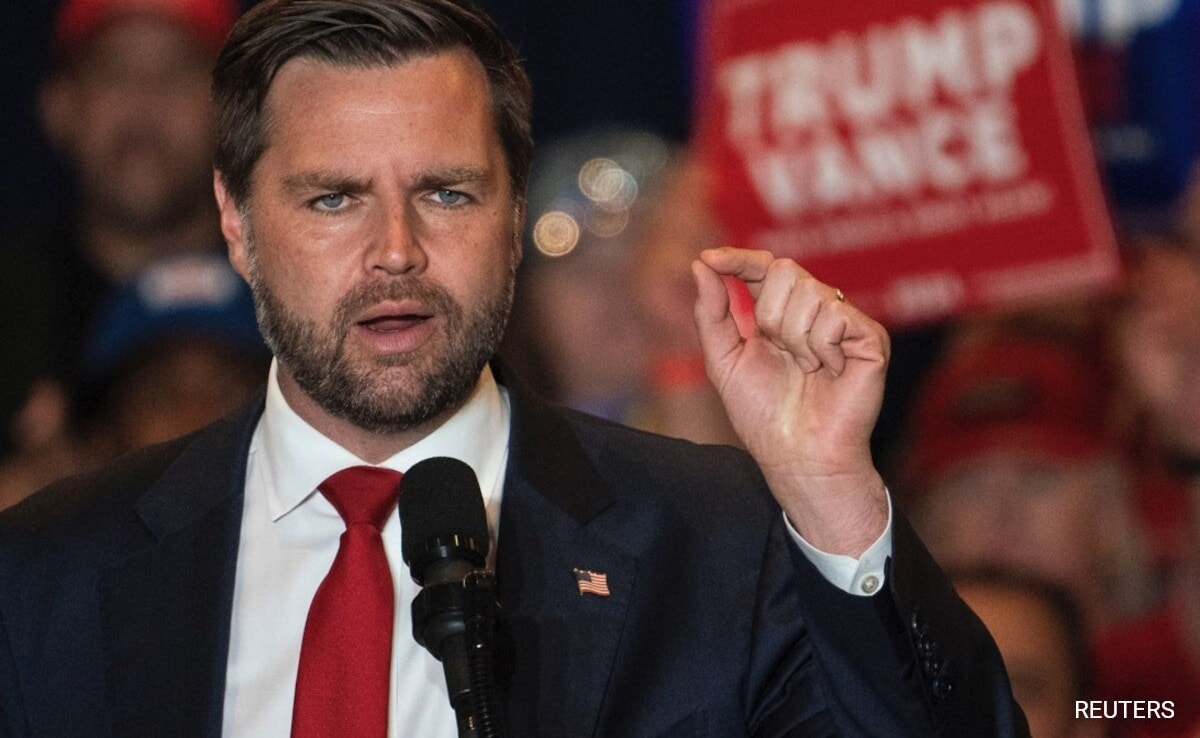
The real reason the Trump administration withheld the text of its fragile new truce with Iran has very little to do with the First Amendment. It is about a scramble to contain a major diplomatic blunder before the details blew up in Washington.
When Vice President JD Vance sat down on a prominent podcast this week, he attempted to spin a two-day delay in publishing the 14-point Islamabad Memorandum of Understanding by taking a direct swipe at the systems of the nations that brokered it. He asserted that the political frameworks in Pakistan and Qatar do not share the American expectation of an open, interrogated text because they lack press freedom and constitutional protections like the First Amendment.
It was a classic Beltway distraction. The reality, confirmed by administrative timelines and regional breakdowns, points to a desperate attempt to manage a fractured narrative while foreign capitals were already altering the script.
The Fiction of the Constitutional Misalignment
The administration announced the interim deal on June 15, promising an end to months of punishing hostilities that had choked global energy corridors and spiked oil prices. Yet for forty-eight hours, the text remained hidden. Democratic lawmakers immediately smelled a rat, accusing the White House of burying significant concessions to Tehran.
Vance stepped into the breach to reframe a security bottleneck as an ideological mismatch. He claimed the administration wanted the text out instantly, but that Pakistani and Qatari partners "don't quite have" the transparency reflex.
It is a clever defense, but the timeline reveals structural failures that go far deeper than a philosophical disagreement over free speech.
While Vance was blaming the Pakistani system for the secrecy, Pakistani Prime Minister Shehbaz Sharif was already setting off a cascade of geopolitical embarrassment. Sharif took to social media to announce a grand, high-profile physical signing ceremony to take place in Switzerland. Within hours, the narrative fell apart.
Iranian officials flatly denied they would travel to Switzerland, citing ongoing military strikes in southern Lebanon. The entire European summit was quietly shelved. Trump and Iranian President Masoud Pezeshkian ultimately bypassed the regional mediators entirely, signing the document electronically from their respective capitals.
Sharif was left to frantically edit his public statements, scrubbing references to the Swiss summit while his interior minister rushed to Tehran in a rearguard action to save face. The secrecy was not an artifact of Islamabad’s restricted press landscape. It was a desperate buffer zone erected while the three nations tried to determine if they even had a signed piece of paper.
What the One Page Text Actually Contains
The document is remarkably thin for a framework meant to stabilize a volatile region. Vance himself admitted the initial memorandum spans roughly a page and a half.
It operates less like a comprehensive treaty and more like a high-stakes pause button. The core mechanism hinges on a strict 60-day window.
- Immediate Ceasefire: Both Washington and Tehran commit to a total halt of military operations on all active fronts, including proxy conflicts in Lebanon.
- Nuclear Dilution: Iran is required to dismantle and destroy its current stockpile of highly enriched uranium under the immediate, direct supervision of the International Atomic Energy Agency.
- The Strait Reopening: Tehran guarantees the immediate, unrestricted restoration of commercial shipping through the critical chokepoint of the Strait of Hormuz.
- The Financial Incentive: A proposed $300 billion international reconstruction and development fund is outlined, alongside the conditional unfreezing of stranded Iranian financial assets.
The friction point inside Washington is that $300 billion price tag. Defensive hawks on Capitol Hill immediately revolted, comparing the package to the 2015 Joint Comprehensive Plan of Action. They claimed the White House was funding a regional adversary.
Vance has spent the last forty-eight hours on a media blitz trying to douse those fires. He insists that not a single cent of American taxpayer money is allocated to the fund, claiming the capital will be sourced entirely via foreign investments from third-party nations.
But that defense exposes the core vulnerability of the entire arrangement. The financial leverage relies on international markets volunteering billions of dollars to rebuild a state that remains functionally isolated by secondary sanctions. If those international partners decline to write the checks, the primary incentive for Iranian compliance evaporates before the 60-day technical negotiations even begin.
The Fragility of a Remote Handshake
The fundamental weakness of the Islamabad Memorandum is already playing out on the water. Hours after the electronic signatures were validated, fresh military exchanges broke out between Israel and Hezbollah in southern Lebanon.
Tehran immediately seized on the violence, declaring that the very first clause of the text—demanding a cessation of hostilities on all fronts—had been violated. Iranian state media promptly announced that the Strait of Hormuz would close right back down if the operations did not cease.
This is the exact trap of a remote, digital agreement negotiated through third-party intermediaries without ironclad verification protocols on the ground. A single tactical strike by an independent actor can instantly shatter the diplomatic baseline.
The administration’s decision to put Vance at the absolute forefront of this strategy is its own calculated risk. Donald Trump has signaled both supreme confidence and a distinct political distance, stating that if the arrangement succeeds, he will take the credit, but if it falters, the blame belongs squarely to his vice president.
Vance has essentially hitched his long-term political trajectory to a page-and-a-half document that is currently being tested by rocket fire in Lebanon and shifting rhetoric in Tehran. Blaming a lack of foreign press freedom for the initial rollout friction makes for a convenient headline. But it does nothing to fix the structural cracks in a truce that is currently threatening to splinter before the ink on the digital signatures can even dry.