The political reality of Los Angeles is fracturing. Heading into the June 2026 nonpartisan primary, an electorate deeply fatigued by visible homelessness, rising crime, and municipal inertia has turned a supposed joke of a campaign into a statistical dead heat. Reality television star Spencer Pratt, once known strictly as the bleached-blonde antagonist of MTV’s The Hills, is no longer a fringe curiosity. He is a legitimate threat to incumbent Mayor Karen Bass.
A UC Berkeley Institute of Governmental Studies poll confirms the gravity of the situation, placing Bass flatlining at 26 percent, progressive City Councilmember Nithya Raman at 25 percent, and Pratt surging at 22 percent among likely voters. With 40 percent of the city undecided just weeks ago, the race has transformed from a standard progressive referendum into an unpredictable three-way battle. Pratt’s campaign, built on the ashes of his destroyed Pacific Palisades home and fueled by aggressive anti-establishment rhetoric, has successfully tapped into a deep vein of voter resentment that traditional Democrats failed to diagnose.
The Economics of Rage
To understand why a reality villain is polling within the margin of error in America’s second-largest city, one must look at the specific catalyst of his campaign. In January 2025, the catastrophic Palisades Fire tore through western Los Angeles, reducing Pratt’s multi-million-dollar residence to ash. For the average citizen, a celebrity losing a mansion evokes little sympathy. But Pratt did something clever. He weaponized his personal disaster, framing it not as an act of God, but as a failure of municipal governance.
He sued the city, demanded investigations into Governor Gavin Newsom and Mayor Bass, and used the one-year anniversary of the fire to launch his mayoral bid. By linking his loss to the broader perception of a city incapable of managing its basic infrastructure—from fire prevention to public safety—Pratt shifted from an entitled influencer to an angry proxy for every homeowner frustrated by rising insurance premiums and municipal neglect.
This anger is backed by a surprising financial war chest. Far from a shoestring operation funded by internet clicks, campaign finance disclosures reveal that Pratt has raised over $3.7 million, outpacing Karen Bass’s $3.2 million in direct contributions. While Bass relies on traditional Democratic fundraising networks and institutional endorsements, including a late-stage nod from Governor Newsom, Pratt has drawn financial backing from eclectic high-net-worth individuals. Donors like Jeanie Buss, Katharine McPhee, and Rick Salomon have injected serious capital into his run, proving that elite frustration with the current administration crosses traditional industry lines.
Deconstructing the Batman Strategy
Pratt’s campaign style avoids the curated, risk-averse staging of traditional politics. Instead, he utilizes a raw, adversarial street-level theater that keeps his opponents on the defensive. He frequently films campaign videos directly outside the private residences of both Mayor Bass and Nithya Raman, prompting Raman to publicly accuse him of reckless and intimidating behavior.
When a viral, independent AI-generated video circulated online depicting Pratt as Batman fighting caricatures of California’s political establishment, Pratt’s team did not distance themselves from the unauthorized media. They shared it. The imagery resonated because it leaned into the exact persona he cultivated for a decade on television. He understands that in a media-saturated environment, absolute certainty—even when delivered with a snarl—cuts through the noise far better than a policy white paper.
Pratt’s rhetoric is deliberately combative. He publicly refers to the incumbent as "Karen Basura" and calls Raman a serious threat to families. When Bass posted a social media video of herself submitting ballots alongside supporters near a drop box, Pratt instantly filed a formal complaint with City Clerk Patrice Lattimore, accusing the mayor of illegal electioneering within 100 feet of a polling station.
"Someone in a position of power should be especially respectful of our democratic laws, but this is just emblematic of Karen's mafia-like regime," Pratt stated.
The tactic was swift, legally grounded enough to warrant news coverage, and perfectly aligned with his narrative that the city's ruling class operates above the law.
The Broken Democratic Coalition
The true gravity of the situation lies in the collapse of the traditional progressive voting bloc. Los Angeles has not elected a Republican mayor since Richard Riordan in 1997. While the current race is officially nonpartisan, Pratt is a registered Republican. Yet, he has deliberately downplayed his national party affiliation, knowing that an overt MAGA branding is toxic in a city where Democrats outnumber Republicans nearly three to one.
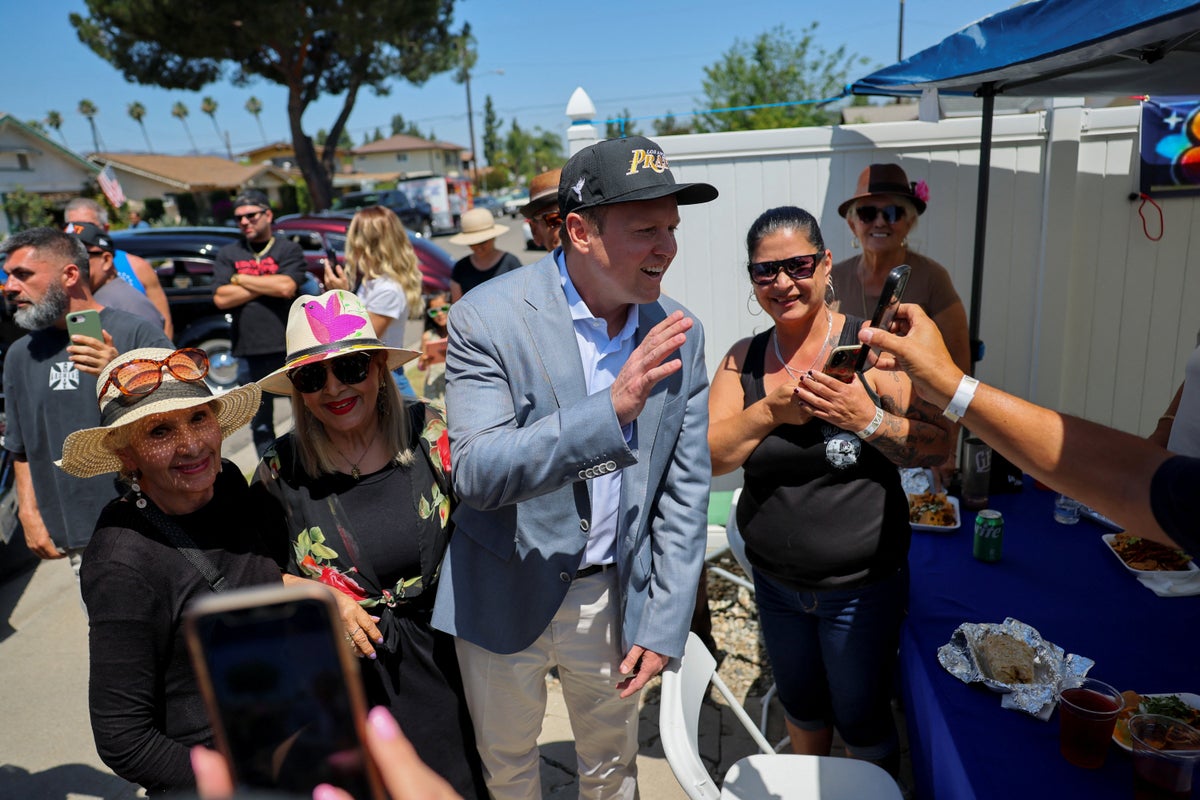
Instead, Pratt focuses on working-class neighborhoods that feel neglected by the ideological battles inside City Hall. At a recent campaign block party, lifelong residents of working-class neighborhoods like Boyle Heights expressed open defection from the Democratic establishment, citing dirtier streets, persistent encampments, and a total loss of civic pride. By keeping his platform hyper-local—demanding increased funding for the Los Angeles Police Department, slashing budgets for homelessness programs that voters view as black holes of inefficiency, and cracking down on illegal street takeovers—Pratt offers a blunt instrument to voters who want immediate, visible changes rather than systemic, long-term plans.
This strategy has created an unusual alignment. While national conservative figures like Senator Rick Scott and former envoy Richard Grenell have endorsed him, and Donald Trump has publicly voiced a desire to "see him do well," Pratt has kept his distance from Washington. He famously brushed off the need for national endorsements by claiming he only needed the votes of local mothers to win. This hyper-local focus makes it exceedingly difficult for Bass to dismiss him as a simple proxy for national partisan warfare.
The Runoff Scenario
The math of the June primary makes a November runoff almost certain. In Los Angeles municipal elections, a candidate must secure more than 50 percent of the vote to win outright in the primary. With three major candidates commanding significant portions of the electorate and a massive pool of undecided voters, no single contender will cross that threshold.
| Candidate | Recent Polling Average | Primary Fundraising | Key Endorsements |
|---|---|---|---|
| Karen Bass | 25% - 26% | $3,214,043 | Gov. Gavin Newsom, LA County Democratic Party |
| Spencer Pratt | 11% - 22% | $3,744,718 | Sen. Rick Scott, Richard Grenell |
| Nithya Raman | 9% - 25% | $980,930 | Abundant Housing LA, Future Urbanist Club |
Predictive political prediction markets, including Kalshi, currently give Pratt a 78 percent chance of advancing past the primary into the November head-to-head runoff. The real danger for the ruling political class is not just that Pratt might make the runoff, but who he faces if he does.
If Raman overtakes Bass from the left, moderate Westside homeowners and working-class valley voters may view Pratt’s hard-line stance on crime as the only viable alternative to total progressive control. If Bass survives to face Pratt, she will be forced to defend a four-year record against a media maestro who spent his entire youth learning exactly how to exploit an opponent's vulnerabilities on camera.
The standard political playbook dictates that a candidate like Pratt should fade once voters face the reality of a ballot box. But Los Angeles in 2026 is an exhausted city. The entry of an aggressive, well-funded populist who understands the dark mechanics of modern attention economics has exposed a profound truth: when citizens lose faith in the basic competence of their government, the line between a reality television villain and a political savior completely disappears.