The machinery of American elections just received its most significant judicial tuning ahead of the upcoming midterm elections, and the fallout has exposed a widening rift between institutional Republican legal strategy and the rhetoric of the White House.
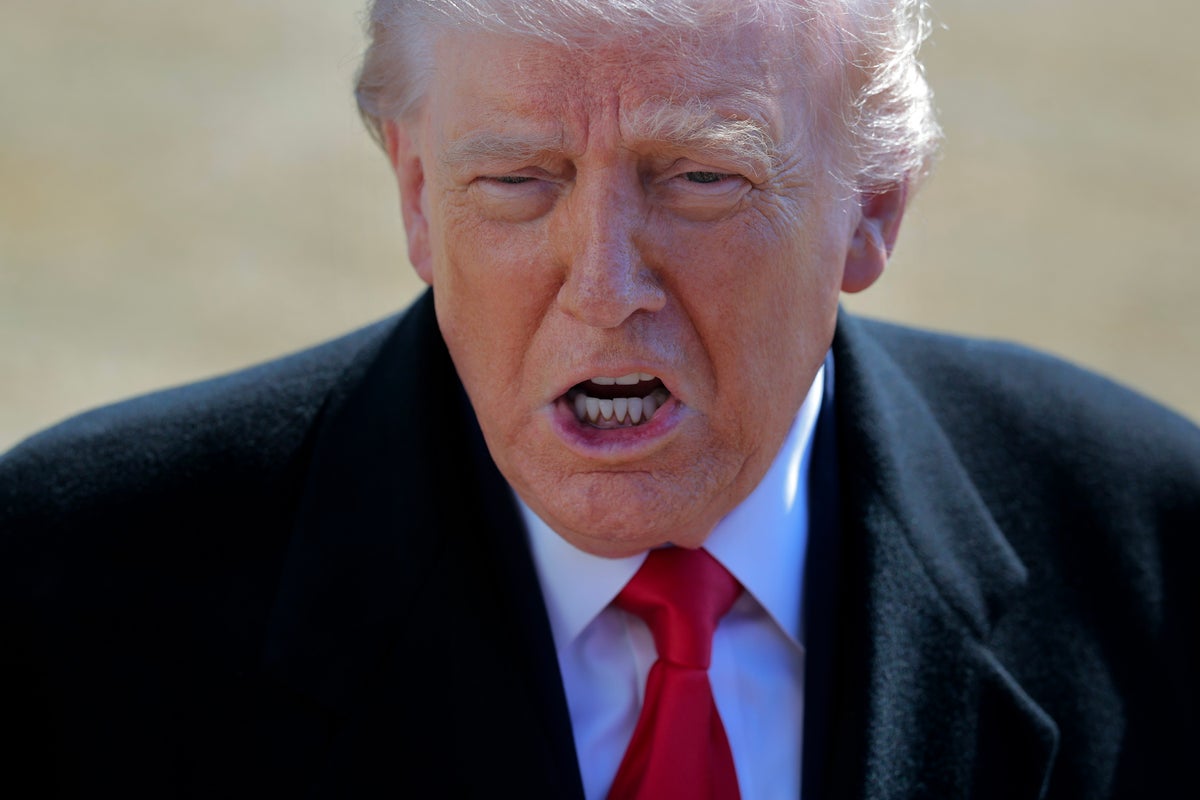
By a narrow 5-4 vote, the Supreme Court ruled that states are entirely within their constitutional rights to count mail-in ballots that arrive after Election Day, provided they are postmarked by the time polls close. The decision in Watson v. Republican National Committee represents a major tactical defeat for national Republican groups, which had sought to establish a hard nationwide cutoff at 5 p.m. on Election Day. Within hours of the ruling, President Donald Trump took to social media to blast the decision, framing the defense of late-arriving mail ballots as an explicit endorsement of systemic misconduct.
Yet, looking past the predictable online outcry reveals a far more complex reality. The case did not stem from a progressive stronghold attempting to stretch voting windows. It originated in Mississippi—a deeply conservative state whose own Republican attorney general was forced to defend its state statute allowing a five-day grace period for postmarked ballots against a challenge brought by her own national party.
The Friction Between Local Administration and National Strategy
For decades, the mechanics of American voting have been decentralized by design. States dictate their own rules, a principle long championed by conservative legal theorists under the banner of states' rights. The national Republican challenge to Mississippi’s law attempted to flip this framework, arguing that nineteenth-century federal statutes setting a uniform day for choosing electors implied that all physical ballots must be in hand when the date concludes.
Writing for the majority, Justice Amy Coney Barrett systematically dismantled that argument. Joined by Chief Justice John Roberts and the court’s three liberal justices, Barrett noted that while the act of voting must occur by Election Day, the physical receipt of the ballot is an administrative function left to local authorities.
"The election-day statutes say nothing about ballot receipt, and we cannot add to the words Congress chose," Barrett wrote.
This ruling preserves the status quo in roughly fourteen states and the District of Columbia, where varying grace periods protect voters from local postal delays. The administrative reality of shifting the rules just months before an election would have been severe. In Mississippi alone, forcing local clerks to immediately halt the processing of any ballot arriving after November’s deadline would have thrown processing centers into immediate gridlock, particularly regarding military and overseas ballots that rely heavily on these windows.
The Mathematical Target of Postmarked Ballots
The focus on post-Election Day arrival is not accidental. It is a calculated piece of a broader proxy war over who votes and how those votes are tallied.
Political data from recent cycles shows a persistent partisan divide in ballot delivery methods. While in-person voting on Election Day tilts heavily toward conservative candidates, mail-in options are heavily utilized by urban professionals, elderly populations, and suburban voters. By attempting to invalidate ballots that arrive on Wednesday or Thursday—even if mailed the previous week—legal strategists were targeting a specific tranche of the electorate that historically skews away from the current administration.
The dissenting opinion, penned by Justice Samuel Alito and joined by Justices Clarence Thomas and Neil Gorsuch, warned that extended deadlines leave room for public skepticism. Alito argued that stretching the receipt window creates a prolonged tabulation process that erodes confidence in the finality of the results.
However, the litigation revealed a stark absence of evidence regarding actual manipulation within this specific window. During oral arguments, various hypotheticals were floated regarding voters attempting to recall or alter mailed ballots after learning early returns. When pressed, state election officials noted that no such instances have ever been documented in the history of the state’s modern election administration.
The Executive Order Strategy and Its Structural Limits
Frustrated by judicial bottlenecks, the White House has increasingly turned to executive actions to reshape the voting environment. Earlier this spring, the president signed an executive directive aimed at restricting mail-in infrastructure. The order instructed the Department of Homeland Security to cross-reference citizenship databases and directed the U.S. Postal Service to restrict ballot deliveries exclusively to state-approved voter rosters.
That strategy is already hitting a wall. Just days before the Supreme Court's ruling, a federal judge in Boston narrowed the scope of lawsuits challenging that executive order, allowing voting rights groups to proceed with expedited bids to block the directive before the midterms.
The structural flaw in using executive power to regulate elections is foundational. Under the Constitution, the executive branch does not possess the inherent authority to dictate how states manage their voting rolls or processing procedures. By attempting to use federal agencies like the Postal Service as enforcement mechanisms, the administration is testing the limits of administrative law, setting up another inevitable collision with the federal court system.
The Congressional Pivot
Realizing that the courts are proving to be an unreliable vehicle for rewriting election procedures, the administration's allies are shifting their focus to Capitol Hill. The immediate push is now centered on the SAVE America Act, a legislative package that aims to severely curtail mail-in voting nationwide and impose strict federal identification mandates.
While the bill has successfully cleared the House of Representatives, its prospects in the Senate remain virtually nonexistent under the current filibuster rules. This leaves the legislative push as a powerful messaging tool for the upcoming midterms rather than a viable near-term policy shift.
The immediate reality for election administrators is clear. The rules on the ground will remain exactly as they were. Ballots postmarked by Election Day will continue to be collected, verified, and counted according to individual state timelines. The judicial system has signaled that it prefers predictability over mid-stream rule changes, leaving the political apparatus to fight out the remainder of the cycle within the established boundaries of the law.