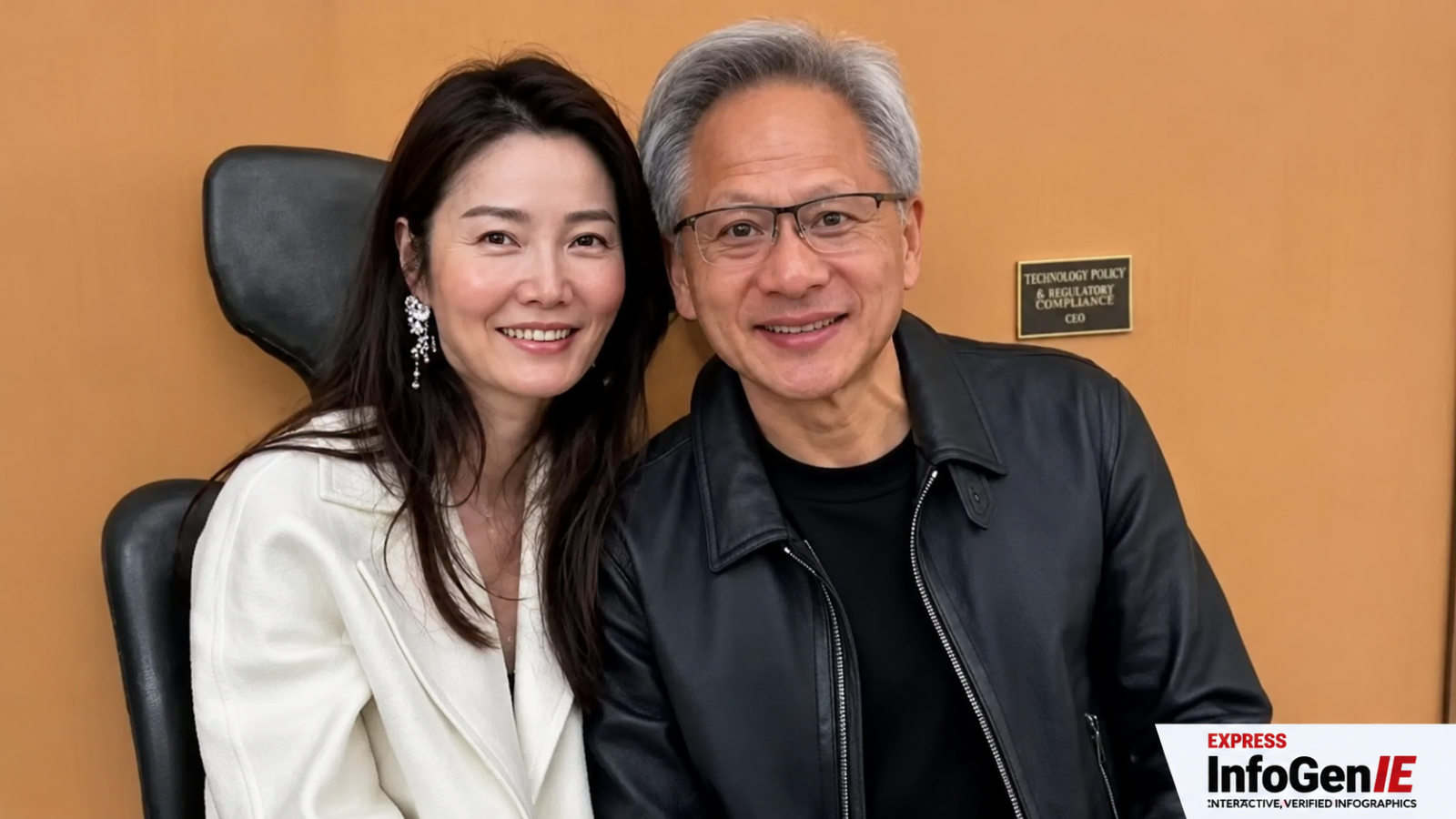
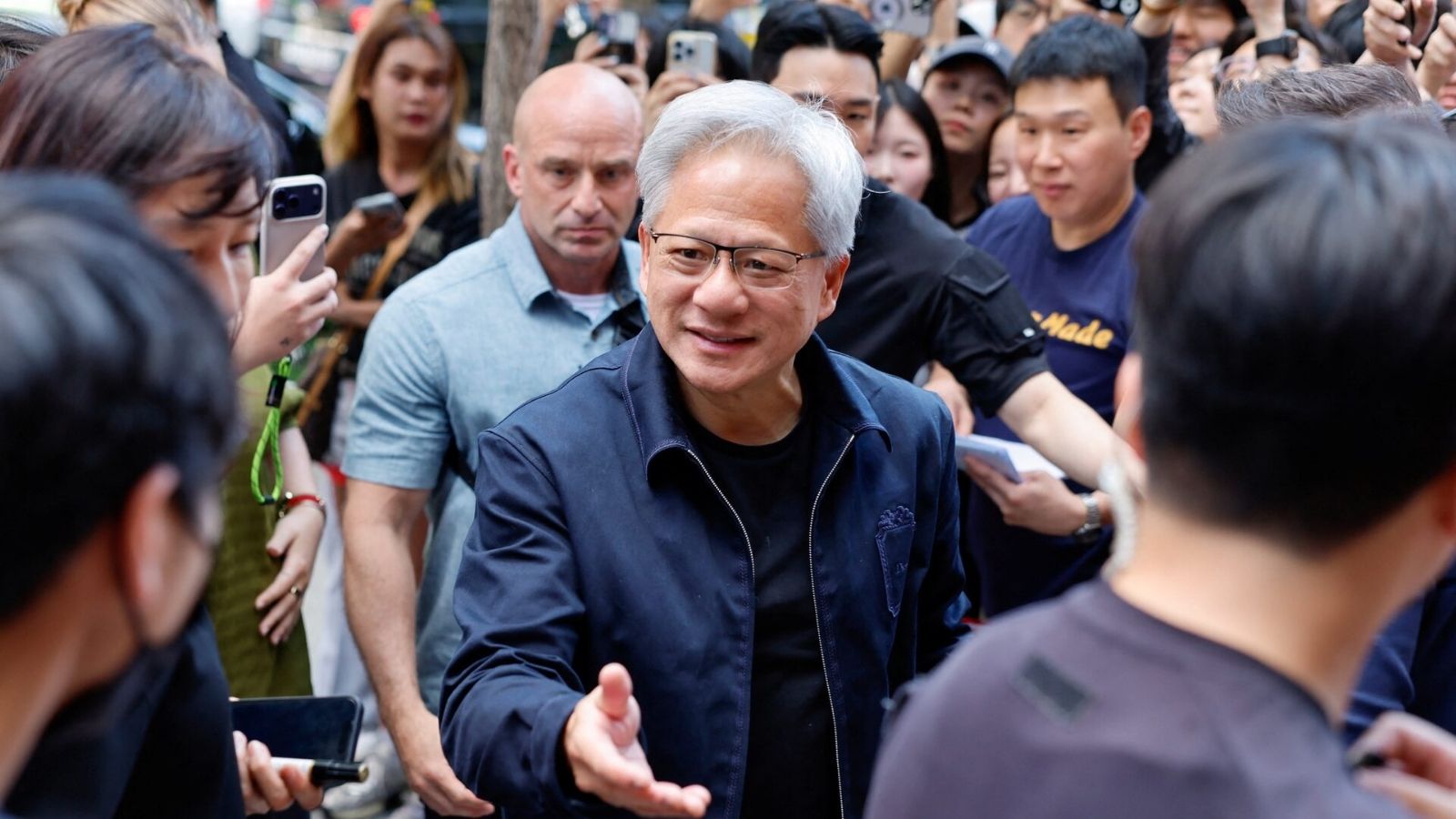
Under mounting political and regulatory pressure, the Trump administration has confirmed it is investigating Singapore-based data center operator Megaspeed International over the suspected illegal diversion of advanced American artificial intelligence chips to China. The probe—spanning the Department of Justice, the FBI, and the Commerce Department—centers on billions of dollars in high-end Nvidia hardware shipped to Southeast Asia that allegedly ended up powering Chinese AI infrastructure, alongside a high-profile scandal involving Nvidia CEO Jensen Huang and former Megaspeed executive Alice Huang. While Washington has placed Megaspeed on a federal trade blacklist, trade lawyers and national security analysts warn that critical gaps in how export restrictions are enforced leave the door wide open for continued chip smuggling.
How a Little-Known Singapore Firm Became a Semiconductor Flashpoint
For months, the mechanics of global AI hardware enforcement operated largely behind closed doors. Then came a convergence of corporate intrigue, intelligence leaks, and inter-agency friction that dragged Megaspeed International into the center of a geopolitical firestorm. Also making headlines recently: When the Watchers Go Dark Inside the NSANet Outage.
Megaspeed’s rise followed a pattern that has become familiar to federal investigators tracking gray-market semiconductor flows. Registered in Singapore, the firm rapidly emerged as a massive buyer of cutting-edge AI processors, ordering billions of dollars' worth of equipment originally routed from California toward data center facilities in Malaysia. Under U.S. export controls designed to curb Beijing’s military and technological ambitions, Chinese firms are barred from directly acquiring top-tier AI chips. Registering corporate entities in neutral jurisdictions like Singapore and Malaysia became a primary workaround—one that looked legitimate on paper until federal inspectors started checking the racks.
In late 2024, a Commerce Department official visited one of Megaspeed’s Malaysian data centers to verify that the restricted hardware was actually installed and operating on-site. What the inspector found was telling. Rather than humming inside cooled server aisles, vast quantities of high-value server equipment sat unopened, still packed in shipping boxes. In the export compliance world, boxed hardware at a destination facility is a classic red flag for transshipment—the practice of using a shell or intermediary location as a temporary staging ground before smuggling restricted goods across a controlled border. Further insights into this topic are explored by CNET.
By June 2025, Singaporean authorities had detained Megaspeed founder and executive Alice Huang for questioning. Yet in Washington, momentum stalled.
The Cabinet Rift and the Nvidia Boardroom Earthquake
To understand why the Trump administration suddenly went public with a joint Justice and Commerce Department statement vowing to bring "the full extent of the law against Megaspeed," you have to look at the internal warfare that fractured the president's own economic and national security teams.
For weeks, Treasury Secretary Scott Bessent and national security officials across the State and Defense departments pushed aggressively to slap Megaspeed with immediate export blacklisting. Commerce Secretary Howard Lutnick resisted. Lutnick’s Commerce Department favored a narrower, more cautious regulatory posture, sparking sharp internal recriminations from China hawks who accused Commerce of growing overly cozy with Silicon Valley’s biggest chipmakers.
That bureaucratic stalemate shattered in late October 2026 when explosive revelations surfaced regarding an extramarital affair between Nvidia CEO Jensen Huang and Alice Huang. Intelligence reports indicated that Alice Huang had been in contact with China’s Ministry of State Security during the relationship, though U.S. intelligence assessments stopped short of proving she had been actively tasked with extracting corporate or national security secrets from Nvidia’s chief executive.
The fallout was immediate. Jensen Huang stepped down from Nvidia amid the uproar, only to execute a stunning corporate comeback on November 23, 2026. Following direct intervention from President Donald Trump—who publicly praised Huang as a "great patriot and national treasure" and assured Nvidia’s board that the executive posed no national security threat—Nvidia reinstated Huang as president and CEO.
Hours after Huang reclaimed his corner office, the Bureau of Industry and Security finally dropped the hammer, adding Megaspeed International and six other Southeast Asian firms to the U.S. Entity List. The timing was unmistakable. Facing bipartisan fury on Capitol Hill over Huang’s reinstatement and accusations that the administration had been soft on chip diversion, the White House needed to demonstrate that its enforcement teeth were still sharp.
The Glaring Loophole in the Megaspeed Blacklist
On paper, landing on the Commerce Department’s Entity List is a corporate death sentence. It prohibits American companies from exporting controlled technologies to the designated firm without a special federal license, which is almost always denied.
In practice, however, the Megaspeed designation suffers from a structural flaw that veterans of semiconductor supply chains recognized immediately.
Nvidia designs chips; it does not manufacture them. Nearly all of the world’s most advanced AI processors—including Nvidia’s flagship architectures—are fabricated in Taiwan by contract foundries like TSMC, and assembled into server systems across Asia. Because the initial Entity List restriction specifically targets direct exports from the United States, shipments originating from foreign manufacturing hubs outside U.S. soil can fall outside the immediate reach of standard export bans unless the Commerce Department invokes broader extraterritorial rules.
Even more troubling for investigators is the rise of compute smuggling—accessing restricted hardware without ever moving a physical box across a border.
- Physical Diversion: Buying chips through front companies in Singapore or Malaysia and physically shipping crates into mainland China, where Nvidia chips have already surfaced at sites like the Yangtze River Delta Project.
- Cloud Compute Arbitrage: Renting raw processing power remotely from data centers located in third-party countries, allowing Chinese AI labs to train frontier models on American silicon without violating physical customs checkpoints.
- Corporate Shell Regeneration: Dissolving a blacklisted entity and spinning up a fresh holding company with clean registration papers faster than federal investigators can complete end-use audits.
The Commerce Department attempted to plug part of this leak by issuing supplementary rules aimed at restricting remote cloud access for "countries of concern," while Nvidia announced the creation of a new internal export control committee. Yet enforcement remains a game of whack-a-mole played at global scale.
Why Hardware Bans Are Failing the Reality Test
Washington’s struggle to contain Megaspeed exposes a deeper philosophical divide over whether export controls can actually hold back China’s AI sector—or whether they are quietly backfiring.
Jensen Huang and his allies have long argued that locking China out of the American hardware ecosystem only accelerates Beijing’s push for semiconductor self-sufficiency. According to this view, keeping Chinese developers dependent on Nvidia’s software stack and silicon starves domestic Chinese rivals like Huawei of market share and R&D capital. Cut them off completely, and Beijing will pour unlimited state subsidies into building a parallel, sanction-proof supply chain.
National security hawks counter that this logic is dangerously naive. China is already deploying every industrial policy weapon at its disposal to build sovereign chipmaking capacity. Denying Beijing access to top-tier compute buys the United States and its allies precious time—measured in years, not months—to maintain a decisive lead in frontier AI systems. Allowing Chinese labs to harvest millions of advanced processors through Southeast Asian middlemen gives them the exact computational horsepower they need to close the gap right now.
Both arguments carry weight, which is precisely why policy has lurched between aggressive crackdowns and quiet pauses.
Consider the sheer scale of the verification problem. A single modern AI cluster requires tens of thousands of GPUs, complex networking switches, and custom cooling infrastructure. Tracking those components across dozens of freight forwarders, system integrators like Super Micro Computer, and colocation facilities across Southeast Asia requires an army of inspectors that the Bureau of Industry and Security simply does not have. When a company like Megaspeed insists it conducts "legitimate and lawful business" and notes that Alice Huang departed the firm in August 2025, prosecutors face the grueling task of proving criminal intent across multiple international jurisdictions.
The Real Cost of Selective Enforcement
What makes the Megaspeed affair uniquely damaging isn't just the suspected diversion of chips—it is the perception that enforcement bends to political and market gravity.
When investors and foreign intermediaries watch a Justice Department probe pause, see cabinet secretaries publicly clash over whether to sanction a major buyer, and witness a president personally lobby for the reinstatement of a CEO at the center of a counterintelligence controversy, the deterrent effect of U.S. export law erodes. Compliance officers across Asia take note. If the rules appear negotiable at the highest levels of government, smaller distributors will gladly take the financial gamble of routing hardware through gray channels.
For Singapore, the scandal has also triggered an uncomfortable reckoning. Prime Minister Lawrence Wong confirmed that Singapore is conducting its own domestic inquiry into Megaspeed, separate from the U.S. investigation, to protect the city-state’s reputation as a trusted financial and logistics hub. If Singapore and Malaysia cannot police the shell companies operating inside their borders, they risk facing blanket regional chip caps that would cripple their own legitimate digital economies.
Next week, Jensen Huang is scheduled to testify before House and Senate panels, where lawmakers from both parties are preparing to grill him on Nvidia’s due diligence, its licensing requests, and how billions in silicon flowed into Megaspeed’s orbit. Meanwhile, federal prosecutors in the Justice Department’s National Security Division are combing through shipping manifests, server logs, and financial records to build a criminal case that can survive scrutiny in federal court.
Until Washington closes the foreign-foundry loophole and enforces end-user verification with teeth rather than press releases, blacklisting Megaspeed will remain a reactive gesture in a supply chain already three steps ahead of the law.