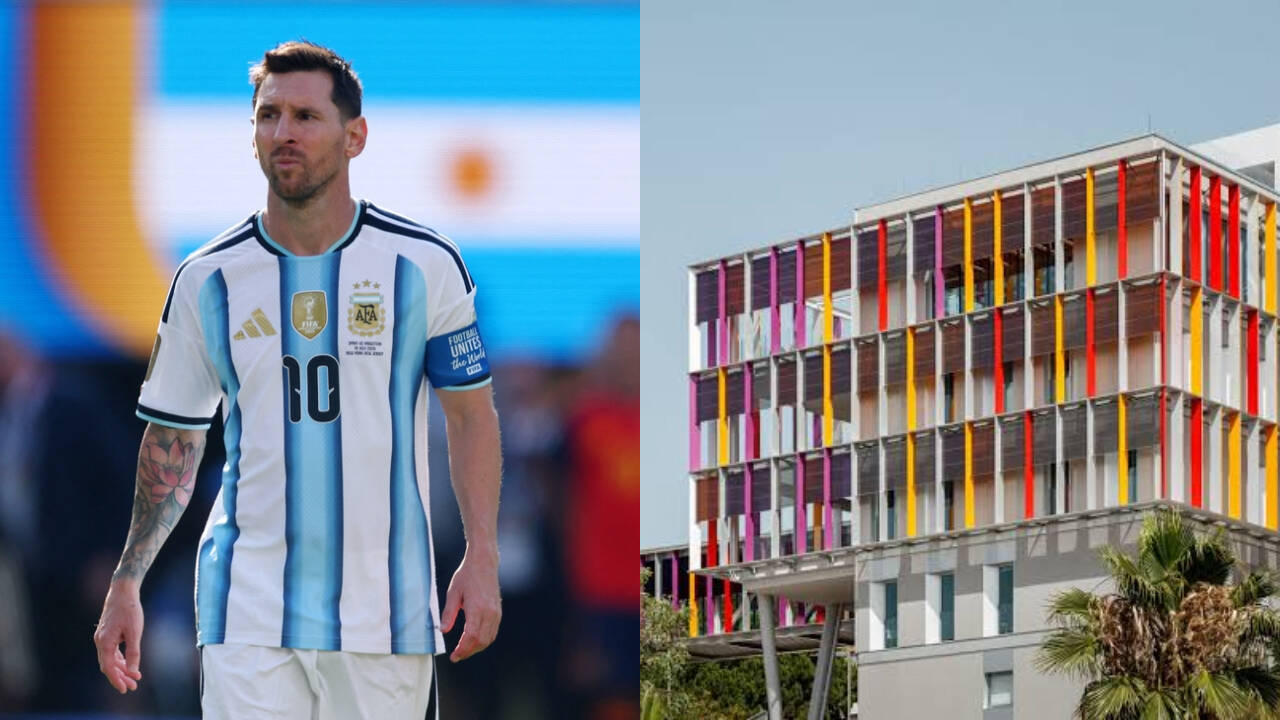
When the SJD Pediatric Cancer Center Barcelona opened its doors, it changed the trajectory of childhood oncology across the continent. Backed by a multi-million-euro funding drive, the facility was designed to absorb up to 400 new cancer cases each year. Yet the path from a stalled blueprint to a functioning medical fortress reveals a complex financial puzzle. High-profile philanthropy relies heavily on public mobilization, strategic corporate partnerships, and structural gap-filling.
The hospital needed a massive influx of capital to break ground. By late 2018, a severe funding deficit threatened to stall the entire endeavor. Organizers had raised substantial sums through public campaigns and corporate donations, but a final deficit of €2.6 million stood between the architectural renderings and actual construction. The Leo Messi Foundation stepped directly into this financial void, partnering with the Stavros Niarchos Foundation to cover the remaining balance and secure the required funds.
This intervention illustrates how celebrity-backed charities operate in modern infrastructure development. Rather than acting as the sole financiers of a €37 million project, these entities often function as strategic accelerators. They inject capital precisely when fundraising plateaus, using high-profile visibility to mobilize public trust and trigger matching grants from institutional donors.
The facility itself broke away from traditional hospital architecture. By housing diagnosis, treatment, research laboratories, and family psychological support under one roof, the center reduced the logistical strain on patients navigating long-term therapies. Molecular oncology laboratories operate alongside inpatient rooms to customize treatments based on genetic profiles of solid tumors. That integration means fewer transfers between facilities and faster deployment of clinical trials for aggressive pediatric cancers.
Critics of celebrity philanthropy often point to the risks of volatile funding cycles and transient public attention spans. Foundations tied to active athletes face scrutiny regarding long-term financial sustainability once the founder's playing career ends or public focus shifts. However, the Barcelona project mitigated this vulnerability by embedding the foundation as one of ten permanent founding stakeholders on an advisory board. This institutional anchoring ensures continued accountability and shared governance long after the initial ribbon-cutting ceremony.
Beyond Catalonia, the foundation's footprint extends into international aid and regional educational recovery. In Syria, the organization financed twenty prefabricated classrooms to help displaced children return to formal schooling. In Latin America, programs targeting sports-based social inclusion have run parallel to recent fundraising efforts linked to digital art auctions.
The SJD Pediatric Cancer Center stands as a tangible measure of what happens when high-profile sports capital converges with specialized medical expertise. It demonstrates that athlete-driven philanthropy can move past symbolic gestures into permanent, high-capacity infrastructure when executed with structural precision.