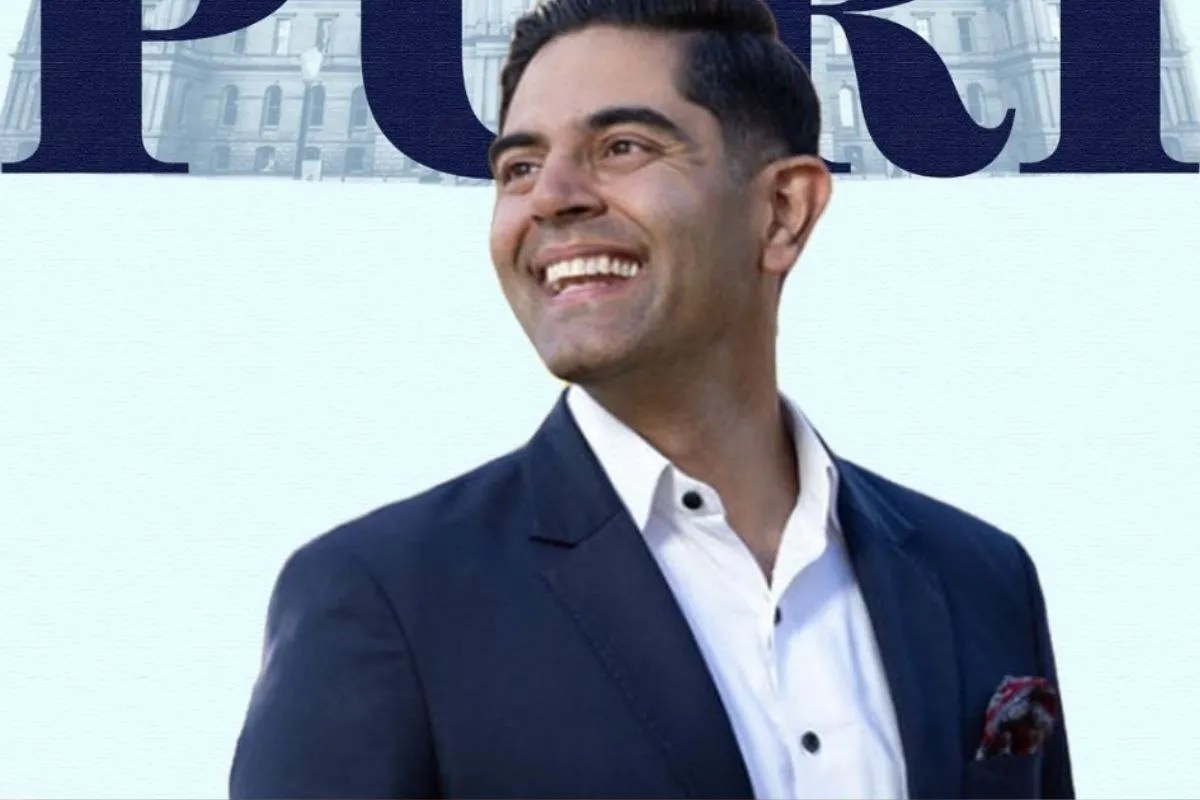
Political power in state capitals rarely shifts through quiet persuasion alone. It usually moves through the raw mechanics of targeted campaigns, demographic transformation, and the relentless discipline of flipping competitive districts. When the Michigan House of Representatives organizes its leadership for the upcoming term, the chamber will answer to a historic figure. Ranjeev Puri, a Democratic state representative from Canton, was selected by his caucus as the speaker-elect, positioning himself to become the 80th speaker and the first Indian-American and Sikh-American to hold the post in state history.
The ascent of Puri is not merely a milestone for representation. It is a masterclass in legislative maneuvering through cycles of narrow margins, painful minority status, and a sudden, decisive electoral sweep. To understand how Puri secured the gavel, one must look past the symbolic headlines and examine the structural realities of modern Midwestern politics.
The Architecture of a Legislative Majority
For years, the Michigan House floor operated under the heavy anchor of gridlock. Margins were razor-thin. Every vote carried existential weight, and floor management required an uncompromising grasp of parliamentary procedure. Puri spent those grinding years learning the machinery of the statehouse from the trenches. He served as minority leader, navigated appropriations subcommittees, and built a reputation for handling high-stakes policy negotiations without losing his caucus's internal cohesion.
When the recent election cycle arrived, the Democratic strategy was remarkably blunt. Instead of playing defense across a broad map, leadership concentrated resources on precise targets. They identified eleven specific red-to-blue flip opportunities and swept every single one of them. That performance expanded the House Democratic caucus to a 63-47 advantage, marking the party's largest gain in the chamber since 1964.
Puri described the strategy with characteristic pragmatism. It was never about complex political science, but rather about disciplined execution, local engagement, and convincing suburban voters that legislative competence mattered more than ideological noise. That majority did not happen by accident. It was engineered district by district, funded by coordinated state party efforts, and anchored by candidates who could speak directly to working-class economic anxieties.
Beyond the Symbolic Milestone
The historical weight of Puri’s background is undeniable. Born in Racine, Wisconsin, to Punjabi immigrant parents, holding an MBA from the University of Chicago Booth School of Business, and maintaining a professional background in the automotive sector and financial consulting, his path to the speaker's office defies conventional political pedigrees. When he first won election to the House in 2020, he broke barriers as the first Sikh-American in the Michigan legislature.
Yet reducing his rise to a simple narrative of identity politics misses the substance of his legislative track record. Puri has spent his tenure shaping policy that directly impacts daily life in the industrial Midwest. He was instrumental in steering historic gun safety reforms through the chamber, a cause shaped in part by his own proximity to tragedy after his family's former place of worship was targeted in the 2012 Oak Creek Gurudwara shooting.
He also spearheaded legislative efforts to dismantle administrative hurdles for green energy adoption, including successfully passing bills to prevent homeowners associations from blocking residential solar panels and electric vehicle chargers. These are not abstract partisan talking points. They represent concrete shifts in state regulatory frameworks that pit local property rights against outdated community governance models.
The Reality of Governing with a Mandate
With a commanding majority heading into January, the temptations of overreach are real. History shows that legislative caucuses experiencing a sudden surge in seats often fracture under the weight of their own internal factions. Progressive wings push for sweeping structural overhauls, while moderate members representing swing districts eye the next election cycle with caution.
Puri's challenge as speaker will be holding this coalition together while delivering tangible results to voters who rewarded Democrats with power. The legislative agenda is already mapped out. Utility costs, regional healthcare access, and infrastructure modernization top the list of immediate priorities. Voters tired of legislative paralysis expect swift movement on proposals designed to lower household expenses and stabilize the state's energy grid.
The transition from minority leader to speaker requires a fundamental shift in temperament. In the minority, a politician's primary weapon is obstruction, messaging, and building a disciplined resistance. In the speaker's chair, the currency shifts to consensus, resource allocation, and internal discipline. Puri inherits a caucus that knows how to win an election, but the harder test is proving that a diverse legislative majority can govern effectively without alienating the suburban districts that made the victory possible.
The gavel changes hands in January. The political landscape of Lansing has been redrawn, and the expectations resting on the new leadership are unforgiving.


