The Limits of American Airpower in the Persian Gulf
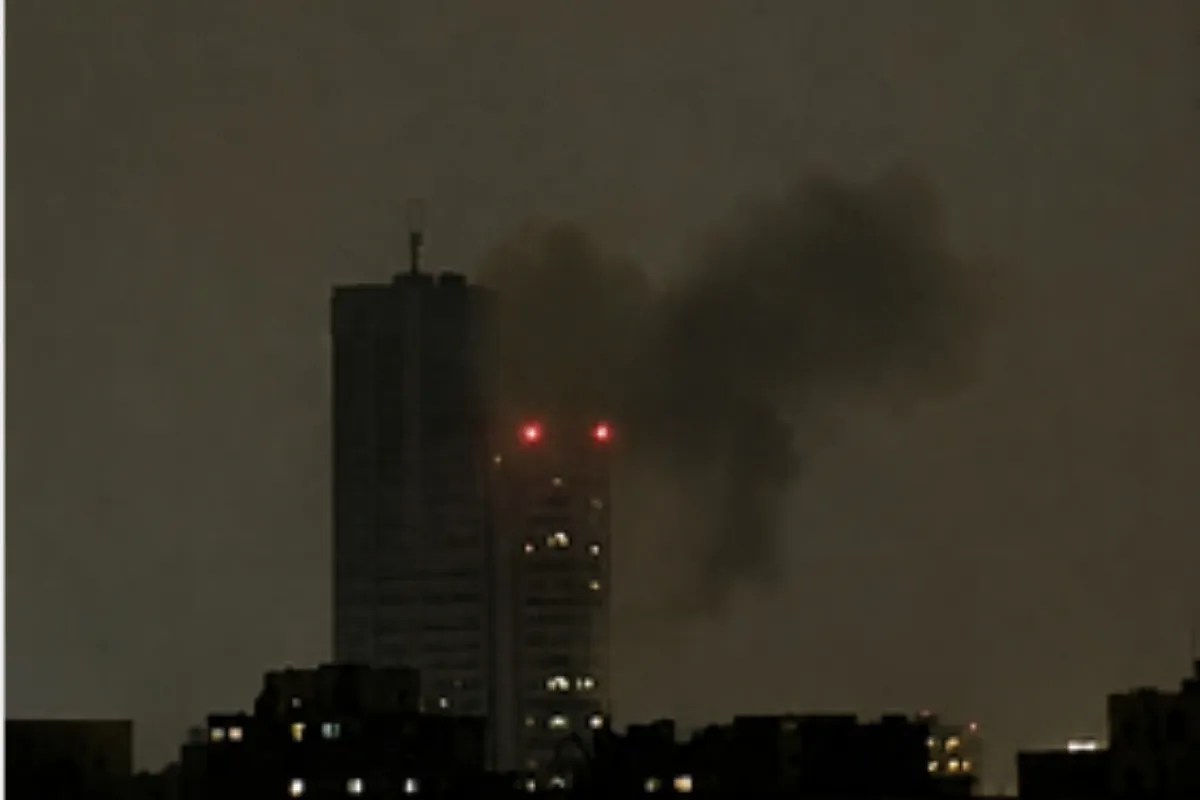
Eleven consecutive nights of relentless military strikes across the Middle East have underscored a grim geopolitical reality. Precision munitions can dismantle radar arrays and collapse weapons depots, but they cannot force a hardened regional power to negotiate when diplomacy has been completely sidelined.
The campaign was billed as a decisive effort to restore deterrence and protect international shipping lanes. Instead, Washington finds itself trapped in a familiar strategic loop. Kinetic operations have taken precedence over diplomatic channels, creating a feedback cycle where tactical victories on the battlefield actively erode long-term stability.
Military operations designed to Project force often reveal systemic limitations when deployed against asymmetric opponents. Striking mobile launchers and underground bunkers requires continuous, high-grade intelligence. When those targets are integrated into dense urban environments or deeply fortified geography, the margin for operational success narrows dramatically.
The primary objective of these strikes was to sever command-and-control networks. Yet, history demonstrates that decentralized military structures thrive under sustained pressure. Rather than collapsing, regional proxy groups and state sponsors adapt by breaking down their operational chains, allowing lower-level commanders to execute independent attacks without central clearance.
The Failure of Kinetic Deterrence
Deterrence is not merely a measure of how much destruction an armed force can inflict. It relies entirely on the target's perception of risk and their willingness to absorb damage.
For months, defense analysts warned that escalation would not produce compliance. When a regime views the conflict as existential, standard calculus regarding material loss disappears. A destroyed missile battery is simply viewed as an operational cost, easily absorbed and eventually replaced.
Strategic deterrence breaks down the moment an adversary realizes that retaliatory strikes are constrained by domestic political pressure and international law, while their own responses face no such boundaries.
The reliance on aerial bombardments reveals a broader policy void. Bombing campaigns are politically palatable because they minimize risk to American personnel on the ground. However, airpower alone has rarely forced a determined adversary to surrender core strategic objectives. By relying on sorties rather than sustained diplomatic leverage, foreign policy becomes reactive, dictated by the next drone launch rather than a coherent grand strategy.
How Economic Sanctions and Kinetic Operations Coexist
The financial architecture behind regional conflict is as resilient as the military hardware. While strikes target physical assets, the funding streams powering these operations continue to flow through informal banking networks and shadow maritime fleets.
+-----------------------------------------------------------------------+
|                       THE ESCALATION CYCLE                            |
|                                                                       |
|   [ Air Strikes Target Assets ] ---> [ Adversaries Decentralize ]     |
|                ^                                  |                   |
|                |                                  v                   |
|   [ Diplomatic Stall ] <--- [ Asymmetric Attacks Continue ]           |
+-----------------------------------------------------------------------+
Sanctions were intended to starve military budgets. In practice, long-term trade restrictions have forced targets to build sophisticated, off-grid economic systems that operate entirely outside Western oversight.
- Shadow Tanker Fleets: Ship-to-ship transfers in international waters bypass traditional maritime tracking systems, maintaining revenue streams despite international oversight.
- Front Companies: Complex webs of shell corporations across multiple jurisdictions conceal the true origin and destination of dual-use technology.
- Alternative Payment Systems: Local currency exchanges and unregulated digital assets bypass the SWIFT banking network entirely.
Without closing these structural economic loopholes, air campaigns merely clear the top layer of a deeply rooted infrastructure. Rebuilding a destroyed depot takes weeks; cutting off the capital used to build it requires years of coordinated international enforcement that currently does not exist.
The Collapse of Secondary Diplomatic Channels
While missiles dominate the headlines, the real catastrophe is occurring behind closed doors. Formal diplomatic channels have stalled, and backchannel communication avenues are rapidly closing down.
Historically, neutral third parties mediated disputes during high-intensity crises. European interlocutors and Gulf nations frequently passed messages to prevent miscalculations. Today, those channels are choked by escalating rhetoric and maximalist demands from all sides.
When direct lines of communication burn out, the risk of miscalculation escalates exponentially. A misidentified target, a stray drone, or an uncoordinated naval intercept can instantly escalate a localized incident into a regional war that neither party originally intended to fight.
The High Cost of Strategic Miscalculation
The assumption that the adversary will eventually seek an exit strategy rests on a dangerous misconception. It assumes both sides share the same definition of victory and the same tolerance for pain.
Washington measures success through target lists, destroyed hardware, and degraded capabilities. Their opponents measure success purely through survival and the ability to continue firing. So long as a single missile can be launched after eleven nights of heavy bombardment, the defending side claims a narrative victory, eroding the perceived authority of the world's most powerful military.
The operational math is equally punishing. Interceptor missiles used by naval vessels cost millions of dollars each. The cheap, mass-produced attack drones being fired at commercial shipping cost a fraction of that amount. This basic economic asymmetry ensures that defense costs far more than offense over time.
The Flawed Logic of Escalation Management
Strategy experts often talk about managing the escalation ladder, controlling the tempo and intensity of a conflict to force an opponent to stand down. In the Middle East, this theoretical model consistently fails.
There is no shared consensus on where the rungs of that ladder actually lie. What Washington considers a measured, proportional response is often interpreted by the recipient as a severe escalation demanding an immediate, aggressive counterstrike.
+----------------------------------------------------------------+
|                     THE COST ASYMMETRY                         |
|                                                                |
|  Defensive Interceptor: ~$2,000,000 - $4,000,000 per unit      |
|  Attacking Attack Drone: ~$20,000 - $50,000 per unit           |
+----------------------------------------------------------------+
This disparity makes long-term defense financially and operationally unsustainable. No military inventory is bottomless. Expending high-end, specialized air defense stockpiles to counter low-cost saturation attacks exposes vulnerabilities elsewhere in global defense posture.
The Strategic Vacuum
The fundamental issue is not the precision of American munitions, nor the skill of the pilots executing these missions. It is the absence of an achievable political outcome.
Military force is meant to serve political ends. When military action becomes the policy itself, strategic drift sets in. Strikes continue simply because stopping them without a diplomatic deal looks like defeat, while continuing them yields diminishing returns and heightens the probability of a wider regional conflict.
The regional powers involved understand this dynamic. They know that domestic political cycles impose strict time limits on foreign military deployments. By simply surviving the initial wave of strikes, adversaries stall for time, waiting out the political resolve of their opponents while continuing to build low-cost strategic weapons behind the scenes.
The Operational Reality Beyond the Headlines
Military briefings highlight high success rates, precise hit ratios, and degraded enemy networks. These metrics create an illusion of progress while masking the broader failure to change the political calculus on the ground.
Degrading capability is not the same as eliminating resolve. An adversary whose facilities are destroyed does not suddenly become open to diplomatic concessions. Instead, they become more desperate, more aggressive, and far less predictable.
The current strategy relies on the hope that enough structural damage will eventually force a return to the negotiating table. History suggests the exact opposite happens. Continued bombardment hardens political positions, rallies domestic populations around national defense, and destroys whatever faint appetite for compromise remained.
Until policy shifts from military management to a coherent strategy that aligns economic pressure, regional diplomacy, and realistic political goals, nights of strikes will simply lead to weeks of retaliation, dragging all parties deeper into a conflict with no clear exit.