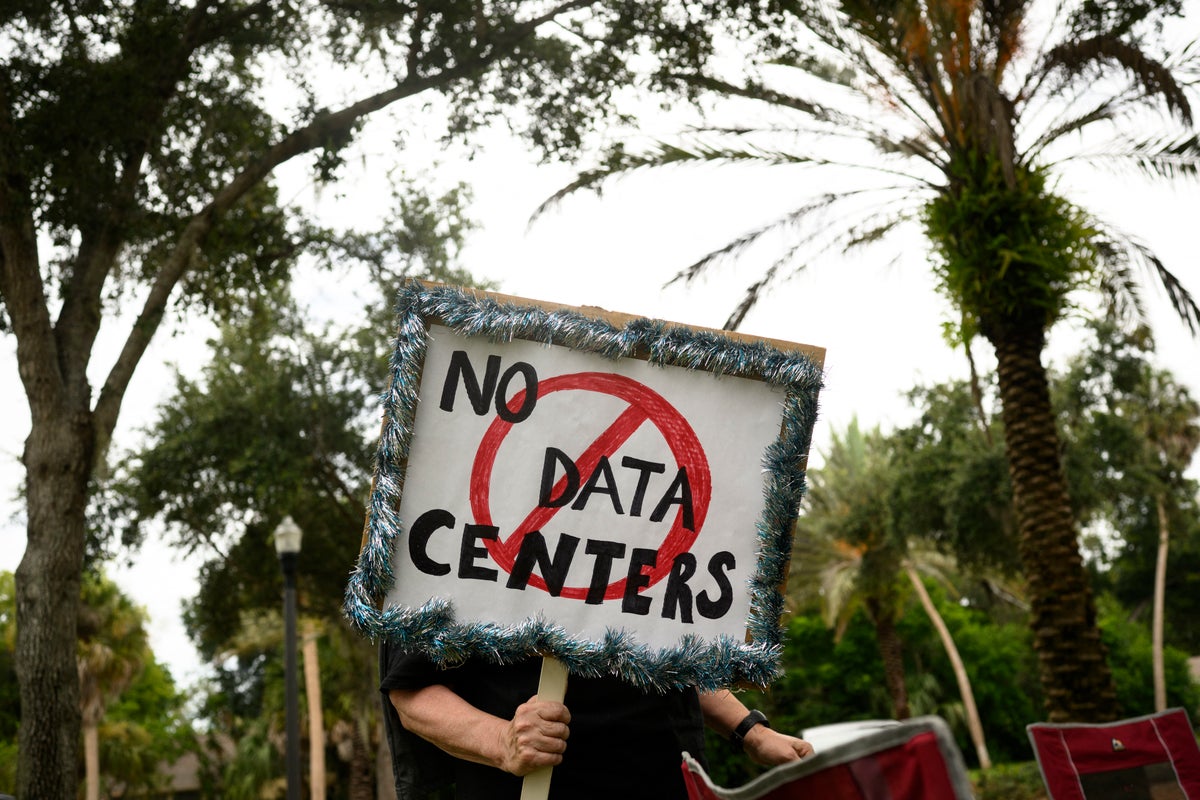
Communities across the United States are fighting back against the massive buildout of artificial intelligence data centers, triggering a high-stakes clash between local residents and major technology corporations over strained power grids and soaring utility bills. Behind this grassroots uprising lies a deeper institutional battle: tech conglomerates are aggressively pivoting to state and federal politics, deploying millions of dollars in lobbying campaigns and super PACs to bypass municipal zoning boards and neutralize local opposition.
For the past three decades, the digital economy operated largely out of sight. Fiber-optic cables ran silently along highway medians, and server farms hummed quietly in suburban industrial parks, demanding little from the surrounding towns other than cheap electricity and tax abatements. That era is over. The generative artificial intelligence boom has transformed data facilities from modest gray boxes into sprawling concrete fortresses. These complexes occupy hundreds of acres, consume as much electricity as small cities, and require millions of gallons of water daily to cool high-density racks of graphics processing units.
When a hyperscale server farm arrives in a rural township or a working-class suburb, it does not bring an influx of high-paying local employment. It brings a permanent roar of industrial cooling fans, a massive drain on local water tables, and a very real threat to the stability of regional electrical grids. Utility companies are scrambling to keep pace, often passing the costs of grid upgrades onto everyday ratepayers. Families living miles away from the nearest server yard are opening monthly utility bills that reflect double-digit percentage spikes, while corporate operators enjoy negotiated wholesale rates.
Citizens are responding with a level of mobilization unseen in modern municipal politics. In towns across Georgia, Virginia, Ohio, and Oregon, homeowner associations, environmental activists, and rural conservatives are forming unprecedented coalitions. They are packing zoning board meetings, demanding public inquiries, and launching recall campaigns against local officials who signed secretive non-disclosure agreements with tech representatives. More than five hundred municipalities have enacted temporary construction moratoriums or outright zoning bans on large-scale computing facilities. Wall Street financial analysts now factor grassroots resistance directly into project risk assessments, noting that local pushback has successfully stalled or killed tens of billions of dollars in planned infrastructure.
Faced with this rising wall of municipal defiance, the corporations financing the artificial intelligence gold rush have shifted tactics. They are no longer relying solely on local zoning lawyers and corporate charm offensives. Instead, industry leadership has opened the political floodgates, transforming server farm expansion into a top-tier electoral and legislative priority.
Lobbying expenditures tied to digital infrastructure have reached unprecedented heights in state capitals. Tech giants are working behind the scenes to draft state-level preemption bills. These legislative maneuvers are designed to strip local town councils and county commissioners of their authority over land use, transferring zoning power to state utility commissions where corporate interests wield more influence. By shifting the battleground from community town halls to statehouses, technology firms aim to render neighborhood opposition legally irrelevant.
At the federal level, political alignments are shifting in real-time. Populist lawmakers from both major political parties have seized on the data center backlash to challenge the unchecked expansion of big tech. Congressional offices are suddenly fielding angry constituent calls about grid reliability and energy scarcity, turning server farms into a visible proxy for broader anxieties about automation, corporate dominance, and declining living standards. Simultaneously, executive branch policy and political action committees are pouring resources into campaigns to brand local resistance as economically backward, framing infrastructure restrictions as a threat to national technological supremacy.
This is no longer a simple zoning dispute over noise ordinances and property setbacks. It is a fundamental contest over who governs the physical footprint of the digital age. As tech conglomerates leverage their vast financial reserves to buy political protection, communities are discovering that protecting their local water and electricity requires confronting the structural power of the modern corporate state. The server farms keep expanding, but the political cost of building them is climbing just as fast, setting the stage for a prolonged war of attrition across the American landscape.