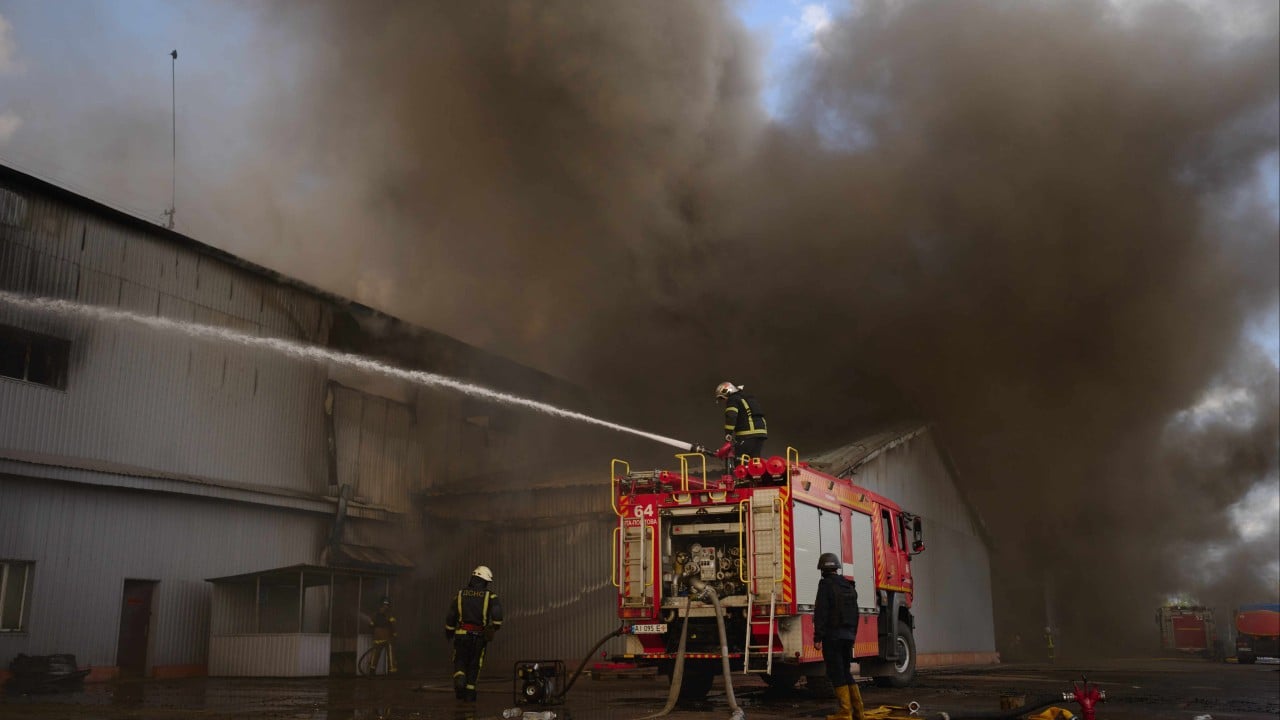
At least 27 people are dead and over 40 others are injured following a devastating Russian drone strike that triggered a catastrophic secondary explosion at a warehouse in the village of Myla, located in the Bucha district of Ukraine's Kyiv region.
The attack, which occurred amid a relentless multi-day wave of aerial assaults on the capital, flattened surrounding infrastructure, damaged roughly 50 residential buildings, and forced the emergency evacuation of more than 370 residents. Yet, the true tragedy extends far beyond the raw physics of a drone payload hitting a target. It points directly to an internal crisis of accountability, zoning violations, and administrative negligence that exposed civilian populations to extreme danger long before the first munition descended. Read more on a related issue: this related article.
President Volodymyr Zelenskyy reacted swiftly, announcing that criminal proceedings for official negligence had been initiated. The core accusation is stark and unyielding: military-grade components, boosters, or explosive material were stored in close proximity to civilian homes, nursing facilities, and residential streets, directly violating wartime safety regulations.
The Anatomy of a Secondary Catastrophe
Modern industrial warfare leaves very little margin for error. When a long-range drone strikes a standard logistics facility, the immediate damage is usually confined to the footprint of the building itself. However, when that facility harbors high-energy materials or military logistics components without adequate decentralization or subterranean hardening, the initial combustion becomes a fuse. Further analysis by NBC News highlights similar perspectives on this issue.
In Myla, the incoming strike ignited a massive secondary detonation. The resulting blast wave and subsequent fires traveled outward, consuming nearby homes, a local restaurant, and facilities catering to the elderly and disabled. Among the dead was Taras Didych, head of the Dmytrivka rural community, who was actively involved in rescue and evacuation efforts when the secondary blast hit.
Military analysts have long warned about the logistical bottlenecks facing Ukrainian defense production and supply chains. Decentralization is the doctrine of survival. Concentrating high-risk inventory within populated municipal boundaries is a fatal error, regardless of supply line pressures.
The Institutional Failure
The anger emanating from Kyiv is palpable, and for good reason. Regulations governing the placement of munitions, defense technology components, and explosive stores are not arbitrary bureaucratic red tape. They are hard-earned lessons written in civilian blood over four years of intense conflict.
By permitting sensitive logistical nodes to operate inside municipal vectors, local and regional oversight mechanisms failed.
- Zoning laws designed to protect non-combatants were sidestepped under the immense pressure of wartime production quotas.
- Warehousing networks expanded rapidly to keep pace with unmanned aerial vehicle manufacturing and frontline supply needs.
- Oversight agencies turned a blind eye to high-risk inventory accumulation near residential sectors.
When accountability is deferred in the name of expediency, catastrophe is merely a matter of time. The state investigative apparatus is now tasked with finding out precisely who signed off on the Myla storage site, and why basic safety radiuses were ignored.
The Broader Strategic Cost
This localized disaster unfolds against a backdrop of escalating infrastructure targeting across the country. Russian forces have intensified strikes against logistics, transport, and energy nodes from Odesa to Mykolaiv, aiming to fracture the economic spine of the nation.
Yet, incidents like the one in Myla deal a severe psychological blow that external enemies do not have to manufacture. They erode trust from within. When citizens are asked to endure continuous air raids, blackouts, and economic paralysis, they also expect the state to shield them from internal hazards.
The criminal investigation opened into the Myla warehouse blast must yield transparent results. Punishing those responsible is not merely a legal formality; it is an operational necessity to force military and civilian administrators to respect the safety buffers that keep residential neighborhoods alive. War forces impossible choices upon a nation, but storing the seeds of a massive explosion next door to a children's playground or an elder care facility is a failure of leadership that no strategic defense priority can justify.