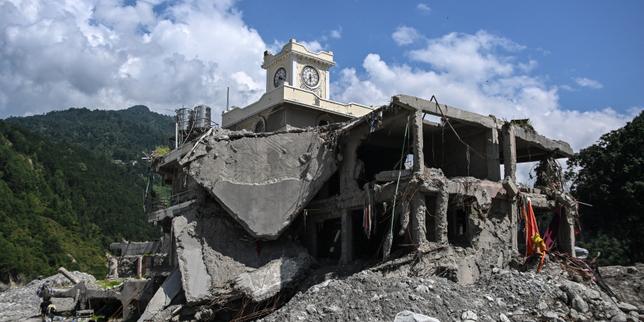
Every time a multi-storey building collapses in Nairobi, the script plays out with grim predictability. Sirens wail over twisted rebar, bulldozers rumble into tight urban plots, rescue workers dig through dust with bare hands, and politicians promise an immediate audit.
Yet concrete keeps giving way across Kenya's capital. A wave of structural failures in late 2026—from an eight-storey structure near the Standard Gauge Railway terminus in Syokimau and an unfinished collapse in the Riverside area to a deadly tower failure along Ninth Street in Eastleigh—has turned sporadic headlines into a chronic urban emergency. Across the country, dozens of buildings have come down over the past three years, burying site masons, guards, and neighbors under slabs that never cured or held what they were asked to carry.
The standard news report treats each collapse as an isolated tragedy or a sudden act of bad luck. That framing misses the real story. When a multi-storey building collapses in Nairobi, it is rarely a freak accident. It is the predictable outcome of fast capital chasing scarce land, thin inspection staffing, cut-rate materials, and a regulatory maze where every agency points at another when the dust settles.
Why Concrete Keeps Failing Across the Capital
A high-rise does not fall because gravity suddenly changed its mind. It falls because load exceeds capacity at a weak link—a poorly mixed column, premature formwork stripping, under-reinforced concrete, or soil that cannot bear the weight stacked on top of it.
In Nairobi, urban land values have climbed sharply as more people move into the city and developers race to pack rental units onto narrow parcels. When land costs eat up a huge share of project capital, builders look for ways to claw back margin on the vertical build. Sometimes that means pushing a structure higher than the foundation or structural grid was designed to support. Other times it means shaving pennies off every bag of cement, using undersized steel reinforcement, or relying on makeshift timber props instead of engineered steel shoring while wet concrete is still heavy and plastic.
The Physics of Cutting Corners on Site
Concrete looks deceptively forgiving on paper. You mix cement, aggregate, sand, and water, pour it into molds, and wait for it to harden. In practice, structural safety depends on tight tolerances during mixing, placing, curing, and supporting fresh loads.
Too much water makes concrete easy to pour and finish quickly, which speeds up labor on a busy site. It also weakens the cured matrix and increases shrinkage cracks. If a crew strips formwork too early to reuse props on the next floor, or props a heavy upper slab with weak timber poles that buckle under load, progressive collapse can start in seconds. Once one column or slab punches through, the floors above drop onto the floors below with momentum that no standard residential frame was built to arrest.
Preliminary findings from recent Kenyan incidents have repeatedly pointed back to these exact field failures: compromised materials, sloppy workmanship, weak site supervision, and inadequate temporary supports during active pours. None of those causes is a mystery to a seasoned site engineer. They are everyday shortcuts taken when nobody credible is watching the pour.
Paper Approvals Versus Reality on the Ground
Walk through a fast-growing neighborhood in Nairobi and you will see a stark gap between official compliance and actual construction. On paper, Kenya has a recognizable set of rules and institutions meant to keep structures safe.
Under the system, county governments handle development permits and zoning approvals, while the National Construction Authority registers projects and contractors and monitors compliance. Separate professional bodies regulate engineers, architects, and quantity surveyors, and environmental agencies sign off on required assessments. Even the National Building Code, published in 2024 and brought into force in 2025, exists to set modern standards for design, inspection, and safety.
On paper, that looks like a multilayered defense. In reality, paperwork and site execution often live in separate universes.
How Projects Slip Through the Cracks
Investigations into recent collapses have exposed how broken the chain from approval to bricklaying can become. In some cases, probes have found developers pressing ahead without approved architectural or structural plans even after securing a zoning change. In other cases, a project has looked compliant on file—with registrations, licenses, and initial checks recorded—only for actual site execution to drift far away from safe engineering practice.
Consider a hypothetical developer putting up an eight-storey block on a tight plot. The initial drawings might pass muster on a desk, or a zoning shift might get approved amid heavy political pressure and administrative backlog. Once construction starts, the licensed structural engineer may visit infrequently—or only at milestones—while uncertified foremen run daily shifts and swap specified materials for cheaper substitutes to beat rising costs.
A stamped drawing in a file drawer cannot hold up a tenth-floor slab if the concrete in the ground-floor columns was watered down or under-cured.
✨ Don't miss: The Long Road to a Silent Sky
When oversight is stretched thin, bad actors learn that the odds of a surprise inspection stopping a pour at the exact right moment are low. Officials from the National Construction Authority have pointed out just how lopsided the staffing math is in the capital. With dozens of active sites across a sprawling city and only a handful of technical officers covering vast stretches of Nairobi against a much higher benchmark need, routine physical verification simply cannot keep pace with every crane, mixer, and scaffold.
The Counter-Argument Nobody Wants to Hear
Whenever buildings fall, the loudest demand is predictable: pass stricter laws, arrest more officials, and shut down non-compliant sites immediately. There is real merit in accountability, especially when corruption or gross negligence costs lives. Yet treating enforcement alone as a cure-all runs into hard operational limits.
First, you cannot inspect your way out of a structural shortfall if inspectors lack staff, testing equipment, transport, and authority to halt work and make stop-work orders stick. A regulator operating with budget deficits and thin field ranks can only spot-check a fraction of active builds. Announcing sweeping crackdowns without funding daily field presence creates theater, not safety.
Second, heavy-handed bans and blanket freezes carry real economic side effects. Nairobi needs housing and commercial space for a growing population, and legitimate contractors, small builders, and middle-income families depend on construction jobs and supply chains. If compliance becomes purely a bureaucratic hurdle—expensive, slow, and vulnerable to informal "facilitation" payments—honest builders get squeezed while reckless ones find workarounds.
A more honest assessment recognizes a difficult gray area. Tougher penalties matter, especially for developers who build without approved structural designs or ignore stop orders. Still, penalties only deter behavior when detection feels likely and swift. Without practical field verification and clearer accountability across agencies, new rules risk becoming just more ink on paper.
What Actually Changes Outcomes in High-Risk Cities
Cities that have reduced building failures over time rarely rely on speeches after a disaster. They tighten a few high-leverage choke points where shortcuts usually hide.
- Independent material testing: Requiring verified cube strength tests and steel quality checks tied to critical structural stages—foundations, columns, and transfer slabs—gives engineers hard data rather than guesswork.
- Real-time site milestones: Linking continued construction permissions or utility connections to documented structural sign-offs stops builders from racing past dangerous stages unchecked.
- Clear agency ownership: Ending the blame ping-pong between county planning offices, professional boards, and national construction regulators ensures someone owns enforcement from permit to completion.
- Protect whistleblowers and site workers: Masons, steel fixers, and junior technicians often see wobbling props or bad concrete days before a collapse, yet fear losing daily wages if they speak up.
None of these steps is flashy, and none works overnight. Every one of them requires political spine because enforcement inevitably steps on well-connected toes and slows down quick profits.
Until concrete strength, site supervision, and regulatory follow-through matter more than speed and political convenience, the next collapse in Nairobi will not be a surprise—only a question of which street loses its footing next.